destination guides
Forest Shadows Stir: Dispatches from a Week at Ngaga Camp
Encounters Africa - 5 min read
Updated on 11 May 2026
Deep in the Goualougo Triangle of the Republic of Congo, Ngaga Camp emerges as a whisper amid ancient rainforest giants. Here, travellers immerse in the intimate world of habituated western lowland gorillas, their silverbacks' distant chest-beats echoing through mist-shrouded canopies at dawn. This remote outpost in the Congo Basin offers unparalleled access to primates rarely seen elsewhere, blending low-impact luxury with frontline conservation.
Ngaga Camp serves as the gateway to one of Africa's most pristine gorilla habitats, where guests track family groups through fern-choked understorey. Expect mornings filled with the guttural calls of gorillas, afternoons decoding faint bongo trails shared over fireside gatherings. The best time to visit Ngaga Camp spans the dry months from May to October, when trails firm up and wildlife concentrates near streams.
Reaching Ngaga Camp: The Journey into Congo's Heart
Access to Ngaga Camp begins with a charter flight from Brazzaville's Maya-Maya Airport, touching down on a rudimentary airstrip after a 90-minute hop over unbroken forest. From there, a 90-minute forest trek carries you deeper, porters balancing gear on head-loads while babbler flocks chatter overhead. This deliberate pace ensures only committed gorilla enthusiasts arrive, preserving the site's tranquillity.
Encounters Africa coordinates seamless logistics, including visas and vaccinations—yellow fever proof is mandatory. Fly into Brazzaville via Paris or Addis Ababa, then connect to the charter. The trek demands moderate fitness; sturdy boots grip mossy roots, and rain ponchos shield sudden downpours.
Pro tip: Schedule arrivals for mid-morning to settle before the afternoon's first gorilla track. Camps provide gumboots for the muddy paths ahead.
"The forest closes around you like a living cathedral, every rustle a reminder that gorillas tread these same paths."
Ngaga Camp Layout and Low-Impact Design
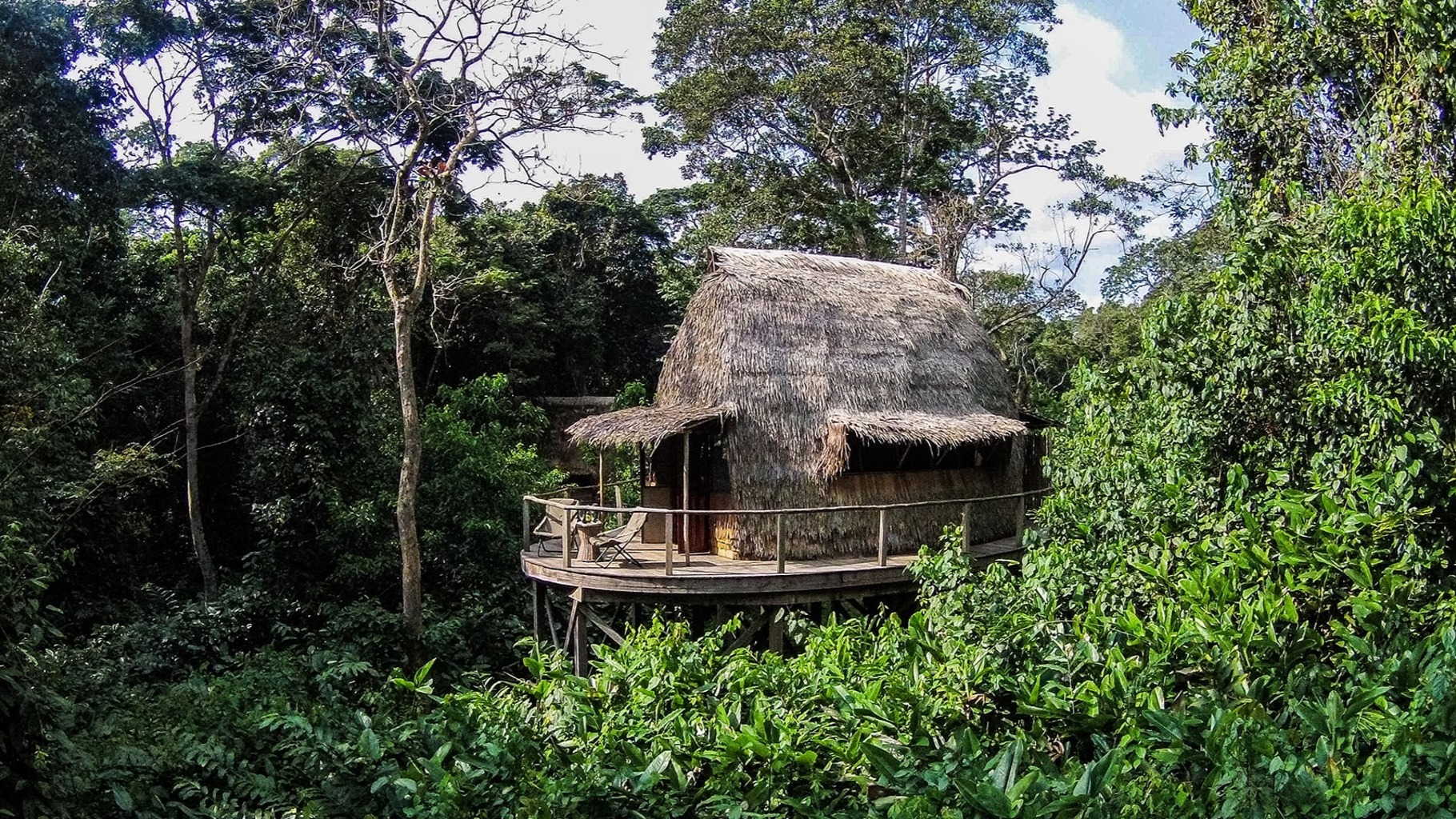
Ngaga Camp comprises eight stilted tents elevated above the forest floor, their canvas walls blending into the dappled light of 500-year-old mahogany trees. Each unit features a spacious bedroom, en-suite solar-powered shower, and private deck where colobus monkeys swing at eye level. Communal areas centre on a thatched dining platform, alive with the aroma of grilled forest antelope and cassava leaves.
Construction minimises disturbance: platforms rest on minimal footings, waste recycles via composting toilets, and solar panels power dim lanterns that mimic firefly glow. This design, pioneered by the Wildlife Conservation Society, sets Ngaga Camp apart as a model for sustainable rainforest lodging.
Tent Features for Gorilla Enthusiasts
Interiors boast mosquito-netted kingsize beds piled with cotton linens, cooled by cross-breezes. Decks overlook gorilla nesting sites, ideal for pre-dawn vigils. Hammocks invite lazy afternoons scanning for elusive okapi shadows.
Private solar-heated showers with rainwater collection
Writing desks stocked with field guides to Congo Basin primates
Binoculars and headtorches provided for night forest sounds
Custom-fitted gumboots sized on arrival

A Day Tracking Gorillas from Ngaga Camp
Mornings at Ngaga Camp stir with the camp manager's soft briefing at 5:30am, coffee steaming as guides detail the day's gorilla group—perhaps the Beets or Maya family, habituated since 2003. A 30-90 minute hike leads to nests from the previous night, where fresh scat and bent saplings signal the primates' direction. Pygmy trackers, with encyclopedic forest knowledge, lead silently, machetes parting lianas without a whisper.
Gorilla encounters last one hour, close enough to hear milk hoot calls and see infants clamber over mothers' backs. Minimum distances respect the animals: 7 metres for adults, 10 for feeding groups. Afternoons free for birding or duiker spotting, evenings decode the day's signs over communal fires.
What sets Ngaga Camp gorilla treks apart? Groups cap at six guests, ensuring intimate views without crowding. Success rates exceed 95% in dry season, per Wildlife Conservation Society data.
Understanding Habituation Protocols
Habituated since the early 2000s, Ngaga's gorilla families tolerate humans after years of gradual exposure. Researchers monitor from nest-to-nest, noting health and social dynamics—guests often join these non-intrusive observations. Protocols prioritise gorilla welfare: no tracking in heavy rain, evacuation if silverbacks charge.
Wildlife Beyond Gorillas in Goualougo Triangle
Ngaga Camp's realm extends to forest elephants crashing through undergrowth, their trumpet calls vibrating the air at dusk. Sun-squirrels dart across trails, while hornbills' wingbeats punctuate the canopy. Night walks reveal glowing eyes of genets and the rare forest buffalo.
Birdlife dazzles with over 400 species: African grey parrots squawk in flocks, grey-necked rockfowl dance in clearings. Guides spotlight leopard tracks, and camera traps occasionally capture bongo, the unicorn of antelopes.
"Ngaga Camp reveals the Congo Basin's pulse: gorillas by day, phantoms of the night that vanish by torchlight."
Signature Species and Sighting Tips
Western lowland gorillas: 98% encounter rate, families of 8-15 members
L'Hoest's monkeys: Listen for crashing branches mid-morning
Forest elephants: Best at wallows during dry spells, July-September
Bongo antelope: Scan salt licks at dawn with local Pygmy spotters

Practical Advice for Your Ngaga Camp Stay
Best time to visit Ngaga Camp: May to September offers drier trails and higher gorilla visibility; October-November sees fruit blooms drawing primates closer. Avoid June-July wet peaks when leeches thrive. Pack quick-dry synthetics, long sleeves for chigger protection, and high-factor insect repellent.
Health prep includes malaria prophylaxis (discuss with your doctor), tetanus boosters, and rabies awareness—don't feed wildlife. Electricity charges via solar from 6pm-10pm; bring a universal adapter. Dietary needs accommodate vegetarians with advance notice; meals feature local yams, plantains, and wild honey.
Packing Essentials and Safety
Ol Pejeta Conservancy in Kenya offers similar primate insights, but Ngaga's density is unmatched. For itineraries blending gorilla and savannah, explore our safari itineraries.
Leech socks and gaiters for wet-season hikes
Waterproof daypack for gorilla treks
Power bank for camera charging
Notebook for sketching gorilla postures
Conservation at Ngaga Camp and Why It Matters
Ngaga Camp partners with the Wildlife Conservation Society, funding anti-poaching patrols that have reduced snares by 70% since 2010. Guests contribute via a $750 daily conservation fee, supporting Pygmy ranger training and camera trap networks. This model proves luxury and protection coexist in the Congo Basin.
Challenges persist: logging roads encroach, and ebola decimated groups in the 2000s. Yet habituated families rebound, with births outpacing losses— a testament to sustained efforts.
For discerning travellers seeking private gorilla journeys beyond set paths, Encounters Africa crafts tailor-made experiences. Contact us via our enquiry form to design your Ngaga Camp adventure, drawing on our network of remote camps for seamless immersion.
More like this
destination guides
From American Cities to Okavango Delta: One Traveler's Botswana Odyssey
destination guides
From Deck Chairs at Sayari: Noted Moments Tracking Elephants Across Endless Plains
destination guides
From Heathrow to Arusha: A Traveler's Chronicle of the United Kingdom to Tanzania Journey
destination guides
From Moscow Winters to Creole Shores: A Russian Traveler's Seychelles Lodge Guide
destination guides
Gorilla Trails from Germany: Finding Rwanda's Finest Lodges After Frankfurt Flights
destination guides