destination guides
Riverside Days at Mboko Camp: Tracking Forest Elephants in Congo Basin
Encounters Africa - 6 min read
Updated on 11 May 2026
Perched on the Sangha River's edge in the heart of Dzanga-Sangha Dense Forest Reserve, Mboko Camp offers an unparalleled gateway to the Congo Basin's ancient forests. This remote outpost immerses travellers in the rhythms of forest elephants bathing in nearby clearings and the distant calls of chimpanzees echoing through the canopy. Dzanga-Sangha, a UNESCO-protected complex spanning over 4,300 square kilometres in southwest Central African Republic, safeguards one of Africa's last intact rainforests, where biodiversity thrives amid towering hardwoods and vine-draped understorey.
Reaching Mboko Camp involves a charter flight to Bayanga airstrip followed by a 45-minute boat journey upstream, setting the tone for an expedition into untouched wilderness. Here, guests track elusive forest elephants—smaller, darker, and more secretive than their savanna kin—along mud wallows and riverbanks. The camp's location provides direct access to the reserve's core zones, making it ideal for those seeking profound encounters with Central Africa's hidden wildlife.
Arrival and First Impressions at Mboko Camp
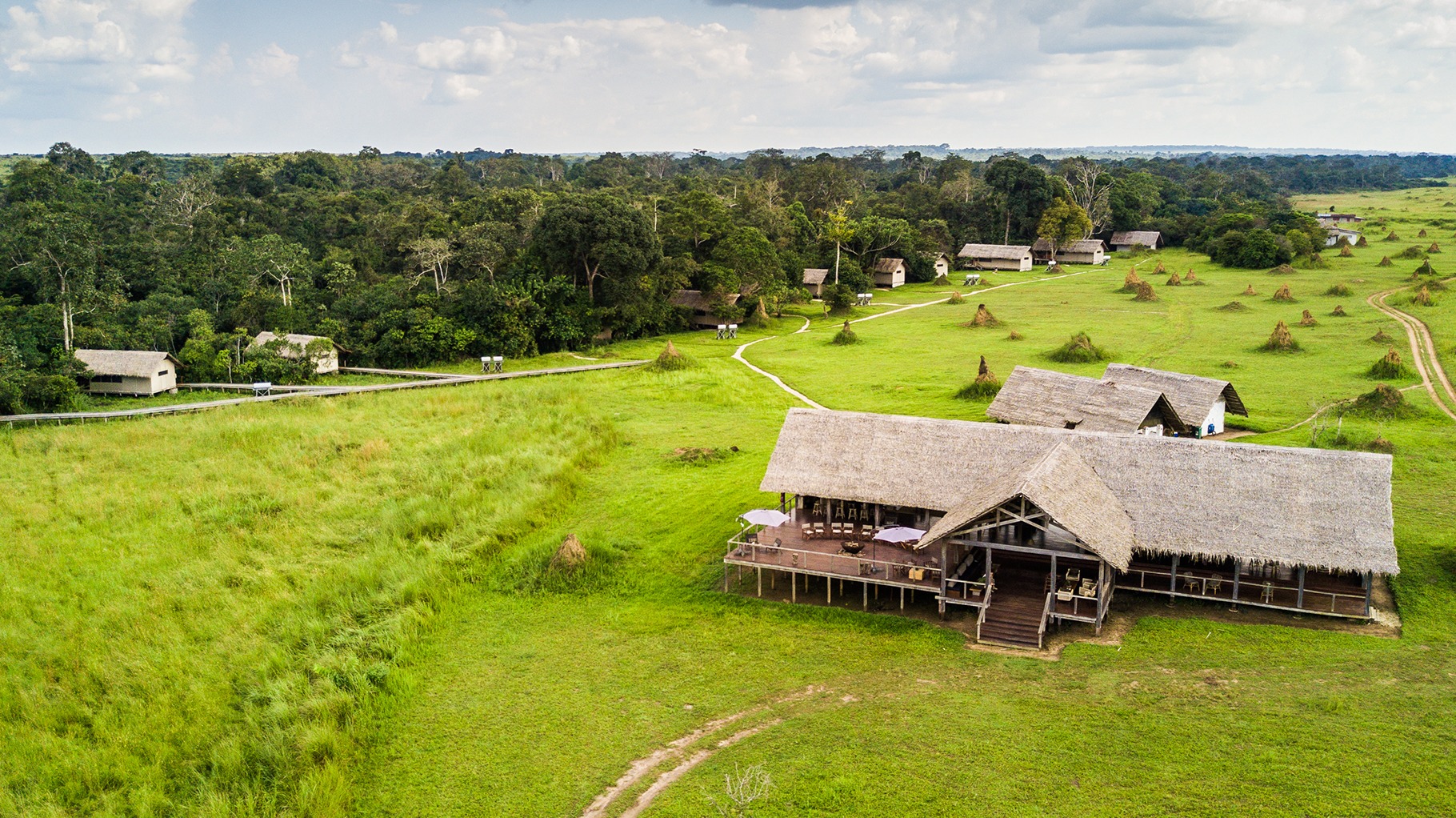
Disembarking at Bayanga, the humid air carries scents of damp earth and blooming orchids as your mokoro canoe glides along the Sangha's chocolate-brown waters. Mboko Camp emerges as a cluster of stone-and-thatch cottages nestled against a forested embankment, their decks overhanging the river for unobstructed views. Solar panels hum quietly, powering this low-impact haven without disturbing the night's symphony of frog choruses and cicada whirs.
Check-in unfolds with fresh mango juice and a briefing from camp manager Pierre, a lifelong Dzanga-Sangha resident. Cottages feature polished concrete floors, mosquito-netted kingsize beds, and open-air showers fed by rainwater. Evenings draw guests to the central dining area, where lanterns cast a warm glow over communal tables set with forest-gathered herbs.
Expect simple yet refined comforts: no Wi-Fi ensures full disconnection, while daily generator runs from 6-9am and 6-9pm align with wildlife viewing peaks. The camp accommodates up to 12 guests, fostering intimate group dynamics among fellow nature enthusiasts.

"From Mboko's decks, the Congo Basin reveals its secrets one ripple at a time."
Guided Forest Walks: Tracking Forest Elephants
Mboko Camp serves as the launchpad for half- and full-day treks into Dzanga-Sangha's interior, led by Baiaka pygmy trackers renowned for their encyclopedic knowledge of the forest. These walks target the Dzanga bai—a vast forest clearing where up to 100 forest elephants gather daily to mineral lick and bathe. The best time to visit Mboko Camp aligns with the dry season from December to May, when clearings are most active and trails drier underfoot.
Understanding Forest Elephants
Unlike open-plain herds, Congo forest elephants (Loxodonta cyclotis) navigate dense undergrowth with straight tusks adapted for stripping bark. Trackers interpret fresh dung piles, broken branches, and footprint sizes to predict herd movements. Encounters often unfold 20-50 metres away, with the ground trembling from their low-frequency rumbles.
Walks last 4-6 hours, covering 5-8 kilometres through buttressed tree roots and fern-choked paths. Guides point out duiker antelopes, giant forest hogs, and rare bongo antelope sign. Hydration stations and rest stops ensure comfort in the 80-90% humidity.
Safety and Preparation
Participants receive rubber boots, rain ponchos, and insect repellent upon arrival. No prior hiking experience is needed, though moderate fitness handles uneven terrain. Groups cap at six, maintaining silence to avoid startling wildlife.
Other Wildlife Encounters from Mboko Camp
Beyond elephants, Mboko Camp's vicinity teems with primates: chimpanzees swing through mid-canopy, while black-and-white colobus monkeys chatter overhead. Night walks reveal bushbabies' glowing eyes and the occasional leopard track. The Sangha River yields hippos and Nile crocodiles at dawn.
Birders tally over 300 species, including African grey parrots in raucous flocks and the elusive Congo peafowl. Camera traps around camp capture nocturnal visitors like genets and civets, shared during evening slideshows.
Chimpanzee habituation treks: Observe tool-using troops for up to four hours.
Pygmy culture immersion: Join Baiaka hunters on sustainable foraging expeditions.
River safaris: Spot sitatunga antelope and forest buffalo from pirogues.
Bai visits: Witness gorillas, bongos, and yellow-backed duikers at mineral licks.
Daily Rhythm and Conservation at Mboko Camp
Days at Mboko Camp follow nature's clock: wake at 5:30am for coffee and dewy forest hikes, return for lunch of grilled tilapia from the Sangha and cassava leaves. Afternoons suit siestas or optional pirogue paddles, culminating in sundowners as mist rises from the river.
Dinners feature communal storytelling, with conservationists detailing anti-poaching efforts. The camp supports Dzanga-Sangha's ranger patrols, which have reduced elephant poaching by 70% since 2010. Guests contribute via optional patrol joins, tracking snares and mapping elephant corridors.
Mboko Camp blends adventure with purpose, turning every guest into a forest guardian.
Evening Conservation Briefings
Gathered around the fire pit, sip palm wine while experts discuss the Congo Basin's carbon sequestration role—Dzanga-Sangha stores 30 million tonnes. Topics span human-elephant coexistence to pygmy land rights, informed by 20 years of on-site research.

Practicalities: Best Time to Visit Mboko Camp and Getting There
The optimal window for Mboko Camp stays spans December to May, with February-April peaking elephant activity at bais. June-November's rains transform trails into streams but swell bird populations. Temperatures hover at 25-32°C year-round, with high humidity.
How to reach Mboko Camp: Fly commercial to Bangui or Douala, then charter via Central African Republic operators to Bayanga (1-hour flight). From there, a 45-minute motorboat transfer lands you at camp by noon. Encounters Africa arranges seamless logistics, including yellow fever vaccinations and CAR visas.
Book charters through Bayanga Airstrip operators (approx. €800 return per seat).
Pack lightweight synthetics, high boots, and binoculars (loaned on-site).
Expect 3-7 night minimum stays; rates from €450/night full board.
Comparing Mboko Camp to Other Congo Basin Lodges
Unlike gorilla-focused camps in Congo or Rwanda, Mboko emphasises forest elephants and multi-species tracking. Songa Lodge offers similar river access but fewer pygmy interactions. For luxury seekers, Dzanga Camp provides private decks, though Mboko's communal vibe fosters deeper bonds.
Mboko stands out for its research integration—guests access data from the World Wildlife Fund’s Dzanga Project, ongoing since 1988.
Plan Your Mboko Camp Journey with Encounters Africa
Mboko Camp delivers the Congo Basin's essence: raw, immersive, transformative. From elephant-trail pursuits to fireside insights, it redefines forest safaris. Encounters Africa crafts bespoke itineraries combining Mboko with gorilla treks or Congo Basin explorer safaris.
For discerning travellers seeking a private safari beyond our set itineraries, we invite you to contact us directly. We specialise in designing exceptional, tailor-made journeys for individuals, couples, families, and private groups of up to eight guests. Drawing on our handpicked network of distinguished camps and lodges, we curate every detail with precision and care, creating a seamless, deeply personal safari experience shaped entirely around your preferences, pace, and budget. Enquire today to step into the forest's heart.
More like this
destination guides
Riverside Days at Singita Pamushana: Elephants and Leopards in Motion
destination guides
Riverside Days at Waterberry Zambezi: Canoeing the Zambezi, Deck Lounging and Sunset Meals
destination guides
Riverside Rhythm at Mara River Tented Camp: A Singita Day Unfolds
destination guides
Rwanda's Premier Luxury Safaris: An Unforgettable African Journey
destination guides
Sabi Sand Rhythms: A Week Embedded at Chitwa Chitwa Lodge
destination guides