South Africa - Fly-in safari
6-Day Kwandwe Eastern Cape Safari
The journey
Updated on 18 September 2026
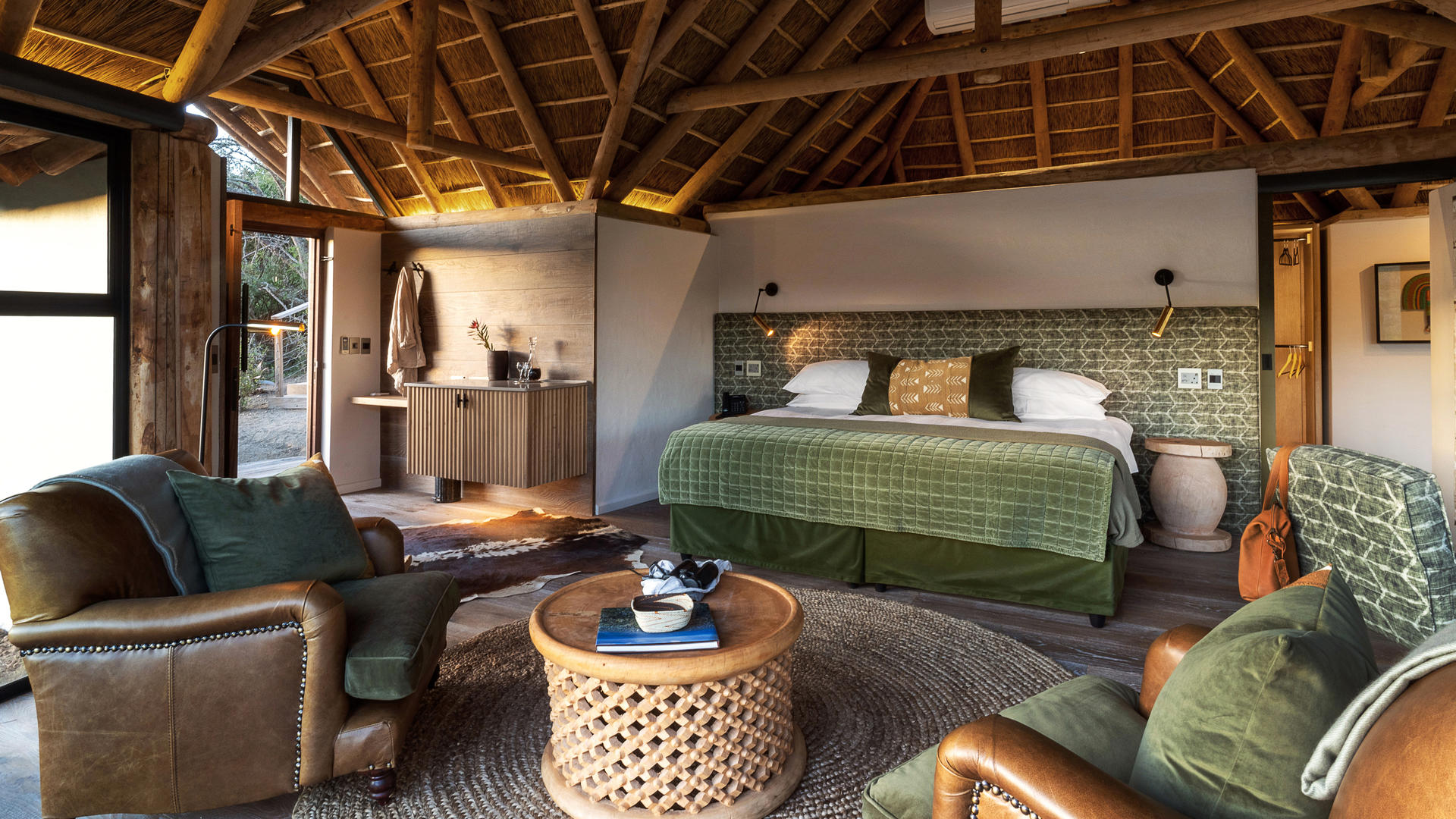
Kwandwe is the Eastern Cape's quiet triumph: 22,000 hectares of restored frontier country along 30 kilometres of the Great Fish River, carrying lion, leopard, elephant, buffalo and both rhino species, with one of the lowest guest densities of any Big Five reserve in Africa. The arithmetic, roughly 450 hectares per guest, translates on the ground into drives that go all morning without meeting another vehicle, guides who stay with a sighting for as long as it deserves, and off-road tracking as the rule rather than the exception. Great Fish River Lodge takes the reserve's headline position, nine suites strung along the riverbank with the water turning slow oxbows below the decks. The style is frontier comfort, fireplaces and claw-foot baths, and the country beyond is proper Eastern Cape: euphorbia valleys, spekboom thicket, open grassland ridges. Everything here is malaria-free, which, with short flights into Gqeberha, makes Kwandwe one of the easiest serious safaris in Africa to reach. Winter mornings are sharp and game-rich; summer brings storm light and cheetah cubs. Five nights does the reserve justice.Your camps, day by day
Stay 1
Gqeberha to the Great Fish
Stay 2
Space to Yourselves
Stay 3
Two Rhinos, One Morning
Stay 4
Cheetah on the Ridges
Stay 5
The Valley's Last Full Day
Stay 6
Kwandwe to Gqeberha
Safari highlights
- Five nights at Great Fish River Lodge
- 22,000 hectares, roughly 450 per guest
- Malaria-free Big Five country
- Off-road tracking and walking as standard
- Both black and white rhino
- 30 kilometres of private Great Fish River frontage
What is included
Included
- 5 nights accommodation, per person sharing
- Return road transfers Gqeberha Airport-Kwandwe, about 1.5 hours each way
- All meals, house wines, local spirits, beers and soft drinks
- Twice-daily game drives with guide and tracker
- Guided walks and rhino tracking
- Kwandwe conservation levies, government taxes and VAT
- Laundry and emergency medical evacuation cover
Not included
- International flights to and from Africa
- Domestic flights to Gqeberha, quoted separately
- Visas and entry permits
- Comprehensive travel and medical insurance
- Premium spirits, champagne and imported wines
- Gratuities for guides, trackers and lodge staff
- Items of a personal nature and telephone calls
Frequently asked questions
How much does a 6-day Kwandwe safari cost?
From USD 7,980 per person sharing, rising to about USD 9,280 in peak season. The price covers five nights at Great Fish River Lodge, all meals and house drinks, twice-daily game drives, walks and rhino tracking, conservation levies and return road transfers from Gqeberha. International flights and the short domestic hop to Gqeberha are excluded and quoted separately.
Is Kwandwe malaria-free?
Completely. The Eastern Cape sits well outside South Africa's malaria belt, so no prophylaxis is needed in any month, for any age. Combined with short road access from Gqeberha and a strong children's programme, that makes Kwandwe one of the most recommendable Big Five reserves for families and for anyone who cannot or would rather not take malaria medication.
How does Kwandwe compare with the Kruger-area reserves?
The game list is comparable, the Big Five plus cheetah, but the experience differs in density: Kwandwe runs a fraction of the guests per hectare of the famous lowveld reserves, so sightings are private almost by default and guides track off-road at will. What you trade is the lowveld's sheer leopard celebrity; what you gain is space, silence and a malaria-free trip.
How do you get to Kwandwe?
Fly to Gqeberha, formerly Port Elizabeth, about 1 hour 40 minutes from Johannesburg or just over an hour from Cape Town, then a 90 minute road transfer, included, brings you through Makhanda to the reserve. The routing pairs naturally with the Garden Route or Cape Town on either side, with no light aircraft or luggage limits involved.
When is the best time to visit the Eastern Cape?
May to September is dry and cool with superb visibility, animals concentrated near water and the crispest tracking mornings; pack warm layers for the open vehicle. October to April is warmer and greener, with calves and cubs from November and dramatic thunderstorm light. The reserve guides well in all twelve months, and rates soften outside the mid-year peak.
Are international flights included?
No. International flights to and from Africa are excluded and booked separately, and the domestic connection into Gqeberha is quoted with your routing at the time of booking. From the moment you land at Gqeberha, everything on the itinerary, transfers, full board, drives and levies, is covered by the published price.