South Africa - Fly-in safari
6-Day Londolozi Safari
The journey
Updated on 18 September 2026
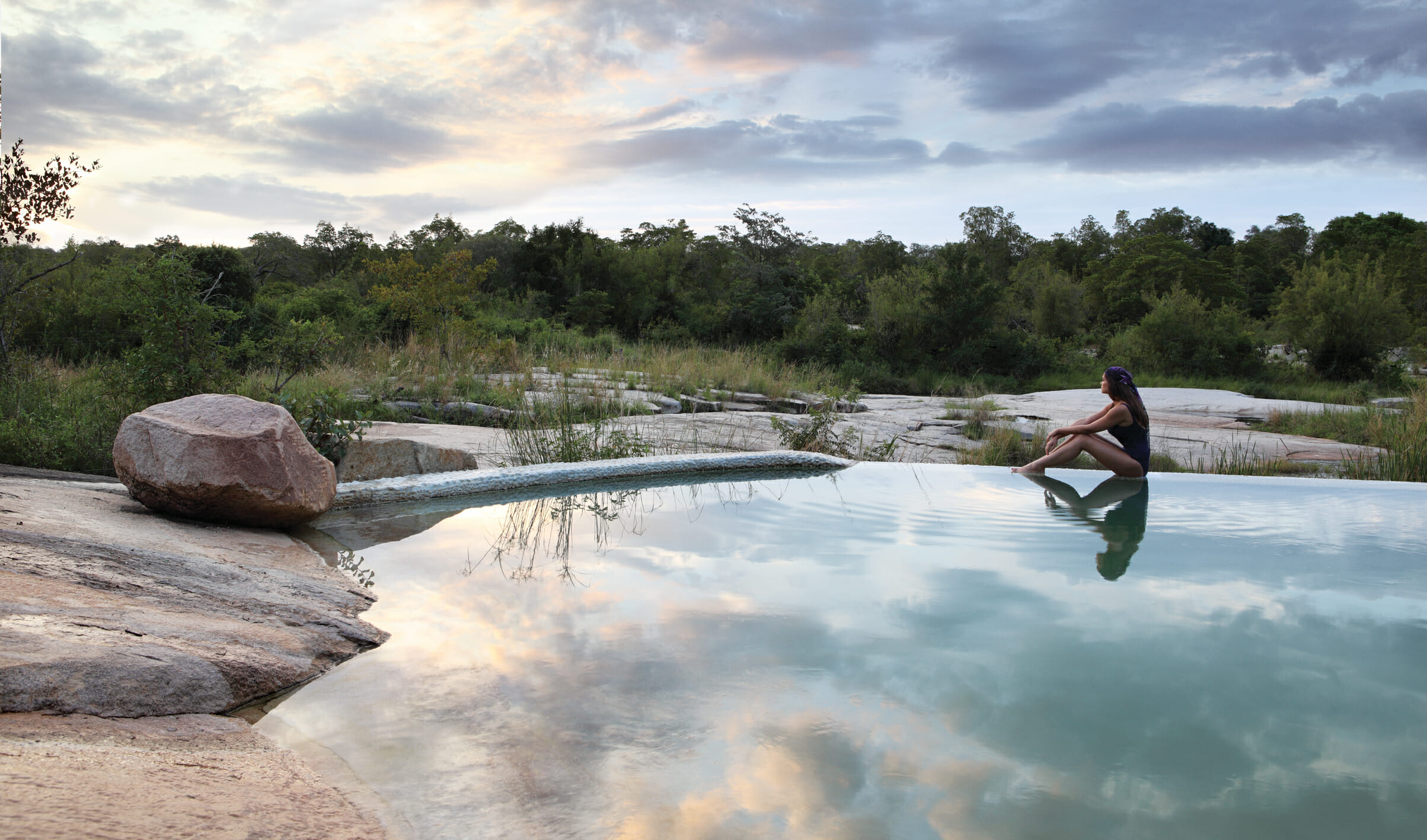
No property is more entwined with the story of the Sabi Sand than Londolozi. The Varty family have run this stretch of the Sand River since 1926, pioneered the leopard habituation that made the reserve's reputation in the 1970s, and turned the word Londolozi, Zulu for protector of all living things, into shorthand for what a family-run safari can be. Private Granite Suites is the smallest and most coveted of the five camps: three suites of glass, steel and slate built into the river boulders, so close to the water that hippo arguments provide the bass line and elephant drink in front of the plunge pools. A private vehicle, guide and tracker come with the booking. The leopard viewing remains the benchmark. Generations of the same maternal lines, the Mashaba and Ndzanzeni females among them, have raised cubs in the traverse, and guides track them with a fluency that comes from knowing the family tree. Five nights leaves room for the rest of Londolozi too: the healing house, the photographic studio where your images are edited properly, and long riverbed walks.Your camps, day by day
Stay 1
Johannesburg to the Granite
Stay 2
The Dynasty
Stay 3
On Foot and In Studio
Stay 4
The Private Vehicle Earns Its Keep
Stay 5
Last Full Day on the Sand
Stay 6
Sand River to Johannesburg
Safari highlights
- Five nights at Private Granite Suites, three suites only
- Built into the boulders of the Sand River
- The Sabi Sand's founding leopard territory
- Private vehicle, guide and tracker included
- The Londolozi photographic studio
- A century of Varty family stewardship
What is included
Included
- 5 nights accommodation, per person sharing
- Return scheduled flights Johannesburg-Londolozi airstrip
- Private game-drive vehicle with dedicated guide and tracker
- All meals, house wines, local spirits, beers and soft drinks
- Twice-daily game drives and guided bush walks
- Use of the photographic studio and camera equipment
- Sabi Sand conservation levies, government taxes and VAT
- Laundry and emergency medical evacuation cover
Not included
- International flights to and from Africa
- Visas and entry permits
- Comprehensive travel and medical insurance
- Healing house treatments
- Premium spirits, champagne and imported wines
- Gratuities for your guide, tracker and camp staff
- Items of a personal nature and telephone calls
Frequently asked questions
How much does a 6-day Londolozi safari cost?
From USD 18,580 per person sharing at Private Granite Suites, rising to about USD 19,280 in peak season. The price covers five nights, a private vehicle with dedicated guide and tracker, all meals and house drinks, walks, the photographic studio and the return Johannesburg-Londolozi flights. International flights to Africa are excluded and quoted separately.
Why is Londolozi famous for leopards?
Because the habituation started here. In the 1970s John Varty and Elmon Mhlongo spent years following a single female, the Mother Leopard, until she accepted the vehicle entirely; her descendants still hold territories in the traverse today, and guides can often name a sighting's grandmother. The result is leopard viewing of unmatched intimacy, cubs, kills and courtship at close range, on most days of a five-night stay.
What is Private Granite Suites like?
The smallest camp at Londolozi: three suites of slate, glass and steel set directly into the granite boulders of the Sand River, each with a heated plunge pool at water level. Elephant and hippo use the river in front of the deck. The camp comes with its own chef and vehicle, and many guests book all three suites and take it as a private camp.
How do you get to Londolozi?
Federal Airlines flies from Johannesburg to Londolozi's own airstrip in about 1 hour 30 minutes, included in the price both ways, with a 20 kg soft-bag limit. Airlink's Skukuza service, about an hour's drive from camp, is the scheduled alternative. Road transfers from Skukuza and charter connections from other reserves are easily arranged.
When is the best time to visit the Sabi Sand?
May to September for the classic dry season: bare bush, big concentrations on the Sand River, cool mornings and the easiest tracking. October to April is the green season, hot, stormy and beautiful, with impala lambs from November and the migrant birds in. The leopard dynasties are active in every month; that is the point of Londolozi.
Is Londolozi in a malaria area?
The Sabi Sand is a low-risk malaria area, with most transmission risk in the warm wet months from November to April; travel clinics generally recommend prophylaxis for that window. Suites are screened and air-conditioned and the camp provides repellent. A yellow fever certificate applies only when arriving from a transmission-risk country.