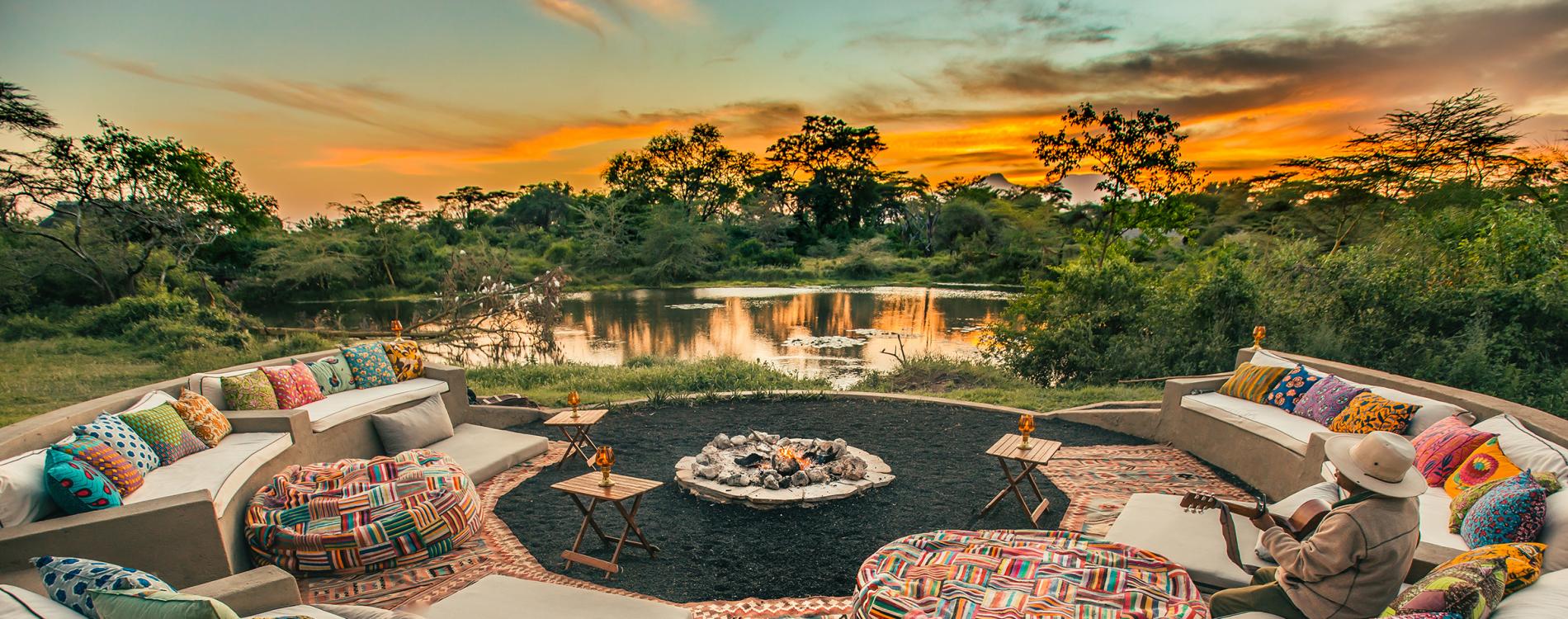
Kenya - Fly-in safari
7-Day Amboseli & Tsavo West Safari
The journey
Updated on 18 September 2026
Amboseli holds the picture everyone has seen, elephant walking a dust plain with Kilimanjaro behind them, and it delivers on it more reliably than almost any wildlife scene in Africa. It also holds Africa's most studied elephant population, watched continuously since 1972, which means the bulls with the enormous tusks have names, ages and family histories the guides can recite. Angama Amboseli sits in the Kimana Sanctuary, a community-owned wildlife corridor between Amboseli and the Chyulu Hills that reopened as a conservancy in 2019. Ten suites, and the big tuskers pass through the sanctuary regularly. Then east to Tsavo West, a completely different landscape: volcanic hills, lava flows and Mzima Springs, where rain that fell on the Chyulus twenty-five years ago surfaces at 250 million litres a day. Finch Hattons is built around its own spring pools, hippo included, with the mountain still on the horizon. June to October is dry, cool and best for the mountain, which clears at dawn. The green months bring storm light and softer rates.Your camps, day by day
Stay 1
Wilson to Kimana
Stay 2
The Big Tuskers
Stay 3
Sanctuary Rules
Stay 4
East to the Lava
Stay 5
Mzima Springs
Stay 6
Ngulia and the Long View
Stay 7
Tsavo to Nairobi
Safari highlights
- Three nights at Angama Amboseli in the Kimana Sanctuary
- Amboseli's big tuskers, studied since 1972
- Kilimanjaro at dawn from both camps
- Three nights at Finch Hattons on its spring pools
- Mzima Springs and the underwater viewing chamber
- Two landscapes, one short flight apart
What is included
Included
- 6 nights accommodation, per person sharing
- Light-aircraft flights Wilson-Amboseli, Amboseli-Tsavo and Tsavo-Wilson
- Road transfers between airstrips and camps
- All meals, house wines, local spirits, beers and soft drinks
- Twice-daily game drives at both camps
- A Mzima Springs excursion and guided nature walks
- Kimana Sanctuary and Tsavo West park fees
- Laundry and emergency medical evacuation cover
Not included
- International flights to and from Africa
- Kenya electronic travel authorisation and entry permits
- Comprehensive travel and medical insurance
- Spa treatments and helicopter excursions
- Premium spirits, champagne and imported wines
- Gratuities for guides, drivers and camp staff
- Items of a personal nature and telephone calls
Frequently asked questions
How much does a 7-day Amboseli and Tsavo safari cost?
From USD 13,880 per person sharing, rising to about USD 14,780 in peak season. That covers six nights at Angama Amboseli and Finch Hattons, all meals and house drinks, twice-daily game drives, the Mzima Springs excursion, sanctuary and park fees, and all three internal light-aircraft flights. International flights to Africa are excluded and quoted separately.
When can you actually see Kilimanjaro?
Most reliably at dawn and again briefly at dusk, when the cloud that builds over the mountain through the day thins out. June to October gives the clearest run; January and February are also good. The mountain often disappears entirely between about ten in the morning and four in the afternoon, so the early game drive is the one that matters.
What are Amboseli's big tuskers?
Elephant bulls whose tusks reach the ground, each weighing over 45 kilograms a side. Fewer than forty are thought to remain in Africa and a meaningful share live in the Amboseli ecosystem, protected by continuous research since 1972 and by the community conservancies around the park. Guides know them individually, which turns a sighting into a biography.
What is the Kimana Sanctuary?
A community-owned wildlife corridor of about 5,700 acres linking Amboseli to the Chyulu Hills and Tsavo, leased from Maasai landowners and relaunched as a conservancy in 2019. It carries the same elephant traffic as the national park with a fraction of the vehicles, and it allows night drives and walking, which Amboseli National Park does not.
Are international flights included?
No. International flights to and from Africa are excluded and booked separately, arriving at Nairobi's Jomo Kenyatta airport. All internal flying is included and operates from Wilson Airport across the city, so allow about an hour to transfer between the two. Light aircraft enforce a 15 kg soft-bag luggage limit per person.
Is this a malaria area?
Both Amboseli and Tsavo are malaria areas, with risk highest during and after the rains in April, May and November. Prophylaxis is recommended for the whole trip; see a travel clinic about six weeks before you fly. Both camps supply nets and repellent, and a yellow fever certificate is needed only if you arrive from a transmission-risk country.