South Africa - Fly-in safari
7-Day Kapama & Thornybush Safari
The journey
Updated on 18 September 2026
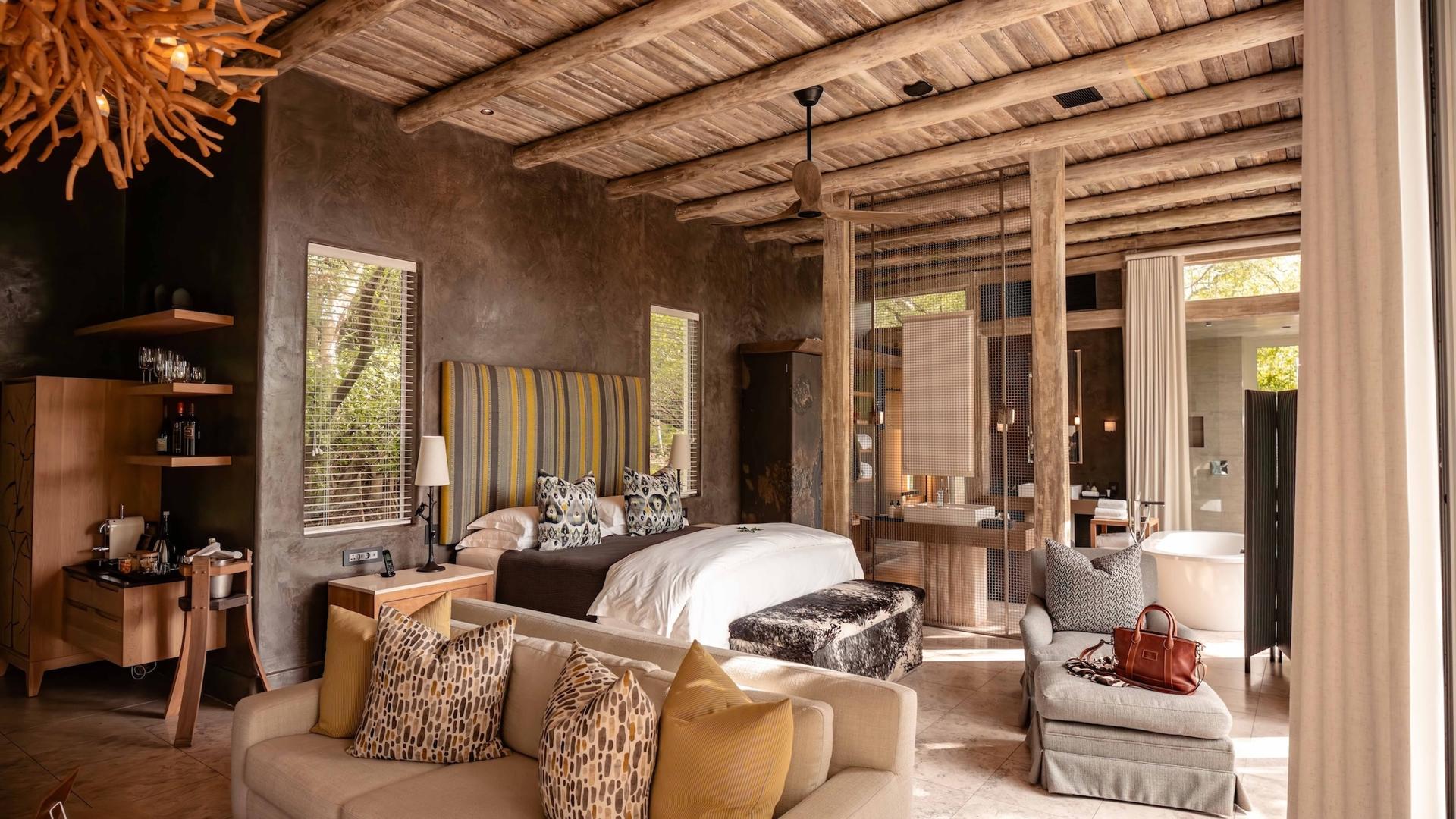
The reserves west of the Kruger around Hoedspruit get less ink than the Sabi Sand and deliver a quieter version of the same lowveld: fewer vehicles, wider traverses, and lodges that compete hard on comfort. This week pairs two of the best. Kapama Karula, the private reserve's flagship, lines the Klaserie River with villas of glass and steel, each behind its own pool, and adds the region's signature extra: hot-air ballooning over the bush at dawn. Kapama's open clearings also make it one of the lowveld's most reliable cheetah territories. A short road transfer then moves you into the Thornybush Private Nature Reserve, now open to the Greater Kruger system, and to Saseka Tented Camp, ten sculptural tents of canvas, timber and curved steel above the Monwana riverbed. The bush here runs thicker, the leopard viewing sharper, and night drives roll home under a spotlight. May to September is the classic dry season; the green months trade thicker bush for storm light, newborn impala and softer rates. Both camps hold their standard all year.Your camps, day by day
Stay 1
Johannesburg to the Klaserie
Stay 2
Cheetah Ground
Stay 3
The Balloon Morning
Stay 4
Across to the Thornybush
Stay 5
Leopards of the Monwana
Stay 6
The Open System
Stay 7
Thornybush to Johannesburg
Safari highlights
- Three nights in a glass-walled villa at Kapama Karula
- Three nights at Saseka Tented Camp in the Thornybush
- Cheetah on Kapama's open clearings
- Thornybush leopard country, open to the Greater Kruger
- Optional dawn hot-air balloon over the bush
- One short transfer, no wasted days
What is included
Included
- 6 nights accommodation, per person sharing
- Return scheduled flights Johannesburg-Hoedspruit in economy class
- Road transfers Eastgate-Kapama, Kapama-Saseka and Saseka-Eastgate
- All meals, house wines, local spirits, beers and soft drinks
- Twice-daily game drives and guided bush walks at both camps
- Kapama and Thornybush conservation levies, government taxes and VAT
- Laundry and emergency medical evacuation cover
Not included
- International flights to and from Africa
- Visas and entry permits
- Comprehensive travel and medical insurance
- Hot-air balloon flight and spa treatments
- Premium spirits, champagne and imported wines
- Gratuities for guides, trackers and camp staff
- Items of a personal nature, curios and telephone calls
Frequently asked questions
How much does a 7-day Kapama and Thornybush safari cost?
From USD 13,080 per person sharing, rising to about USD 13,780 in peak season. That includes six nights at Kapama Karula and Saseka Tented Camp, all meals and house drinks, twice-daily game drives, walks, all road transfers and the return Johannesburg-Hoedspruit flights. The balloon flight, spa treatments and international flights to Africa are excluded.
How do Kapama and the Thornybush differ?
Kapama is a large fenced private reserve of open savanna and riverine bush, superb for cheetah, elephant and relaxed general game, with the balloon as its party piece. The Thornybush dropped its fences into the Greater Kruger system, so its animals move freely to and from the national park, and its thicker bush is classic leopard country. Doing both gives the lowveld's two textures in one week.
What is Saseka Tented Camp like?
Ten tents, though the word undersells them: sculptural suites of canvas, glass and curved timber on decks above the Monwana riverbed, each with a plunge pool, indoor and outdoor showers and air conditioning. The camp is part of The Thornybush Collection's top tier, with guide-and-tracker teams, night drives and walking safaris all standard. Couples dominate the guest book, and it is easy to see why.
When is the best time to go?
May to September for the classic dry-season safari: bare bush, game packed along the rivers and waterholes, cool bright mornings, and the best ballooning conditions. November to March is green season, hot with afternoon storms, newborn antelope everywhere and rates at their lowest. April and October are the pleasant hinges between the two.
Are international flights included?
No. International flights to and from Africa are excluded and booked separately, routing through Johannesburg, which the itinerary's included Airlink flights connect to Hoedspruit's Eastgate Airport in about 55 minutes each way. Eastgate also has a direct Cape Town service if you want to extend the trip south afterwards.
Is this a malaria area?
The Hoedspruit reserves are a low-risk malaria zone, with transmission most likely in the wet months from November to April; most travel clinics advise prophylaxis for that period. Both camps have screened, air-conditioned rooms and supply repellent. A yellow fever certificate is only required if you arrive from a country with transmission risk.