Kenya - Fly-in safari
7-Day Kichwa Tembo & Bateleur Safari
The journey
Updated on 18 September 2026
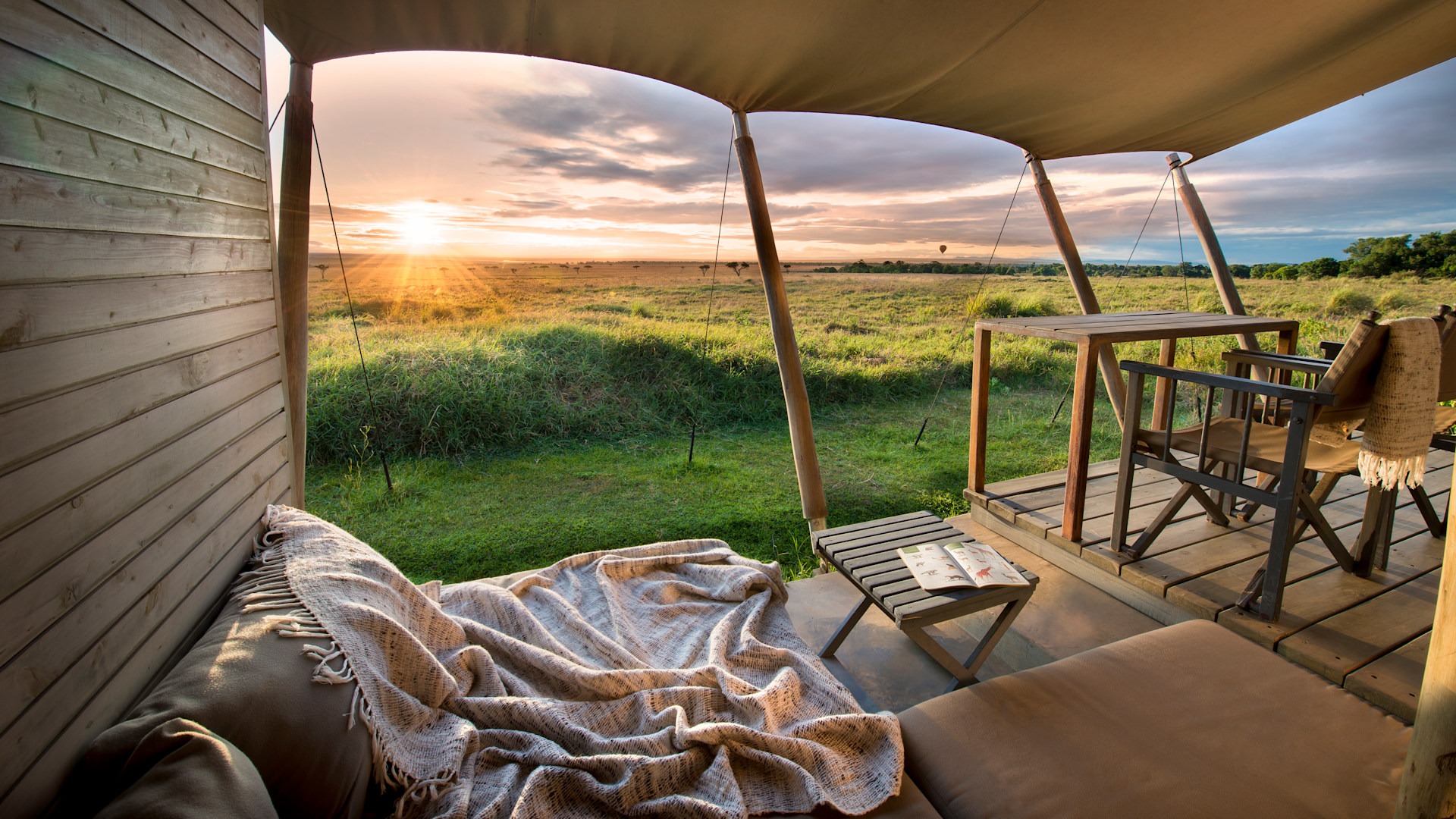
The western edge of the Masai Mara is the part most itineraries skip, and it is the part the guides quietly prefer. andBeyond holds a private concession here at the foot of the Oloololo Escarpment, bordering the Mara Triangle, with riverine forest behind camp and open plain in front. Game moves freely between the two, and the reserve's celebrated crowds are largely on the other side of the river. Bateleur Camp opens the week, eighteen tents in the escarpment's forest shade with butler service and a distinctly 1920s temperament, all campaign furniture and brass. Three nights there, then a short move onto the plain to Kichwa Tembo, larger and more sociable, with a pool facing out over the grass and elephant that wander through most afternoons. The drives cross into the Mara Triangle, where vehicle numbers are capped and off-road driving is banned. From July to October the migration herds pour across the Mara River within reach; the rest of the year the resident lion, leopard, cheetah and elephant carry the days on their own.Your camps, day by day
Stay 1
Wilson to the Escarpment Forest
Stay 2
Into the Triangle
Stay 3
On Foot and Among the Maasai
Stay 4
Down to the Plain
Stay 5
The River in Season
Stay 6
Last Full Day on the Grass
Stay 7
Mara to Nairobi
Safari highlights
- Three nights at Bateleur Camp in the escarpment forest
- Three nights at Kichwa Tembo out on the plain
- A private concession bordering the Mara Triangle
- Migration river crossings from July to October
- Butler service and 1920s campaign style at Bateleur
- The Mara's quiet western flank, away from the crowds
What is included
Included
- 6 nights accommodation, per person sharing
- Return light-aircraft flights Wilson-Kichwa Tembo airstrip
- Road transfers between the airstrip and both camps
- All meals, house wines, local spirits, beers and soft drinks
- Twice-daily game drives in the concession and the reserve
- Guided nature walks and a Maasai village visit
- Masai Mara reserve fees, government taxes and VAT
- Laundry and emergency medical evacuation cover
Not included
- International flights to and from Africa
- Kenya electronic travel authorisation and entry permits
- Comprehensive travel and medical insurance
- Balloon safaris over the Mara
- Premium spirits, champagne and imported wines
- Gratuities for guides, trackers and camp staff
- Items of a personal nature and telephone calls
Frequently asked questions
How much does a 7-day Kichwa Tembo and Bateleur safari cost?
From USD 11,880 per person sharing, rising to about USD 15,280 in the July to October peak. That covers six nights across both camps, all meals and house drinks, twice-daily game drives, walks, a village visit, Masai Mara reserve fees and the return light-aircraft flights from Wilson Airport. International flights to Africa are excluded and quoted separately.
How do Bateleur and Kichwa Tembo differ?
Bateleur is the small, formal one: eighteen tents tucked into riverine forest at the escarpment's foot, with butlers, campaign furniture and a hush to it. Kichwa Tembo is larger and livelier, sitting out on the open plain with a pool and a wide deck where elephant regularly wander past. Splitting the week gives you forest quiet and plains theatre without changing concessions.
When can you see the migration river crossings?
Roughly July to October, when the wildebeest herds move up from the Serengeti and cross the Mara River, often in the western sector within reach of these camps. Crossings cannot be scheduled: herds gather at a bank for hours, then go, or turn back. Guides position early and wait. September is typically the most reliable single month.
What is the advantage of a private concession?
andBeyond's concession sits outside the reserve proper, so its rules are the camp's own: guided walking is permitted, drives can go off the beaten tracks, and the only vehicles are from these two camps. Drives cross into the Mara Triangle for the river and the big cats, then come back to ground where you may not see another car all evening.
Are international flights included?
No. International flights to and from Africa are excluded and booked separately, arriving at Nairobi's Jomo Kenyatta airport. Included are the return light-aircraft flights from Wilson Airport, about 45 minutes each way, with a 15 kg soft-bag luggage limit per person. Allow around an hour to transfer between the two Nairobi airports.
Is the Masai Mara a malaria area?
Yes. The Mara is a malaria area year-round, with risk highest during and after the rains in April, May and November. Prophylaxis is recommended for every visit; arrange it with a travel clinic about six weeks before departure. Both camps supply mosquito nets and repellent. A yellow fever certificate is required only if arriving from a transmission-risk country.