Kenya - Fly-in safari
7-Day Mara & Lewa Safari
The journey
Updated on 18 September 2026
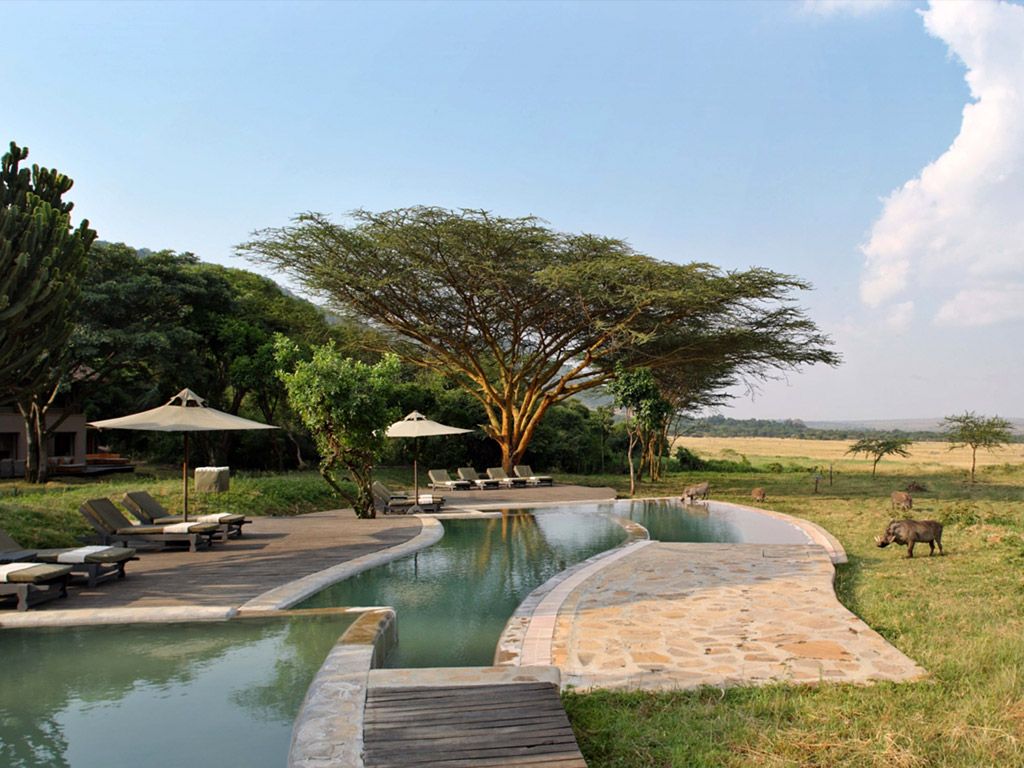
This is the most efficient serious safari Kenya offers: the Masai Mara for the big cats and the migration, then Lewa for the rhino and the northern species, with one short flight between them and no filler days. Kichwa Tembo holds andBeyond's private concession on the Mara's western flank, at the foot of the Oloololo Escarpment. Drives cross into the Mara Triangle, the reserve's managed third where vehicle numbers are capped, and from July to October the migration crosses the river within reach. Back in the concession the camp's own ground allows walking and quieter evenings. Lewa is the second half and the reason the trip works. A 62,000-acre conservancy and UNESCO World Heritage site running into the Mount Kenya foothills, it protects black and white rhino and roughly eleven per cent of the world's Grevy's zebra. Lewa Safari Camp is Elewana's unpretentious base there, twelve tents with a pool and a view down to the plains. June to October is dry and prime. The green months trade some visibility for newborn game, migrant birds and noticeably softer rates.Your camps, day by day
Stay 1
Wilson to the Mara
Stay 2
The Mara Triangle
Stay 3
Concession Ground
Stay 4
Across to Lewa
Stay 5
Rhino Country
Stay 6
Walks, Night Drives and the Mountain
Stay 7
Lewa to Nairobi
Safari highlights
- Three nights at Kichwa Tembo on the Mara's western plain
- Drives into the capped-vehicle Mara Triangle
- Migration river crossings from July to October
- Three nights at Lewa Safari Camp on the conservancy
- Black rhino tracking and Grevy's zebra
- One short flight links the two, no wasted days
What is included
Included
- 6 nights accommodation, per person sharing
- Light-aircraft flights Wilson-Mara, Mara-Lewa and Lewa-Wilson
- Road transfers between airstrips and camps
- All meals, house wines, local spirits, beers and soft drinks
- Twice-daily game drives at both camps
- Guided walks and night drives on Lewa
- Masai Mara reserve fees and Lewa conservancy fees
- Laundry and emergency medical evacuation cover
Not included
- International flights to and from Africa
- Kenya electronic travel authorisation and entry permits
- Comprehensive travel and medical insurance
- Balloon safaris over the Mara
- Premium spirits, champagne and imported wines
- Gratuities for guides, drivers and camp staff
- Items of a personal nature and telephone calls
Frequently asked questions
How much does a 7-day Mara and Lewa safari cost?
From USD 8,580 per person sharing, rising to about USD 10,080 in the July to October peak, which makes it one of the best-value ways to combine Kenya's two best habitats. It covers six nights at Kichwa Tembo and Lewa Safari Camp, all meals and house drinks, game drives, walks, reserve and conservancy fees and all three internal flights. International flights to Africa are excluded.
Why combine the Mara with Lewa rather than staying in one?
Because they hold different animals and follow different rules. The Mara delivers lion, cheetah, leopard and, in season, the migration, but as a national reserve it bans walking and night driving. Lewa is a private conservancy with black rhino, Grevy's zebra, reticulated giraffe and gerenuk, where guided walks and spotlit night drives are standard. Six nights split between them covers far more than six nights in either.
When can you see the migration?
The herds are generally in the Masai Mara from July to October, with Mara River crossings most likely in August and September. Crossings are unpredictable by nature: animals mass on a bank, wait, and either commit or turn back. Guides position early and stay put. Outside those months the Mara's resident predators and plains game carry the drives comfortably.
What is special about Lewa?
Lewa turned a cattle ranch into a 62,000-acre conservancy that now anchors rhino protection in northern Kenya and became a UNESCO World Heritage site in 2013. It holds significant black and white rhino populations and around eleven per cent of the world's endangered Grevy's zebra. Bed numbers are capped, so drives are quiet, and conservancy fees fund the anti-poaching teams and community schools directly.
Are international flights included?
No. International flights to and from Africa are excluded and booked separately, arriving at Nairobi's Jomo Kenyatta airport. All flying inside Kenya is included and operates from Wilson Airport across the city, so allow about an hour for the transfer between airports. Light aircraft carry a 15 kg soft-bag luggage limit per person.
Is this a malaria area?
The Masai Mara is malarial and prophylaxis is recommended for that leg. Lewa sits above 1,700 metres, where risk is low but not absent, so most clinics advise cover for the whole trip. Speak to a travel clinic about six weeks before departure. Both camps supply nets and repellent, and a yellow fever certificate is needed only if you arrive from a transmission-risk country.