Kenya - Fly-in safari
7-Day Mara North Conservancy Safari
The journey
Updated on 18 September 2026
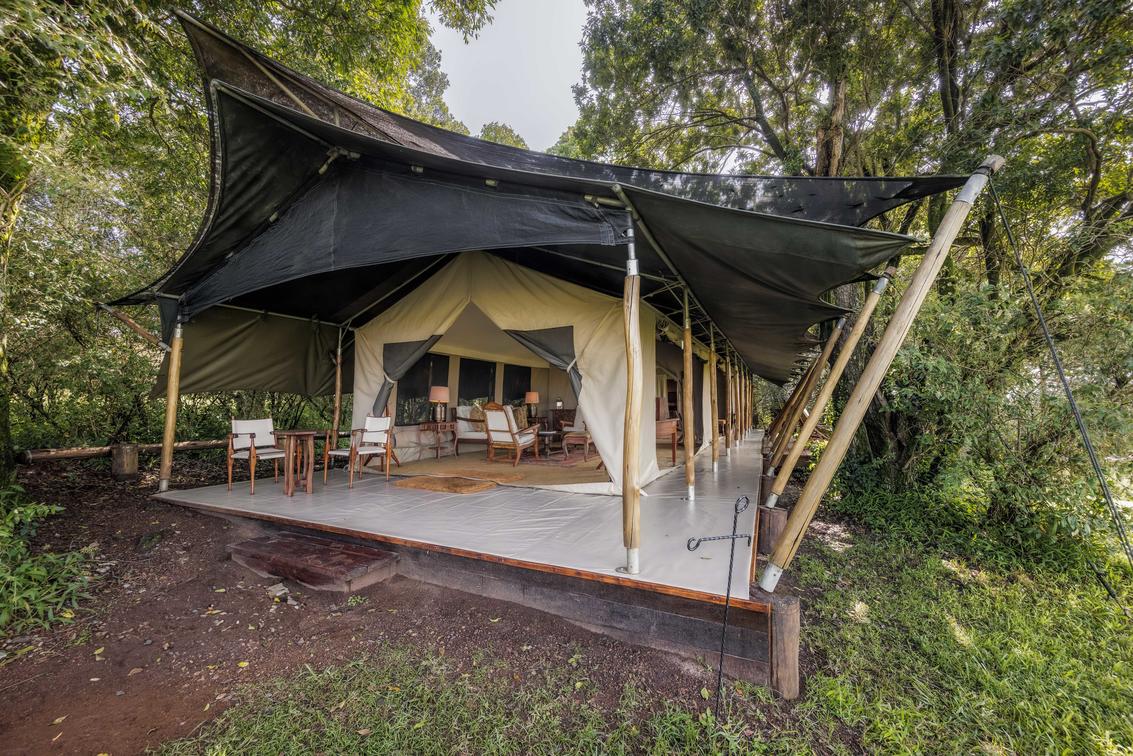
The conservancies that ring the Masai Mara are leased from Maasai landowners and run to strict limits: a set number of beds per acre, a cap on vehicles at a sighting, and rules the reserve itself cannot enforce. The wildlife moves freely across the boundary. The crowds do not. This week takes two of the best. Elephant Pepper Camp sits in Mara North Conservancy, 74,000 acres held by around eight hundred Maasai families and shared by a dozen camps, with a classic canvas feel and no permanent structures at all. Then Mara Plains, Great Plains' small camp in the Olare Motorogi Conservancy, where guest density is among the lowest in the whole ecosystem and the lion viewing is exceptional. Both allow what the national reserve prohibits: guided walking, off-road driving to a sighting and spotlit night drives. Drives can still cross into the reserve for the Mara River and, from July to October, the migration crossings. July to October is peak for the herds; December to March is green, quiet and cheaper, with cubs everywhere and superb light after the afternoon storms.Your camps, day by day
Stay 1
Wilson to Mara North
Stay 2
74,000 Acres to Yourselves
Stay 3
South to Olare Motorogi
Stay 4
Lion Ground
Stay 5
The Reserve and the River
Stay 6
The Conservancy, Your Way
Stay 7
Conservancy to Nairobi
Safari highlights
- Two nights at Elephant Pepper Camp in Mara North
- Four nights at Mara Plains in Olare Motorogi
- Among the lowest guest densities in the Mara ecosystem
- Night drives, walking and off-road driving permitted
- Conservancy fees paid direct to Maasai landowners
- Reserve access for the river and the migration
What is included
Included
- 6 nights accommodation, per person sharing
- Return light-aircraft flights Wilson-Mara conservancy airstrips
- Road transfers and the inter-camp transfer
- All meals, house wines, local spirits, beers and soft drinks
- Twice-daily game drives, night drives and guided walks
- Mara North and Olare Motorogi conservancy fees
- Masai Mara reserve fees on excursion days
- Laundry and emergency medical evacuation cover
Not included
- International flights to and from Africa
- Kenya electronic travel authorisation and entry permits
- Comprehensive travel and medical insurance
- Balloon safaris over the Mara
- Premium spirits, champagne and imported wines
- Gratuities for guides, trackers and camp staff
- Items of a personal nature and telephone calls
Frequently asked questions
How much does a 7-day Mara conservancy safari cost?
From USD 13,780 per person sharing, rising to about USD 15,480 in the July to October peak. That covers six nights at Elephant Pepper Camp and Mara Plains, all meals and house drinks, twice-daily game drives, night drives and walks, conservancy and reserve fees, and the return light-aircraft flights from Wilson Airport. International flights to Africa are excluded and quoted separately.
What is the difference between a conservancy and the reserve?
The Masai Mara National Reserve is public land: anyone with a park ticket can drive it, vehicles are not capped at sightings, and walking and night driving are banned. The conservancies are private leases from Maasai landowners, with strict bed and vehicle limits, off-road access to sightings, night drives and walking. Same animals, roughly a tenth of the audience.
Who benefits from the conservancy fees?
Mara North is leased from roughly eight hundred Maasai families who receive monthly lease payments per parcel of land, which gives them a direct income from keeping it wild rather than fencing or grazing it. Olare Motorogi works on the same model. Your conservancy fee is a line item in that payment, which is why it appears separately on every Kenyan quote.
Can you still see the migration from the conservancies?
Yes. The herds move through the conservancies as well as the reserve, and camps run full-day excursions into the reserve for the Mara River crossings between July and October. Many guests find the conservancy grazing itself fills with wildebeest and zebra in those months, so you get the spectacle without the vehicle scrum at the crossing points.
Are international flights included?
No. International flights to and from Africa are excluded and booked separately, arriving at Nairobi's Jomo Kenyatta airport. Included are the return light-aircraft flights from Wilson Airport to the conservancy airstrips, about 45 minutes each way, with a 15 kg soft-bag limit. Allow roughly an hour to transfer between Nairobi's two airports.
Is the Mara a malaria area?
Yes, year-round, with risk highest during and after the rains in April, May and November. Prophylaxis is recommended for every visit and should be arranged with a travel clinic about six weeks before departure. Both camps provide nets and repellent. A yellow fever certificate is required only if you arrive from a country with transmission risk.