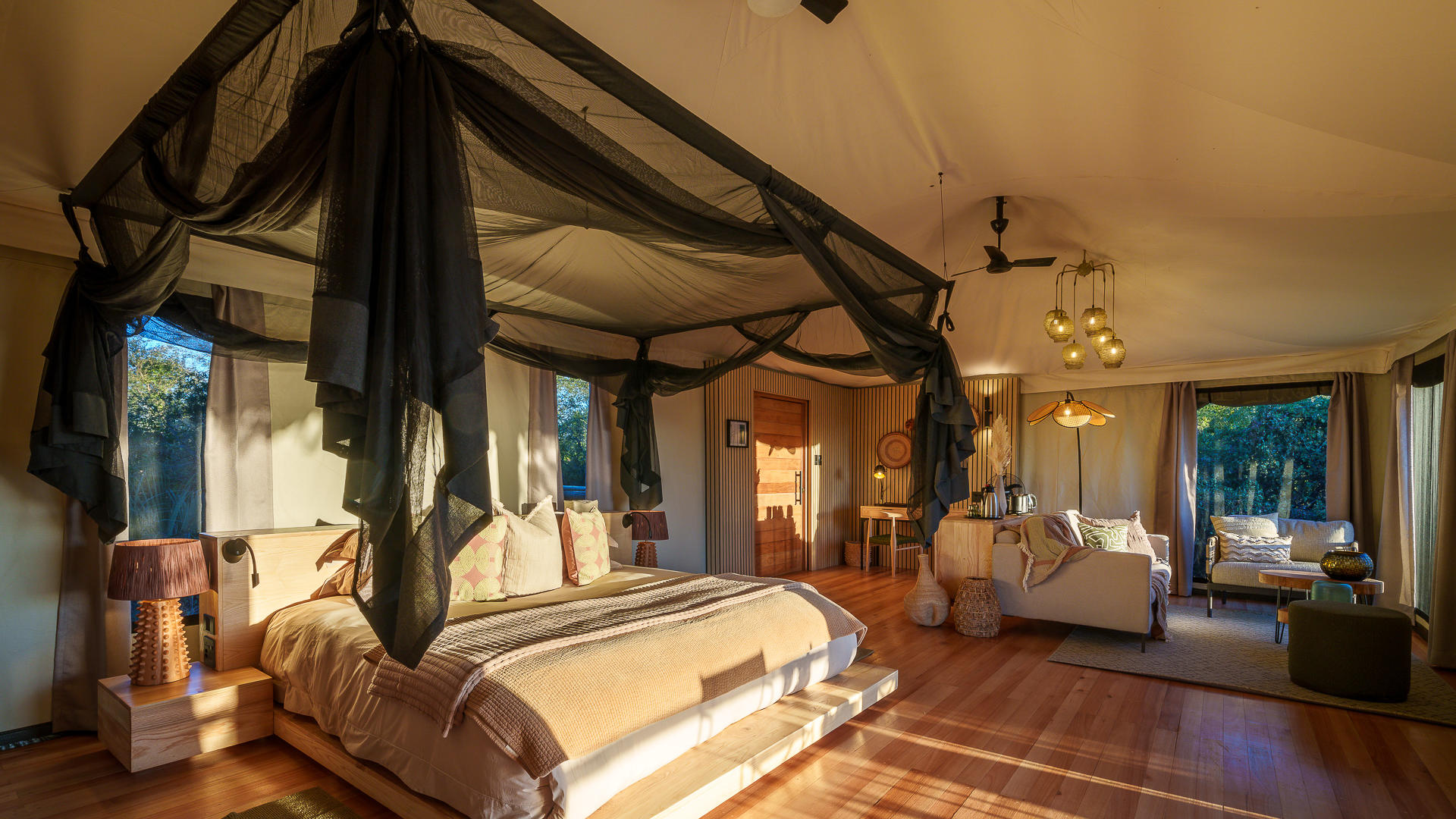
Botswana - Fly-in safari
7-Day Okavango Delta Fly-In Safari
The journey
Updated on 18 September 2026
The Okavango is two ecosystems layered on top of each other, and this safari shows you both. Three nights at Jao Camp put you in the water world of the northern Delta, where mokoro and boat replace the vehicle and the days move at the pace of the current. Then a fifteen-minute flight south to Hunda Island, the largest area of dry land in the reserve and the densest predator country in it, where Tubu Tree Camp sits on raised decks under old trees. There are no roads between these places. Everything moves by small aircraft, and the flights are half the pleasure.Your camps, day by day
Stay 1
Into the Delta
Stay 2
Water and land at Jao
Stay 3
The rhythm of the reserve
Stay 4
South to Hunda Island
Stay 5
Predator country
Stay 6
A last full day
Stay 7
Out
Safari highlights
- Three nights water-based at Jao Camp, three nights in leopard country at Tubu Tree
- Mokoro and motorboat safaris through the Delta channels
- Hunda Island is one of northern Botswana's best areas for leopard
- Private 60,000-hectare concession - no day visitors, no crowds
- All light-aircraft transfers included
What is included
Included
- Six nights accommodation, per person sharing
- All meals and drinks except premium wines and champagne
- Two guided activities daily - game drives, mokoro, boating and walking
- All park and reserve fees
- Jao Reserve community levy
- Regional flight Johannesburg-Maun return
- All light-aircraft transfers within the Delta
- Laundry and emergency medical evacuation cover
Not included
- International flights to and from Africa
- Botswana visa where applicable
- Travel insurance (mandatory)
- Premium wines, champagne and imported spirits
- Gratuities
- Items of a personal nature
Frequently asked questions
How much does an Okavango Delta fly-in safari cost?
This 7-day fly-in safari starts at USD 21,280 per person sharing, staying at Jao Camp and Tubu Tree Camp. Green-season departures between January and March start at USD 13,680. The price includes all camps, meals, drinks, activities, park fees, the regional flight from Johannesburg to Maun and all light-aircraft transfers within the Delta. International flights to Africa are not included.
When is the best time to visit the Okavango Delta?
May to October is the classic season - dry, cool mornings, thinning vegetation and animals concentrating around water. Floodwaters peak between June and August, which is when mokoro and boating are at their best. January to March is green season: dramatic skies, newborn animals, exceptional birding, fewer people and substantially lower rates.
Do I need to fly between camps in the Okavango Delta?
Yes. There are no roads connecting the private concessions. Flights are 15 to 45 minutes in six- to twelve-seat Cessnas. Baggage is limited to one soft bag of 20kg including hand luggage and camera equipment. Hard-shell suitcases cannot be carried.
Is the Okavango Delta good for the Big Five?
Elephant, buffalo, lion and leopard are all present and regularly seen, and Hunda Island in particular is known for leopard. Rhino are the exception - numbers in the Delta are low, so a Big Five sighting is not guaranteed. If seeing rhino matters, we would add a night in a reserve where they are reliably found.
How many nights do I need in the Okavango Delta?
Six nights across two camps is the sweet spot. Fewer than three nights in one camp and you spend a disproportionate amount of time in transit. Two contrasting camps - one water-based, one land-based - shows you both halves of the ecosystem.
Is the Okavango Delta suitable for children?
Jao Camp and Tubu Tree accept children from 6 years, with family units available. Children under 12 generally require a private vehicle, quoted separately. For families with younger children we would recommend a different camp selection.