South Africa - Fly-in safari
7-Day Phinda & Kwandwe Big Five Safari
The journey
Updated on 18 September 2026
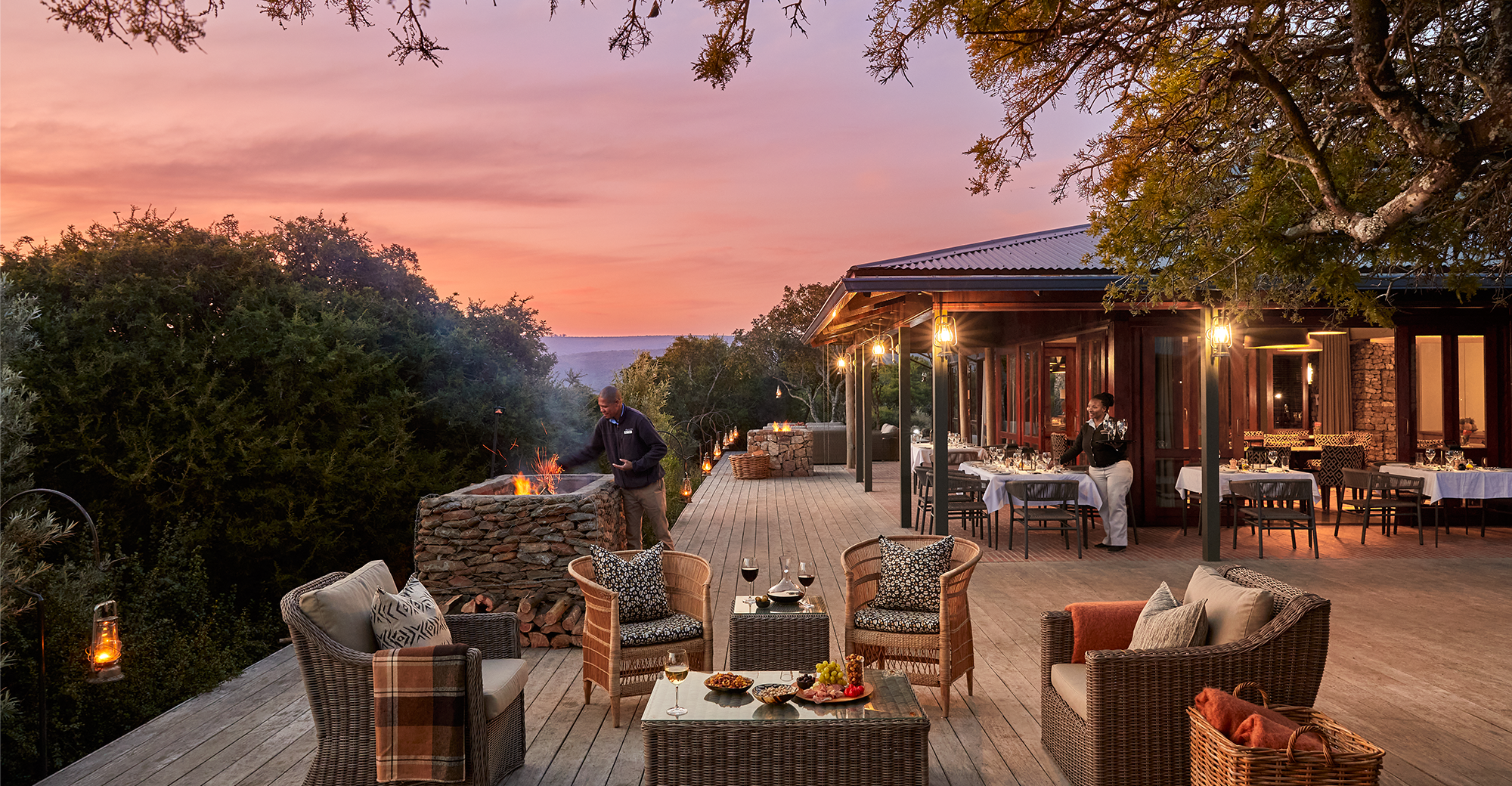
South Africa's best conservation stories are its rebuilt reserves, and this safari strings together two of the finest. Phinda came first: 30,000 hectares of northern KwaZulu-Natal returned from farmland to bush by andBeyond in the early 1990s, now habitat for cheetah that hunt in daylight, black rhino in the thickets, and the rare dry sand forest with its tiny suni antelope. Vlei Lodge, six thatched suites with plunge pools on the forest edge, is its most intimate address. Then a flight south swaps subtropical Maputaland for the Eastern Cape's big folded valleys. Kwandwe holds 22,000 private hectares along 30 kilometres of the Great Fish River, carrying all of the Big Five in malaria-free country, with guest numbers so low that the ratio works out around 450 hectares per visitor. Ecca Lodge is its contemporary heart: six suites, plunge pools, and a guiding culture that favours off-road tracking, walking and time at sightings. Between them you cover seven habitats, two climates and most of what South African conservation has learned in thirty years, at a price the famous lowveld names cannot approach.Your camps, day by day
Stay 1
Johannesburg to Phinda
Stay 2
Cheetah and Sand Forest
Stay 3
Black Rhino Morning
Stay 4
South to the Great Fish
Stay 5
450 Hectares Each
Stay 6
The Valley in Full
Stay 7
Kwandwe to Johannesburg
Safari highlights
- Three nights at Phinda Vlei Lodge on the sand forest
- Daylight cheetah hunts and black rhino tracking
- Three nights at Kwandwe Ecca Lodge, malaria-free
- 22,000 hectares and 30 km of the Great Fish River
- Roughly 450 hectares per guest at Kwandwe
- Two restored reserves, one conservation story
What is included
Included
- 6 nights accommodation, per person sharing
- Scheduled flight Johannesburg-Phinda airstrip
- Flights Phinda-Gqeberha via scheduled connections
- Road transfer Gqeberha-Kwandwe and return, about 1.5 hours each way
- All meals, house wines, local spirits, beers and soft drinks
- Twice-daily game drives, guided walks and rhino tracking
- Phinda and Kwandwe conservation levies, government taxes and VAT
- Laundry and emergency medical evacuation cover
Not included
- International flights to and from Africa
- Visas and entry permits
- Comprehensive travel and medical insurance
- Premium spirits, champagne and imported wines
- Specialist conservation experiences such as rhino notching
- Gratuities for guides, trackers and lodge staff
- Items of a personal nature, curios and telephone calls
Frequently asked questions
How much does a 7-day Phinda and Kwandwe safari cost?
From USD 10,280 per person sharing, rising to about USD 11,480 in peak season. That covers six nights at Vlei Lodge and Ecca Lodge, all meals and house drinks, twice-daily drives, walks and tracking, conservation levies and the internal flights and transfers linking Johannesburg, Phinda and the Eastern Cape. International flights to Africa are excluded and quoted separately.
Why combine Phinda and Kwandwe?
Because they complement rather than repeat. Phinda is subtropical: sand forest, marsh and palmveld, cheetah hunting in daylight, black rhino, superb birding. Kwandwe is the Eastern Cape: big open valley country on the Great Fish River, malaria-free, with extraordinary space per guest and strong lion and rhino viewing. Two climates, two habitats, and the whole Big Five twice over.
Is Kwandwe really malaria-free?
Yes. The Eastern Cape lies entirely outside South Africa's malaria zone, so the Kwandwe leg needs no prophylaxis in any season. Phinda is a low-risk area where clinics recommend tablets mainly for the November to April wet months. Travellers who want to avoid malaria medication altogether often run this itinerary in the southern winter.
What is Ecca Lodge like?
Contemporary and easy-going: six suites of glass, timber and colour on a ridge above a wooded valley, each with a plunge pool and outdoor shower. Kwandwe's low guest density means drives rarely meet another vehicle, guides go off-road for sightings and walking is encouraged. The lodge is one of the Eastern Cape's most family-friendly, with a dedicated kids' programme.
When is the best time for this combination?
April to September suits both reserves: dry, mild, thin bush and concentrated game, with Kwandwe's valley mornings crisp enough for blankets on the vehicle. October to March is greener and hotter, excellent for birding and newborn game, and Phinda's turtle-nesting coast is an easy add-on in midsummer. Both reserves guide well year-round.
Are international flights included?
No. International flights to and from Africa are excluded and booked separately, arriving and departing Johannesburg in the standard routing. All the internal legs, the scheduled flight into Phinda, the connections south to Gqeberha and the Kwandwe road transfers, are included in the published price.