Tanzania - Fly-in safari
7-Day Singita Grumeti Safari
The journey
Updated on 18 September 2026
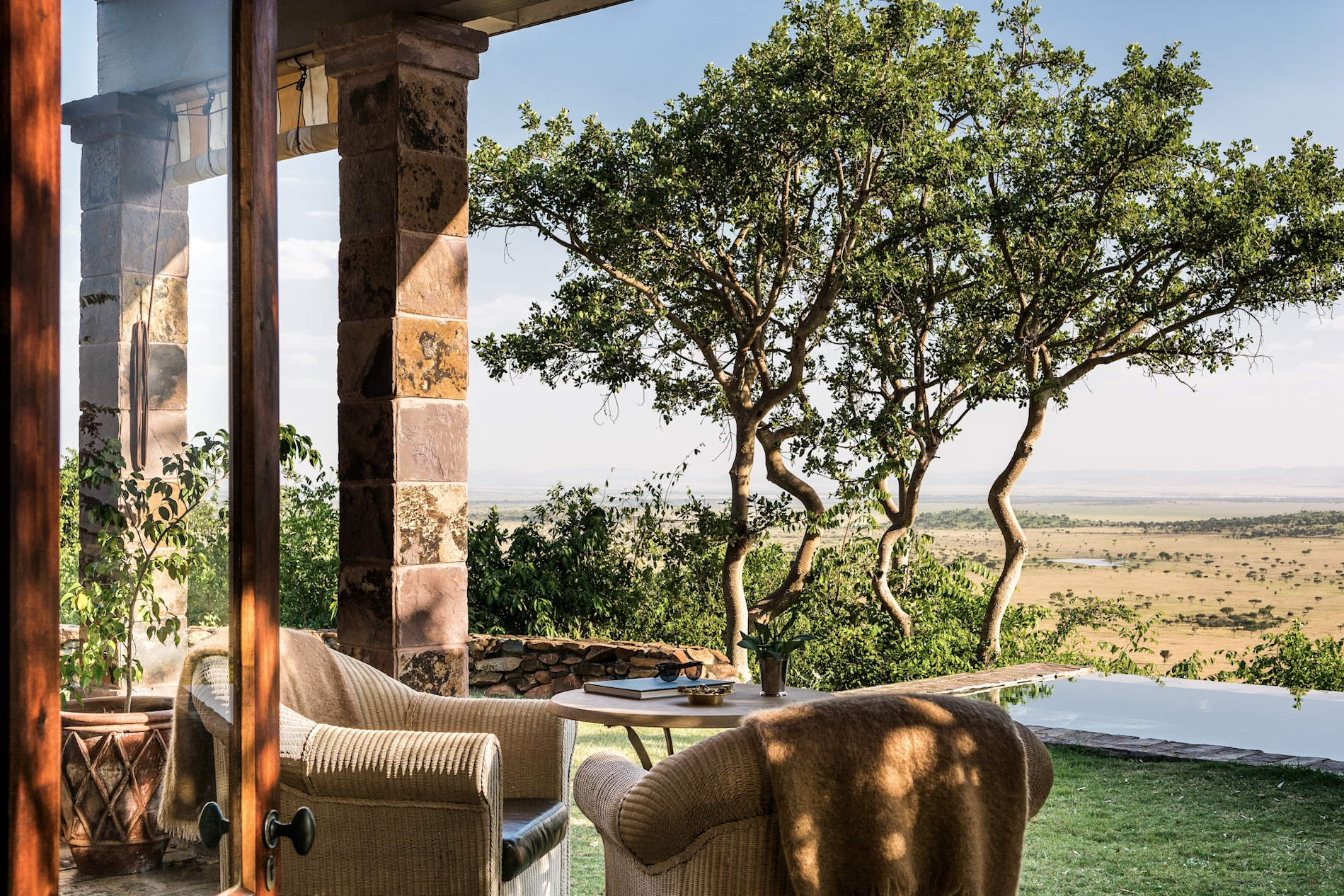
The Grumeti Reserve is 350,000 acres on the western corridor of the Serengeti, given protected status by the Tanzanian government in 1994 and run since 2006 by Singita on behalf of the Grumeti Fund. No other operator works here. There are no public roads and no minibus circuits, and on most days there is no vehicle at a sighting but your own. The Fund reintroduced nine East African black rhino in 2019, and its anti-poaching teams have turned a depleted hunting block into some of the best-stocked game country in Tanzania. Six nights split two ways gives you the contrast. Sasakwa Lodge stands high on Sasakwa Hill in the manner of an Edwardian manor house, nine cottages with parquet floors, fireplaces and private infinity pools looking over thirty kilometres of grassland. Sabora sits out on the open plains, tented, low and quiet, rebuilt in 2022, with the herds walking past the mess tent. Time it for June and July, when the migration works through the western corridor towards the Grumeti River. Resident lion, elephant and buffalo hold the reserve year-round, so the game viewing here does not depend on the herds arriving.Your camps, day by day
Stay 1
Into the Grumeti
Stay 2
The View from Sasakwa
Stay 3
On Foot and the Fund
Stay 4
Down to the Plains
Stay 5
Balloon at First Light
Stay 6
The Grumeti River
Stay 7
Out from Sasakwa
Safari highlights
- 350,000 acres of private Serengeti, operated only by Singita
- Six nights split between Sasakwa Lodge and Sabora Tented Camp
- Sasakwa's Edwardian manor house, nine cottages with own pools
- Hot air balloon at dawn over the western corridor plains
- Black rhino returned to the reserve by the Grumeti Fund in 2019
- No outside traffic: the concession is closed to other operators
What is included
Included
- 6 nights accommodation, per person sharing
- Return light aircraft flights, Kilimanjaro International to Sasakwa airstrip
- Road transfers between Sasakwa airstrip and the lodges, and Sasakwa to Sabora
- All meals at Singita Sasakwa Lodge and Singita Sabora Tented Camp
- All beverages, including premium wines, spirits and liqueurs
- Twice-daily game drives in open vehicles, plus guided walking safaris
- Grumeti wildlife fee, tourism development levy and carbon offset levy
- Hot air balloon safari over the western corridor with a bush breakfast
- Laundry, telephone calls and WiFi at both lodges
Not included
- International flights to and from Africa
- Tanzanian visa and travel insurance
- Private game-viewing vehicle supplement, USD 1,420 per vehicle per day
- Wellness and spa treatments at both lodges
- French champagne and rare vintages from the Singita cellar
- Gratuities for guides, trackers and lodge staff
- Singita Boutique and Gallery purchases and items of a personal nature
Frequently asked questions
How much does a 7-day Singita Grumeti safari cost?
This programme starts at USD 26,980 per person sharing. That covers six nights split between Sasakwa Lodge and Sabora Tented Camp, all meals, all beverages including premium wines and spirits, twice-daily game drives and guided walks, laundry, the return light aircraft flights between Kilimanjaro and Sasakwa airstrip, the Grumeti wildlife fee and levies, and a hot air balloon safari. Peak-season departures run to about USD 30,980.
Are international flights included in this Singita safari price?
No. International flights to and from Africa are excluded and you book them separately, so you can use miles or fly the carrier you prefer. The price does include the light aircraft sector inside Tanzania, Kilimanjaro International to Sasakwa airstrip and back, which takes a little over two hours each way and lands you inside the reserve.
What is included in Singita's rates?
Singita rates are close to fully inclusive: accommodation, all meals, all beverages including premium wines, spirits and liqueurs, twice-daily game drives, guided walks, laundry, telephone calls, WiFi and airstrip transfers. Charged separately are the wildlife fee of USD 177 per adult per night, a carbon offset levy of USD 4.40 a night, a tourism development levy of one percent, spa treatments, boutique purchases and a private vehicle at USD 1,420 a day.
When is the best time to see the migration in the western Serengeti?
June and July. The herds move west through the Serengeti's western corridor after calving on the southern plains, reaching the Grumeti River and its crocodile pools around late May and pushing north through July. Singita Grumeti sits directly on that route. Outside those months the reserve still holds resident lion, elephant, buffalo and leopard, so game viewing does not stop when the herds move on.
How do you get to Singita Grumeti?
By light aircraft to Sasakwa airstrip, inside the reserve. From Arusha the flight takes about two hours and ten minutes; from Kilimanjaro International, where most long-haul services land, allow a little over two hours. Singita meets you at the strip and the road transfer to Sasakwa Lodge takes roughly twenty minutes. Both flights are included in this programme.
What is the difference between Singita Sasakwa and Sabora?
Sasakwa is a nine-cottage lodge built in the style of an Edwardian manor house on top of Sasakwa Hill, with parquet floors, fireplaces, a tennis court and a private infinity pool at every cottage, looking out over thirty kilometres of plain. Sabora is a tented camp on the flat grassland below, rebuilt in 2022, quieter and closer to the ground, with the game moving past camp. The two sit about forty-five minutes apart.
Do I need malaria tablets for the Serengeti?
Yes. The Serengeti, including the Grumeti Reserve, is a malaria area, and prophylaxis is recommended year-round. Risk is lower in the dry months from June to October. A yellow fever certificate is required only if you are arriving from or transiting a country with risk of yellow fever transmission, which includes Kenya. See a travel clinic six weeks before you go.