South Africa - Fly-in safari
7-Day Tswalu Kalahari Safari
The journey
Updated on 18 September 2026
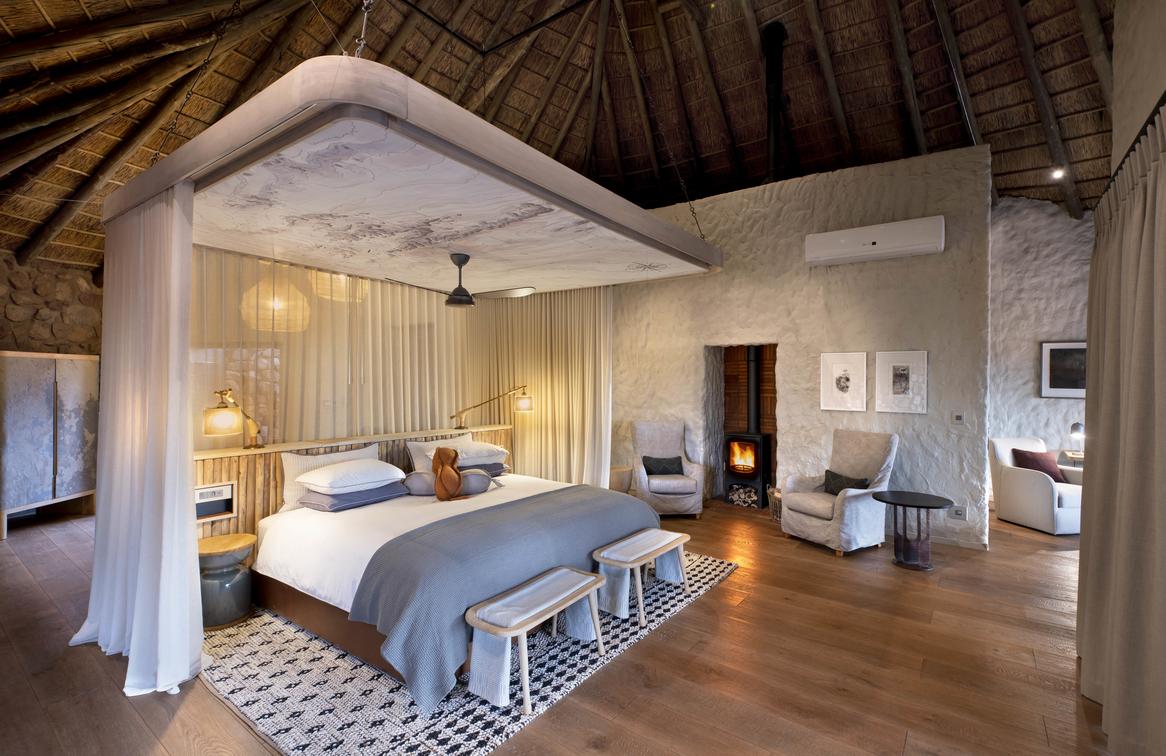
Tswalu is what happens when serious conservation money buys the Kalahari time: 114,000 hectares of red dunes and camelthorn savanna beneath the Korannaberg mountains, restored over decades by the Oppenheimer family and run for research first, tourism second. Guest numbers are capped at under forty across the whole reserve, every booking gets a private vehicle, guide and tracker, and the nearest stranger is usually a horizon away. The animals match the setting: Kalahari black-maned lions patrolling the dunes, desert black rhino, brown hyena, aardvark and aardwolf for those who stay out after dark, and the reserve's celebrities, a colony of habituated meerkats who treat human observers as harmless furniture while they warm up each morning. The Motse is the main lodge, nine legae of local stone and thatch facing the mountains, with the Klein JAN restaurant extending Jan Hendrik van der Westhuizen's Michelin star into the desert. Access is by Tswalu's own scheduled charter from Johannesburg or Cape Town. Winter brings crisp mornings and easy sightings; summer brings storm skies and the desert in bloom.Your camps, day by day
Stay 1
Johannesburg to the Red Dunes
Stay 2
Meerkat Sunrise
Stay 3
The Night Shift
Stay 4
Dunes on Horseback
Stay 5
Rhino and Research
Stay 6
Your Kalahari, Your Order
Stay 7
Tswalu to Johannesburg
Safari highlights
- Six nights at The Motse in 114,000 private hectares
- A private vehicle, guide and tracker for every booking
- Habituated meerkat colony at sunrise
- Kalahari black-maned lions and desert black rhino
- Aardvark and pangolin, the night specialists
- Klein JAN, Michelin-starred cooking in the desert
What is included
Included
- 6 nights accommodation, per person sharing
- Return scheduled charter flights Johannesburg-Tswalu
- Private game-drive vehicle with dedicated guide and tracker
- All meals including Klein JAN, and all house drinks
- Guided walks, meerkat visits and night drives
- Horse riding for experienced and novice riders
- Tswalu conservation levies, government taxes and VAT
- Laundry and emergency medical evacuation cover
Not included
- International flights to and from Africa
- Visas and entry permits
- Comprehensive travel and medical insurance
- Spa treatments
- Premium spirits, champagne and rare vintages
- Gratuities for your guide, tracker and lodge staff
- Items of a personal nature and telephone calls
Frequently asked questions
How much does a 7-day Tswalu safari cost?
From USD 20,280 per person sharing, rising to about USD 21,880 in peak season. The price covers six nights at The Motse, a private vehicle with your own guide and tracker throughout, all meals including Klein JAN, house drinks, activities from meerkats to horse riding, and the return scheduled charter flights from Johannesburg. International flights to Africa are excluded.
What animals is Tswalu known for?
The Kalahari specials. Black-maned lions and desert-adapted black rhino headline, but Tswalu's reputation rests on the hard-to-see: habituated meerkats at sunrise, brown hyena, bat-eared fox, aardwolf, and the best aardvark and pangolin viewing in Africa, especially in winter when they forage in daylight. Researchers based on the reserve mean sightings come with real science attached.
How do you get to Tswalu?
On Tswalu's own scheduled charter from Fireblade Aviation's private terminal at Johannesburg, about 1 hour 45 minutes, included in the price; a Cape Town rotation also operates on set days. The private terminal means no queues and a 20-minute check-in. There is no practical road access for guests, the reserve sits deep in the Northern Cape.
When is the best time to visit the Kalahari?
May to September, the dry winter, delivers cold clear mornings, animals concentrated at water and daylight foraging by aardvark and pangolin, the sightings people cross oceans for. October to April is hotter and greener: the dunes flush after storms, migrant birds pour in and the light turns theatrical. The meerkats, lions and private-vehicle model work identically all year.
Is Tswalu malaria-free?
Yes. The southern Kalahari lies far outside South Africa's malaria belt, so no prophylaxis is needed in any month, which, together with the private vehicles and flexible hours, makes Tswalu one of the country's best reserves for families. The reserve welcomes children of all ages, with dedicated junior tracking activities.
Are international flights included?
No. International flights to and from Africa are excluded and booked separately, arriving at Johannesburg, which the included Fireblade charter serves directly. Most guests land on an overnight flight and connect to the 11:00 Tswalu departure the same morning, reaching the reserve in time for lunch and the first drive.