Botswana - Fly-in safari
7-Day Vumbura & Qorokwe Safari
The journey
Updated on 18 September 2026
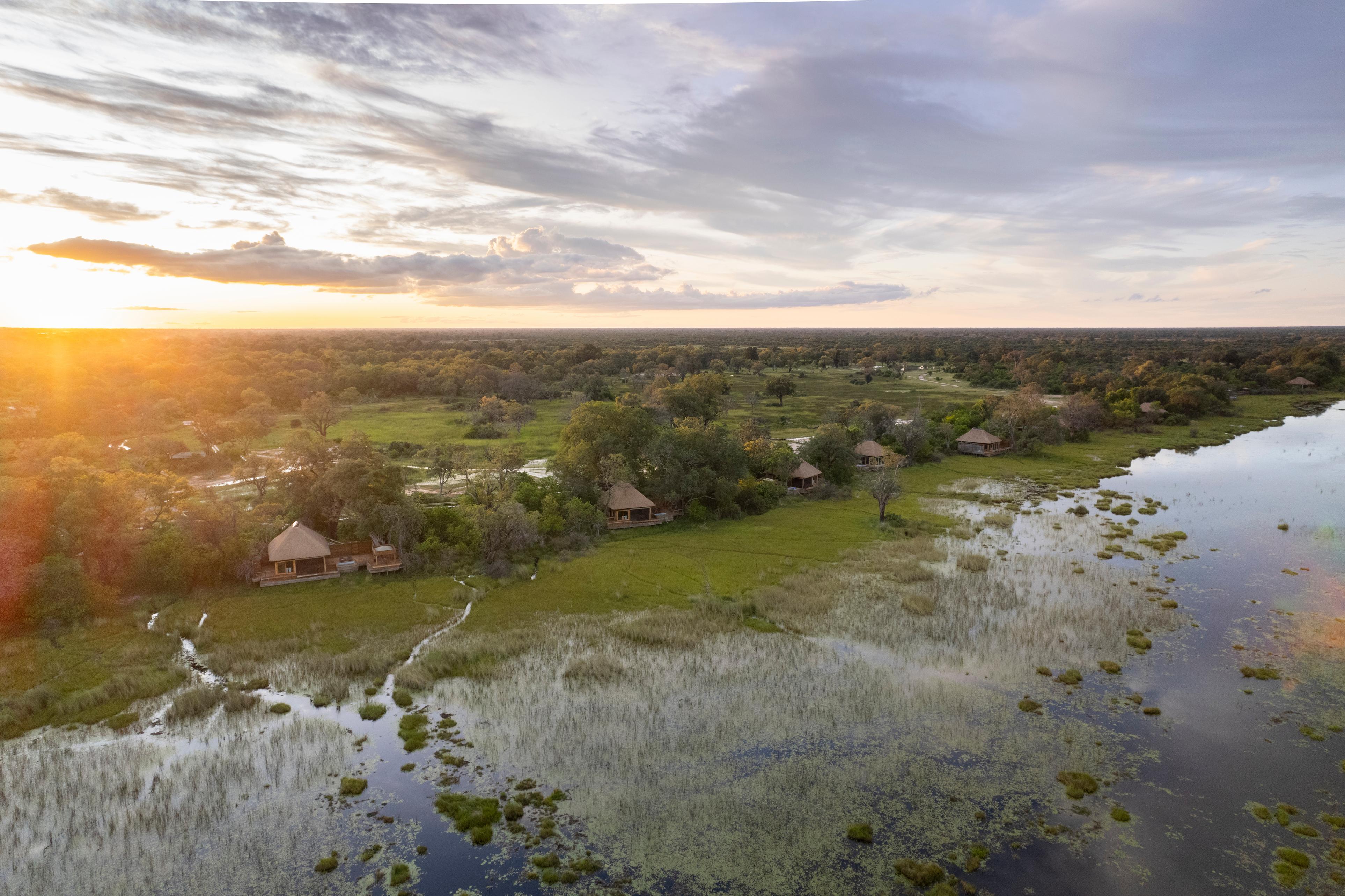
The Okavango is not one habitat but a gradient, wetter in the north where the flood arrives first, drier in the south-east where it peters out into mopane. This safari books the two ends of that gradient. Vumbura Plains sits in the far north on a concession shared with the Okavango Community Trust, where deep channels keep boats and mokoro running most of the year and sable and buffalo work the islands. Qorokwe, in the south-east corner near the Gomoti channel, is the drier counterpart, a modern camp on ground that concentrates lion, leopard and wild dog as the seasonal water shrinks. Three nights at each end gives the gradient time to show itself. The activity sheet changes with the latitude: poling through papyrus in the north, long predator drives in the south, with the 30 minute flight between them doubling as a delta overview. June to October is the classic window, flood high in the north and the south drying hard. Green season trades concentration for storm light and better rates.Your camps, day by day
Stay 1
North to Vumbura
Stay 2
Mokoro Morning
Stay 3
The Full North
Stay 4
South-East to Qorokwe
Stay 5
Predator Ground
Stay 6
The Gomoti Channels
Stay 7
Qorokwe to Johannesburg
Safari highlights
- Three nights at Vumbura Plains in the deep-water north
- Mokoro and boating on year-round channels
- Three nights at Qorokwe in the south-east delta
- Predator country along the Gomoti system
- Two Wilderness private concessions, one flight apart
- Community partnership land in the north
What is included
Included
- 6 nights accommodation, per person sharing
- Return regional flights Johannesburg-Maun in economy class
- Light-aircraft sectors Maun-Vumbura, Vumbura-Qorokwe and Qorokwe-Maun, with airstrip taxes
- All meals, house wines, local spirits, beers and soft drinks
- Twice-daily game drives, with mokoro and boating where water levels allow
- Private concession fees, government levies and VAT
- Botswana Tourism Development Levy of USD 30 per person
- Laundry and emergency medical evacuation cover
Not included
- International flights to and from Africa
- Visas and entry permits
- Comprehensive travel and medical insurance
- Premium spirits, champagne and imported wines
- Gratuities for guides, trackers and camp staff
- Items of a personal nature, curios and telephone calls
Frequently asked questions
How much does a 7-day Okavango safari at Vumbura and Qorokwe cost?
From USD 18,480 per person sharing, rising to about USD 24,380 in peak season. The rate covers six nights at Vumbura Plains and Qorokwe, all meals and house drinks, private concession fees, three light-aircraft sectors and the return Johannesburg-Maun regional flights. International flights to Africa are excluded and quoted separately.
What is the difference between the two camps?
Latitude, mostly. Vumbura Plains sits where the flood arrives first, so water activities run most of the year and the viewing mixes sable, buffalo and wetland birds with the cats. Qorokwe sits where the water runs out, which squeezes game onto the remaining channels and makes it one of the delta's stronger predator addresses. North is water, south is teeth.
When is the best time for this routing?
June to October. The flood peaks in the north between June and August, keeping Vumbura's boats and mokoro in business, while the south-east dries and Qorokwe's game concentrates. November to April is green season, with rates down roughly a quarter, big skies and newborn game, though water activities in the south become less certain.
Is a mokoro trip guaranteed?
At Vumbura, close to it: the northern channels hold water most of the year, and mokoro and motorboat outings are daily fixtures except in rare low-flood years. At Qorokwe, water activities depend on the season and the Gomoti's mood. This is why the routing runs north first, so the water half of the delta is banked before the predator half begins.
Are international flights included?
No. International flights to and from Africa are excluded and booked separately, normally via Johannesburg. Included are the return Johannesburg-Maun flights of about 1 hour 40 minutes each way and the three light-aircraft sectors within the delta. Light aircraft enforce a 20 kg per person limit in soft-sided bags.
Is the Okavango Delta malarial?
Yes, throughout, with the highest risk in and just after the November to April rains. Take prophylaxis whatever the month and see a travel clinic about six weeks before flying. Both camps have screened rooms and supply repellent. A yellow fever certificate is required only if you arrive from a country with transmission risk.