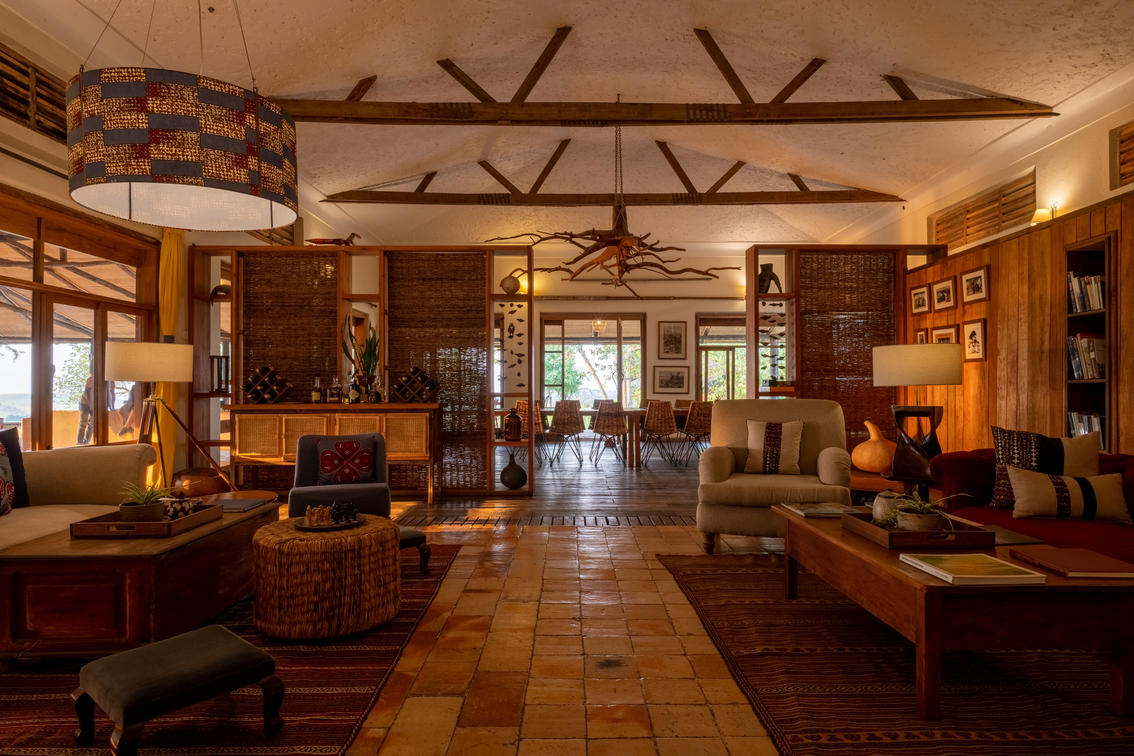
Uganda - Rwanda - Fly-in safari
8-Day Uganda & Rwanda Primate Trail
The journey
Updated on 18 September 2026
The great-ape circuit works because of geography that most maps do not make obvious. Bwindi's southern sectors, Rushaga and Nkuringo, sit about two hours from the Cyanika border post, and Cyanika is thirty minutes from Musanze at the foot of Rwanda's Virungas. Cross there and you move from one gorilla population to the next in a single morning, rather than flying back to Entebbe and starting again. So the order is Uganda first. You fly into Queen Elizabeth National Park for chimpanzees in Kyambura Gorge, a hundred-metre trench of gallery forest cut into the savannah. A light aircraft then carries you to Kisoro and up onto Nteko Ridge for the Nkuringo gorillas, the family that opened the southern sector in 2004. From there you drive across the border for a second and entirely different trek in Volcanoes National Park, and leave through Kigali. Costs differ sharply either side of that line. Uganda charges USD 800 for a gorilla permit; Rwanda charges USD 1,500. Doing both in one trip is the honest way to understand what the difference buys. June to September and mid-December to February are the drier months, when the trails hold.Your camps, day by day
Stay 1
Arrival at Entebbe
Stay 2
Into Queen Elizabeth
Stay 3
The Valley of Apes
Stay 4
South to Nteko Ridge
Stay 5
Nkuringo Gorillas
Stay 6
Across the Cyanika Border
Stay 7
A Second Family
Stay 8
Out Through Kigali
Safari highlights
- Chimpanzee tracking in Kyambura Gorge, 100 metres below the plain
- Gorilla trek at Nkuringo, southern Bwindi's steepest sector
- A second gorilla family in Rwanda's Volcanoes National Park
- Cyanika border crossing, two hours from Bwindi to the Virungas
- Wilderness Sabyinyo, community-owned below Mount Sabyinyo
- Both permits included: USD 800 in Uganda, USD 1,500 in Rwanda
What is included
Included
- 7 nights accommodation, per person sharing
- One Uganda Wildlife Authority gorilla permit at USD 800 for the Nkuringo sector, and one Rwanda Development Board gorilla permit at USD 1,500 for Volcanoes National Park
- One Kyambura Gorge chimpanzee tracking permit and Queen Elizabeth National Park entry fees
- Aerolink light aircraft, Entebbe to Kasese on day two and Kasese to Kisoro on day four
- Private 4x4 and driver-guide for Kasese airstrip to Kyambura, all Queen Elizabeth game drives, and Kisoro airstrip to Nkuringo
- Cross-border road transfer, Nkuringo to Cyanika to Volcanoes National Park, with assistance through immigration on both sides
- Road transfer Volcanoes National Park to Kigali International Airport, and a guided visit to the Kigali Genocide Memorial
- All meals, house and premium drinks, laundry and lodge activities at Kyambura Gorge Lodge, Clouds Mountain Gorilla Lodge and Wilderness Sabyinyo; bed, breakfast and dinner in Entebbe
- Kazinga Channel boat safari, a trekking porter in Bwindi, and emergency medical evacuation cover
Not included
- International flights to and from Africa
- East Africa Tourist Visa, or single-country visas for Uganda and Rwanda
- Travel and medical insurance, which is compulsory on this programme
- Champagne, reserve wines and imported spirits
- Gratuities for guides, trackers, porters, drivers and lodge staff
- Golden monkey permits, gorilla habituation permits and the hike to the Dian Fossey tomb
- Items of a personal nature, including curios, spa treatments and telephone calls
Frequently asked questions
Why does a gorilla permit cost $1,500 in Rwanda and $800 in Uganda?
The two countries price the same hour differently on purpose. Rwanda charges USD 1,500 and caps the park at ninety-six permits a day across twelve habituated families, deliberately restricting numbers. Uganda charges USD 800 for Bwindi and Mgahinga and sells roughly twice as many permits daily across more than twenty families. Rwanda's park is closer to its capital and the terrain is gentler; Uganda's forest is denser, cheaper and harder to reach.
How much does an 8-day Uganda and Rwanda gorilla safari cost?
This programme starts at USD 16,480 per person sharing in shoulder season and runs to about USD 17,880 in peak months. That covers seven nights, the USD 800 Uganda gorilla permit, the USD 1,500 Rwanda permit, a Kyambura chimpanzee permit, both light aircraft sectors, every road transfer including the border crossing, park fees, all meals and drinks at the three safari lodges, and evacuation cover.
Are international flights included in the price?
No. International flights to and from Africa are excluded, so you book your own long-haul into Entebbe and out of Kigali. Everything inside the region is included: the Aerolink sectors from Entebbe to Kasese and Kasese to Kisoro, all road transfers, and the cross-border run to Volcanoes National Park. Budget roughly USD 1,000 to 1,600 return from Europe and USD 1,400 to 2,200 from North America for an open-jaw ticket.
Can you cross from Uganda to Rwanda by road for gorilla trekking?
Yes, and on this route it is the sensible way to do it. Nkuringo in southern Bwindi is about two hours from the Cyanika border post via Kisoro, Cyanika sits thirty minutes from Musanze, and Volcanoes National Park is another half hour on. Immigration formalities take around thirty minutes. Vehicles change at the boom, so your Ugandan guide hands you to a Rwandan one.
Does the East Africa Tourist Visa cover Uganda and Rwanda?
Yes. The East Africa Tourist Visa costs USD 100, is valid for ninety days and allows multiple entries between Uganda, Rwanda and Kenya, so one visa covers this whole route including the Cyanika crossing. You must enter the region through the country that issued it, so apply through Uganda for this itinerary. Separate visas cost USD 50 each, which makes the joint visa the cheaper option here.
How much is a chimpanzee trekking permit in Uganda?
Kyambura Gorge in Queen Elizabeth National Park charges USD 100, which is what this trip uses. Kibale Forest, which holds about 1,500 chimpanzees, charges USD 250, and its four-hour habituation experience costs USD 300. Kyambura's community is small, roughly thirty animals in an isolated gorge, so sightings run at about sixty percent against ninety percent at Kibale. The gorge walk stands on its own.
When is the best time to trek gorillas in Uganda and Rwanda?
June to September and mid-December to February are the drier months in both countries, when the forest floor is firmer and the climbs are shorter. March to May is the long rains and October to November the short rains, when lodges are quieter and Uganda sells discounted permits in April, May and November. Both parks are montane rainforest, so rain is possible in any week of the year.