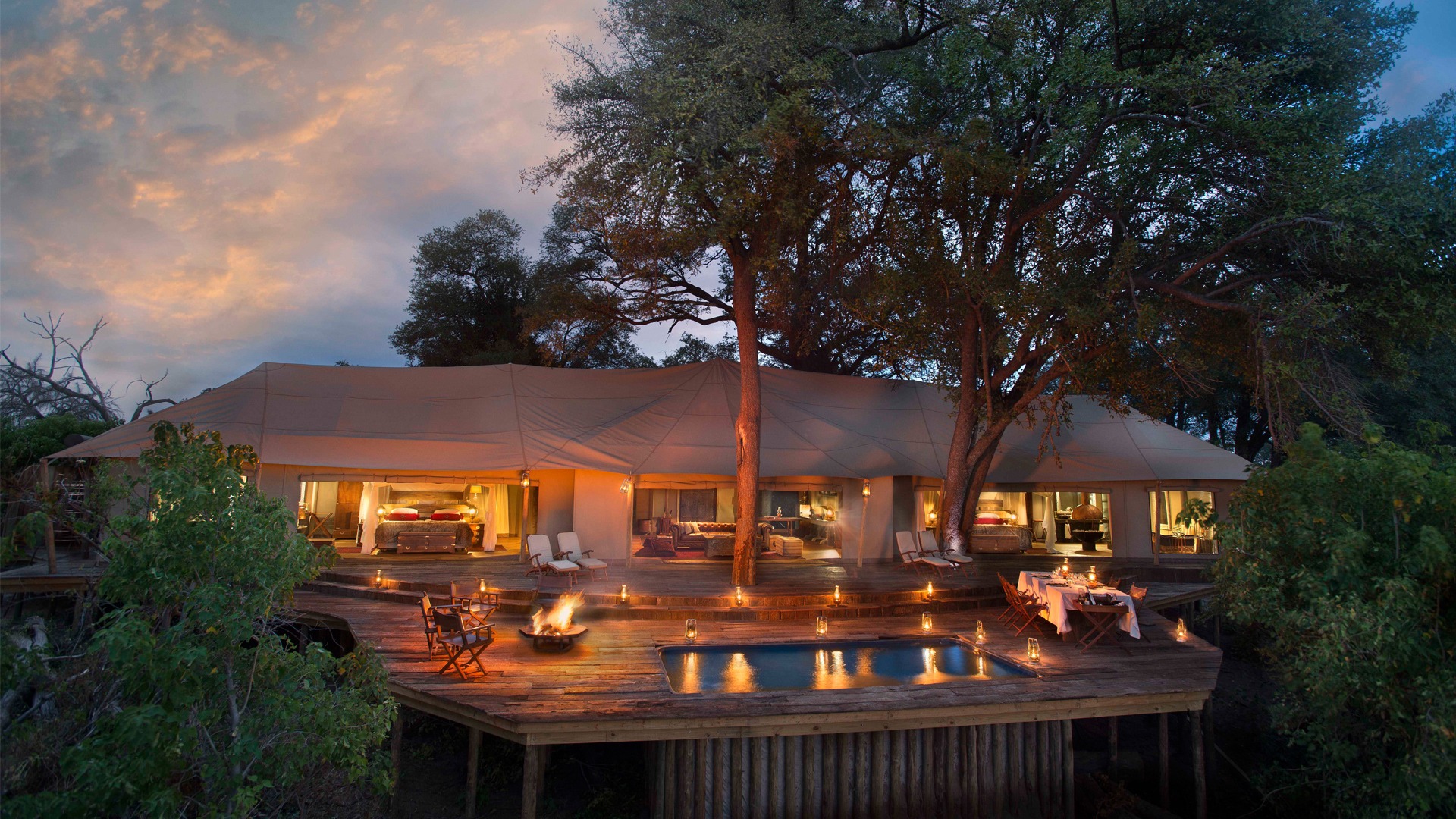
Botswana - Fly-in safari
9-Day Botswana Luxury Fly-In Safari
The journey
Updated on 18 September 2026
Northern Botswana is really three countries. The Linyanti is dry-country predator ground, all elephant highways and open woodland. The northern delta is water: channels, floodplains and islands that flood and drain on the Okavango's own calendar. And Chief's Island is the delta's beating heart, where the game concentrates. This routing gives each its proper camp: Zarafa in the private Selinda Reserve, Vumbura Plains in the far north of the delta, and Mombo on Chief's Island. Because every leg is a light-aircraft hop of under an hour, no day is lost to travel. You move from copper baths above the Zibadianja Lagoon to mokoro channels at Vumbura to the floodplains of Mombo, and the game viewing changes register at each stop, from tracking wild dog to poling past reed frogs to sitting with lion at a kill. May to October is dry season and the strongest game viewing. The green months, November to April, trade some concentration for storm light, birds and rates roughly a quarter lower.Your camps, day by day
Stay 1
Johannesburg to the Lagoon
Stay 2
Selinda Mornings
Stay 3
Wild Dog Country
Stay 4
Into the Northern Delta
Stay 5
Water and Land
Stay 6
The Floodplain Day
Stay 7
South to Mombo
Stay 8
Mombo in Full
Stay 9
Out Through Maun
Safari highlights
- Three nights at Zarafa on the Zibadianja Lagoon
- Three nights at Vumbura Plains, water and land in one concession
- Two nights at Mombo on Chief's Island
- Mokoro and boating in the northern delta
- Wild dog country in the private Selinda Reserve
- Every transfer by light aircraft
What is included
Included
- 8 nights accommodation, per person sharing
- Return regional flights Johannesburg-Maun in economy class
- Light-aircraft sectors Maun-Zarafa, Zarafa-Vumbura, Vumbura-Mombo and Mombo-Maun, with airstrip taxes
- All meals, house wines, local spirits, beers and soft drinks
- Twice-daily game drives, mokoro and boating where water levels allow
- Private concession and Moremi Game Reserve fees, government levies and VAT
- Botswana Tourism Development Levy of USD 30 per person
- Laundry and emergency medical evacuation cover
Not included
- International flights to and from Africa
- Visas and entry permits
- Comprehensive travel and medical insurance
- Premium spirits, champagne and imported wines
- Gratuities for guides, trackers and camp staff
- Items of a personal nature, curios and telephone calls
Frequently asked questions
How much does a 9-day Botswana fly-in safari cost?
This programme starts at USD 32,080 per person sharing and rises to about USD 40,080 in peak season. The price covers eight nights at Zarafa, Vumbura Plains and Mombo, all meals and house drinks, private concession fees, four light-aircraft sectors and the return Johannesburg-Maun regional flights. International flights to Africa are excluded and quoted separately.
Why fly between camps instead of driving?
Because in northern Botswana there is often no road worth the name. The Selinda Reserve, the Vumbura concession and Chief's Island are separated by seasonal swamp; light aircraft cover each leg in 25 to 50 minutes. Flying is standard practice here, the fares are built into this price, and the luggage limit is 20 kg per person in soft bags.
When is the best time for the Okavango and Linyanti?
May to October. The delta flood peaks between June and August while the land dries, which squeezes the game onto the floodplains and riverfronts. September and October are hot and superb for predators. November to April is green season: camps drop rates by roughly a quarter, migrant birds arrive and the light after storms is the best of the year.
What is the difference between the three camps?
Zarafa is four suites on a lagoon in a 130,000-acre private reserve, the most exclusive of the three. Vumbura Plains is a contemporary camp in the far northern delta with both water and land activities from the same deck. Mombo is the classic: the highest-profile game-viewing camp in Botswana, on floodplains with exceptional predator densities. Together they cover everything the north does.
Are mokoro trips guaranteed?
No. Mokoro and boating depend on water levels, which peak roughly June to September in the Vumbura area and vary year to year. When channels hold enough water the camps run both daily; in low-water months the same country is worked by vehicle instead. Mombo is primarily a game-driving camp year-round.
Are international flights to Botswana included?
No. International flights to and from Africa are booked separately, normally through Johannesburg. Included here are the return Johannesburg-Maun flights of about 1 hour 40 minutes each way and every light-aircraft sector between the camps. Most guests land in Johannesburg in the morning and are on the delta floodplain the same afternoon.