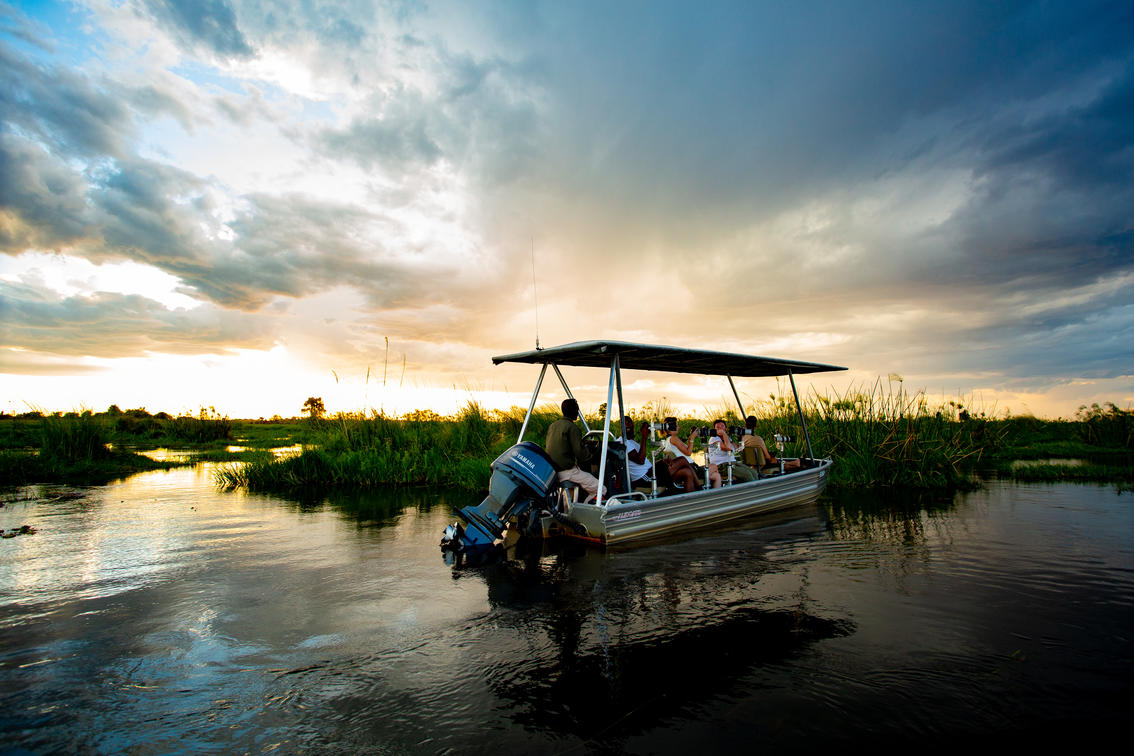
Botswana - Fly-in safari
9-Day Duba & Selinda Safari
The journey
Updated on 18 September 2026
This is a two-act safari built on private ground. Duba Plains sits on a 77,000-acre island concession in the heart of the delta, famous for one of the longest-running predator stories in Africa: lion and buffalo locked together on the same floodplains, hunting and being hunted in daylight. The camp, rebuilt by Great Plains as a five-suite art-filled hideaway, runs custom Land Cruisers that wade the channels between islands. Selinda Camp is the second act, north-east on the Selinda Spillway, where 130,000 private acres carry some of Botswana's best elephant viewing and its most reliable wild dog packs. Where Duba is water and buffalo, Selinda is open woodland and movement, and four nights in each gives both stories room to play out. Both reserves cap vehicle numbers, so sightings are private almost by definition. May to October is the dry-season peak; the green months bring storm light, birds and gentler rates.Your camps, day by day
Stay 1
Into the Duba Concession
Stay 2
Lions in the Water
Stay 3
Channels and Islands
Stay 4
The Full Duba Day
Stay 5
North-East to Selinda
Stay 6
The Spillway
Stay 7
Running with the Pack
Stay 8
Last Day on Private Ground
Stay 9
Selinda to Johannesburg
Safari highlights
- Four nights at Duba Plains in a 77,000-acre private concession
- The Duba lion and buffalo interaction, hunted in daylight
- Four nights at Selinda Camp on the Selinda Spillway
- Botswana's most dependable wild dog country
- Custom vehicles that wade the delta channels
- Both camps limited to a handful of suites
What is included
Included
- 8 nights accommodation, per person sharing
- Return regional flights Johannesburg-Maun in economy class
- Light-aircraft sectors Maun-Duba, Duba-Selinda and Selinda-Maun, with airstrip taxes
- All meals, house wines, local spirits, beers and soft drinks
- Twice-daily game drives, and mokoro or boating where water levels allow
- Private concession fees, government levies and VAT
- Botswana Tourism Development Levy of USD 30 per person
- Laundry and emergency medical evacuation cover
Not included
- International flights to and from Africa
- Visas and entry permits
- Comprehensive travel and medical insurance
- Premium spirits, champagne and imported wines
- Gratuities for guides, trackers and camp staff
- Items of a personal nature, curios and telephone calls
Frequently asked questions
How much does a 9-day Duba Plains and Selinda safari cost?
From USD 33,480 per person sharing, rising to about USD 39,380 in peak season. The price covers eight nights split between Duba Plains Camp and Selinda Camp, all meals and house drinks, private concession fees, three light-aircraft sectors and the return Johannesburg-Maun regional flights. International flights to Africa are excluded and quoted separately.
What is special about the lions at Duba Plains?
The concession's floodplains hold resident buffalo herds that cannot leave the island system, and the lion prides that live off them have adapted to hunting in water and in daylight. The interaction, filmed for years by Dereck and Beverly Joubert, still plays out most weeks. Watching a pride wade a channel chest-deep towards buffalo is Duba's signature sighting.
When is the best time to go?
May to October is the dry-season window, with the delta flood usually peaking at Duba between June and August and the Selinda Spillway drawing elephant through the winter. September and October are hot, dry and excellent for predators. November to April is green season, with lower rates, dramatic skies and superb birding, at the cost of some concentration.
Are international flights included?
No. International flights to and from Africa are excluded and booked separately, normally via Johannesburg. Included are the return Johannesburg-Maun flights, about 1 hour 40 minutes each way, plus the Maun-Duba, Duba-Selinda and Selinda-Maun light-aircraft sectors. Light aircraft restrict luggage to 20 kg per person in soft-sided bags.
How exclusive are these reserves really?
Duba Plains shares 77,000 acres with only its sister camps, and Selinda's 130,000 acres carry two small camps in total. Vehicle numbers at a sighting are capped, usually at two, and off-road driving is permitted, which national parks do not allow. In practice you can spend a full day in either reserve and not see another guest vehicle.
Is this safari malarial?
Yes, both the Okavango Delta and the Selinda area are malaria zones, with risk highest from November to April. Prophylaxis is recommended year-round; consult a travel clinic about six weeks before departure. Both camps provide screened suites and repellent. Yellow fever certificates are needed only when arriving from a country with transmission risk.