Kenya - Tanzania - Fly-in safari
9-Day Great Migration Safari
The journey
Updated on 18 September 2026
The Serengeti and the Masai Mara are one ecosystem divided by a line on a map. This safari puts you on both sides of it. Four nights at Kichwa Tembo below the Oloololo Escarpment in the Mara Triangle, the reserve's quieter western third. Then the cross-border leg into Tanzania and four nights under canvas in the northern Serengeti, where a mobile camp moves with the herds. Between July and October the Mara River is the drama - crossings that build for hours and are over in minutes. Outside that window the same country holds resident lion, cheetah on the open ground and plains game in numbers that stop making sense.Your camps, day by day
Stay 1
Nairobi to the Mara Triangle
Stay 2
The Mara Triangle
Stay 3
The Mara River
Stay 4
Balloon and escarpment
Stay 5
Across the border into Tanzania
Stay 6
The Lamai Wedge
Stay 7
Kopjes and plains
Stay 8
A last full day
Stay 9
Out via Kilimanjaro
Safari highlights
- Four nights each side of the Mara River, Kenya and Tanzania
- Mara Triangle - the reserve's least crowded sector
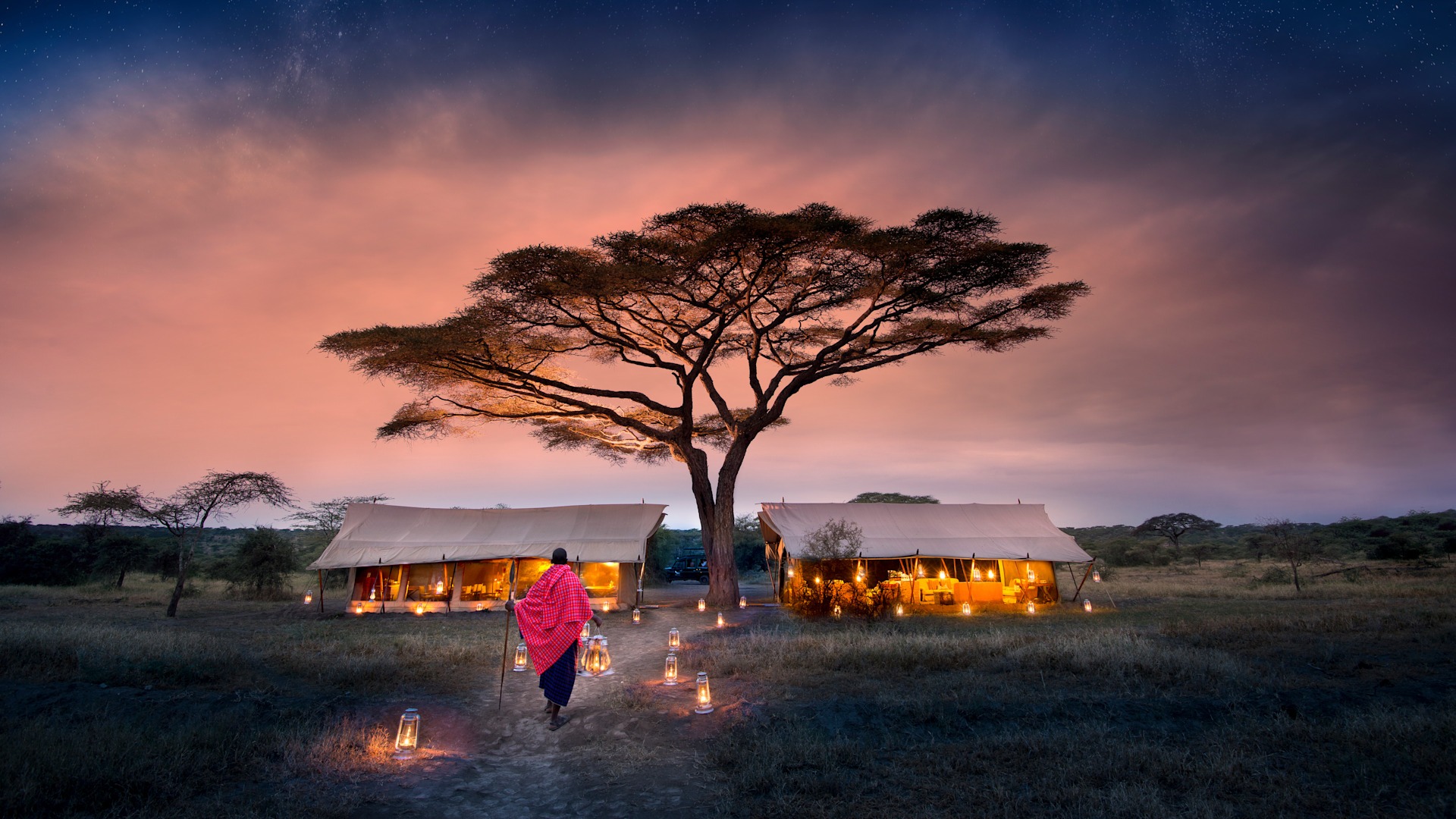
- Serengeti Under Canvas moves with the migration, so the herds stay close
- Cross-border transfer and all park fees included
- Optional dawn balloon flight over the Mara
What is included
Included
- Eight nights accommodation, per person sharing
- All meals and drinks as included by each camp
- Two guided game drives daily
- Masai Mara Reserve fees and Serengeti park and concession fees
- Flight Nairobi Wilson to the Mara Triangle
- Cross-border transfer and flight Masai Mara to Kogatende, including border formalities
- Flight Kogatende to Kilimanjaro International
- Nairobi airport transfers
- Kenya eTA and Tanzania visa costs
- Emergency medical evacuation cover
Not included
- International flights to and from Africa - book open-jaw, into Nairobi and out of Kilimanjaro
- Hot-air balloon safari over the Masai Mara, approx USD 550 per person
- Travel insurance (mandatory)
- Premium drinks and champagne
- Gratuities
- Items of a personal nature
Frequently asked questions
How much does a Great Migration safari cost?
This 9-day Kenya and Tanzania migration safari starts at USD 15,880 per person sharing, rising to USD 18,580 for peak river-crossing season between July and October. That includes eight nights in camp, all meals, all game drives, park fees for both countries, the cross-border transfer and all regional and bush flights. International flights to Africa are not included.
When is the best time to see the Great Migration?
July to October is river-crossing season in the northern Serengeti and the Masai Mara - the dramatic, most-photographed phase, and what this itinerary targets. January to March is calving season in the southern Serengeti, when around 8,000 wildebeest are born daily and predator activity is intense. The herds move continuously; there is no month with no migration, only different chapters of it.
Can you guarantee seeing a river crossing?
No, and any operator who guarantees it is not being straight with you. Crossings are unpredictable - herds can mass on a bank for hours and turn back. What we do is put you in the right place at the right time of year, with four nights on each side of the river and guides who read the signs. Most guests travelling in the crossing window see at least one.
Do I need a visa for both Kenya and Tanzania?
Yes. Kenya requires an eTA and Tanzania requires a visa; both are included in this itinerary's price. The border crossing at Isebania is done on the ground with your guide present and takes about an hour. Bring a passport with at least six months validity and two blank pages.
Is it better to see the migration in Kenya or Tanzania?
Both, which is why this itinerary does both. The herds spend most of the year in Tanzania and roughly July to October in and around the Mara. Seeing only one side means seeing half the story, and the cross-border flight makes doing both straightforward.
How much flying is involved?
Three sectors: Nairobi to the Mara, the cross-border leg to Kogatende, and Kogatende to Kilimanjaro. Bush flights are small aircraft with a 15kg soft-bag limit including hand luggage and camera gear. The cross-border day is the longest, involving a road leg to the border and a flight beyond - budget most of the day for it.