tips and advice
How Much Should You Tip on an African Safari?
Encounters Africa - 8 min read
Updated on 27 August 2026
Tipping on safari forms one of those quiet rituals that can leave even seasoned travellers unsure of the right gesture. From the tracker who spots a leopard’s fresh prints in the soft earth to the kitchen team behind every memorable meal, understanding who receives recognition, how roles differ, and why customary amounts shift by country, camp style and season brings clarity to an often overlooked part of the journey. Encounters Africa is the specialist arm for safaris beyond Namibia, covering South Africa, Botswana, Kenya, Tanzania, Rwanda, Uganda, Zambia and Zimbabwe. Cape Town-based with three decades of combined experience, we book directly with camps and lodges, tailoring journeys for individuals, couples, families and private groups of up to eight using our 81 published itineraries that can all be reshaped.

The Role of Gratitude in the African Bush Experience
Gratitude on safari extends far beyond simple courtesy. It acknowledges the skill, patience and quiet dedication that transform a collection of game drives and meals into something far richer. A well-considered tip recognises the human element that makes each sighting, each story around the fire, and each perfectly timed gin and tonic feel personal.
Yet the practice varies more than many realise. What feels appropriate in a South Africa private reserve may differ in a remote Botswana concession or a high-altitude gorilla trekking lodge in Rwanda. These differences stem from local economies, camp ownership models, and the way staff are compensated across the continent.
A tip is never an obligation, but when offered with sincerity it becomes part of the conversation between traveller and the people who have shared their knowledge of the wild.
Who Typically Receives Tips on Safari?
Three distinct groups usually benefit from tipping on an African safari: professional guides and trackers, lodge or camp managers, and the wider support staff whose work often remains unseen. Each plays a different part in shaping the experience, and the way recognition flows to them reflects those responsibilities.
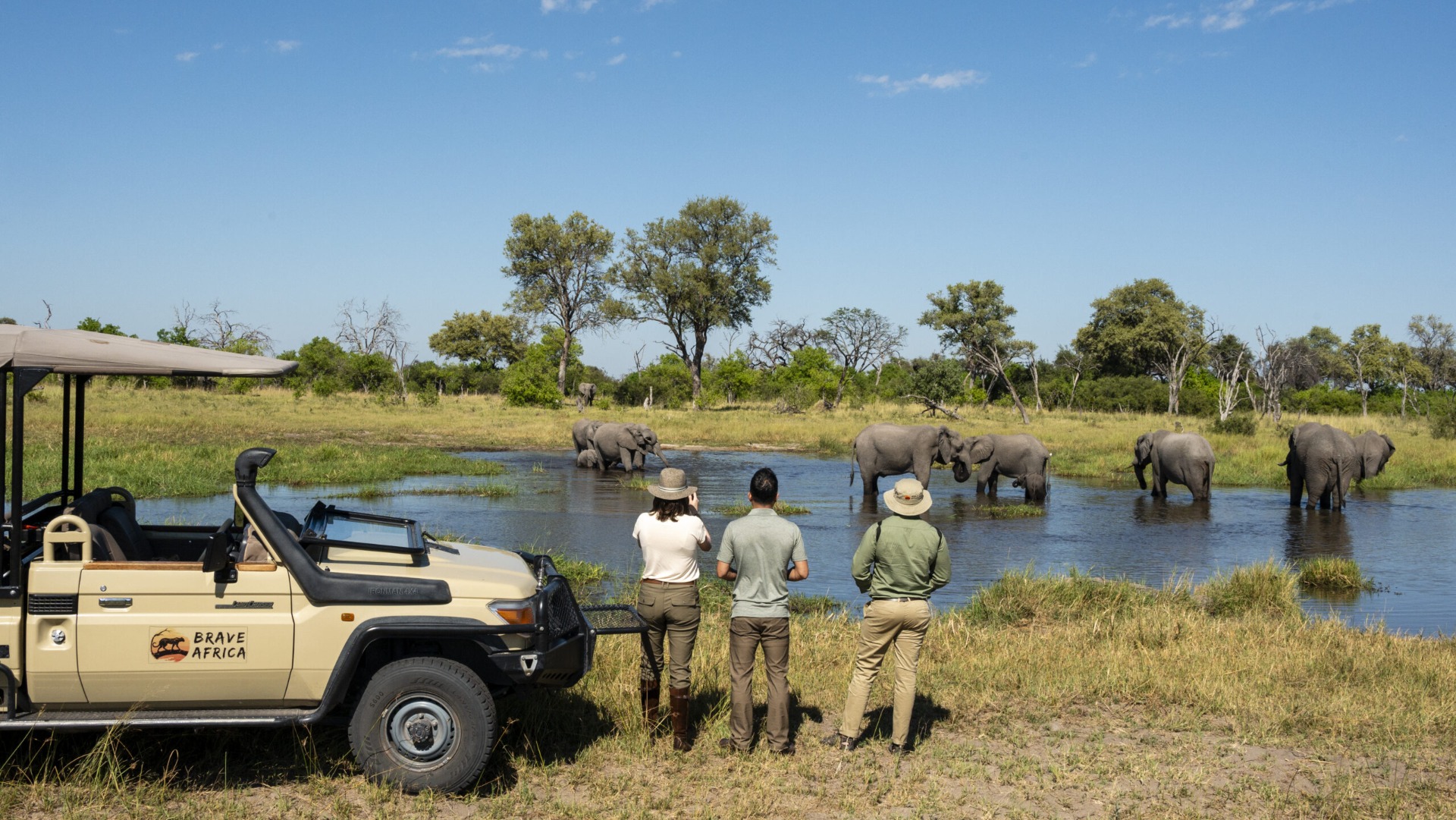
Guides and trackers spend the most direct time with guests. They interpret animal behaviour, ensure safety, and create the narrative thread that ties each drive together. Their knowledge often spans decades spent in the bush, reading the landscape in ways that transform an ordinary sighting into an unforgettable encounter.
General camp staff include everyone from housekeepers and waiters to the kitchen team, maintenance crew and gardeners. Their collective effort keeps the camp running smoothly, from crisp linens after a dusty drive to the warm glow of lanterns that appear as if by magic at dusk. At many properties these contributions are pooled so the entire team shares in the recognition.
Understanding the Distinct Roles of Guides, Trackers and Camp Staff
While the terms are sometimes used interchangeably by first-time visitors, the responsibilities of guides and trackers differ markedly. A guide typically holds formal qualifications, leads the vehicle, explains ecological systems and manages guest expectations. The tracker, often from the local community, reads the smallest signs on the ground - a bent blade of grass, fresh spoor, the distant call of a bird - to locate animals before they are even visible.
This partnership creates a layered experience. The tracker’s intuitive knowledge complements the guide’s broader interpretive skill. Together they form the public face of the safari, which is why many travellers choose to direct a larger portion of their appreciation toward them.
Camp staff, by contrast, work largely behind the scenes. Their contribution might be the thoughtful placement of binoculars on your seat before a drive, the quiet efficiency of a bush breakfast appearing in the middle of nowhere, or the gentle way a room is restored while you are out exploring. Their impact is constant yet understated.
The tracker who finds the lioness with her cubs at first light and the housekeeper who leaves a hot water bottle in your bed on a chilly evening both shape the memory of your journey, albeit in very different ways.
How Much Should You Tip on an African Safari?
How much should you tip on an African safari? There is no single correct figure, as amounts vary by operator, destination, camp style and season. However, a commonly accepted range for guides and trackers combined typically falls between US$10-25 per person per day, while general camp staff often receive between US$5-15 per guest daily, frequently pooled at many properties. These ranges reflect broad regional norms rather than fixed rules, and travellers should adjust according to the quality of service received and their own comfort level.
At smaller, owner-run camps the difference between roles may be less pronounced, with tips sometimes presented as a single contribution to be divided by management. In contrast, larger lodges with dedicated guiding teams often see more individualised recognition for the guide and tracker specifically.
Why Tipping Amounts Vary by Country and Camp
Local economic realities play a significant role. In countries where the cost of living differs markedly, the same dollar amount carries different weight. A contribution that feels generous in one region might appear modest in another where wages and living expenses follow different patterns.
Camp ownership models also influence customary practice. Privately owned intimate camps often distribute tips more directly to individuals, while properties managed by larger safari groups may have structured pooling systems designed to ensure fairness across departments. Seasonal factors matter too - staff who work through the quiet green months may particularly appreciate recognition during periods of lower occupancy.
Even within the same country, differences emerge between national park lodges and private concessions. The latter often allow more flexibility in guiding styles, which can translate into deeper connections between guests and their guiding team, sometimes reflected in the level of appreciation shown at the end of a stay.
Practical Guidance for Showing Appreciation Thoughtfully
Most camps provide a discreet tipping envelope or box at the end of a stay, allowing guests to contribute without awkwardness. Many travellers prefer to give separate envelopes for the guiding team and for the general staff pool, writing a short note of thanks to make the gesture more personal.
Consider the length of your stay when deciding amounts. A week-long journey naturally allows for greater cumulative recognition than a two-night stopover. If a particular guide or tracker has made your safari exceptional through their knowledge or enthusiasm, it is perfectly acceptable to acknowledge that directly while still contributing to the wider team.
Currency choices vary. While US dollars remain widely accepted and convenient across the region, some properties in South Africa also welcome contributions in local currency. Always check with your camp in advance if you are unsure.
The most meaningful tips are those offered with genuine appreciation rather than obligation - a quiet acknowledgement of the expertise, warmth and hard work that made your time in the bush so special.
Common Questions About Safari Tipping Etiquette
Many travellers wonder whether to tip daily or at the end of their stay. The latter is generally preferred, as it allows you to reflect on the entire experience and distribute recognition accordingly. Daily tipping can sometimes create an unintended hierarchy among staff that management prefers to avoid.
Another frequent question concerns children. If travelling with younger family members, it is customary for tips to be calculated on a per person basis, though some camps offer guidance for families to simplify the process.
Finally, remember that a sincere thank you, whether written or spoken, carries its own value. In many remote areas, the opportunity to host international visitors is itself a source of pride, and knowing that their efforts were noticed and appreciated often means as much as the financial gesture.

Planning Your Safari with Confidence
Understanding the nuances of tipping allows you to focus fully on the experience itself rather than worrying about protocols at departure. When every element of your journey is thoughtfully arranged, these smaller details fall naturally into place.
Encounters Africa specialises in creating these seamless, deeply personal safaris. Drawing on our handpicked network of distinguished camps and lodges, we curate every detail with precision, shaping each itinerary around your interests, preferred pace and budget.
For discerning travellers seeking a private safari beyond our set itineraries, we invite you to contact us directly. Whether you are drawn to the predator-rich plains of the Masai Mara, the watery wilderness of the Okavango Delta, or the misty forests where mountain gorillas roam, our team will design an exceptional journey tailored entirely to you.
Read more about luxury safari experiences at https://secretnamibia.com/luxury-safaris and discover how costs work in neighbouring Namibia at https://secretnamibia.com/safari-blog/how-much-does-a-namibian-safari-cost.
More like this
tips and advice
How Safari Camps Balance Signal Strength and Intentional Silence Across Africa

tips and advice
How to Shape a Private Safari Honeymoon Around Sleep-Outs and Secluded Villas
tips and advice
How Women Can Travel Solo Across Africa With Confidence and Ease
tips and advice
Inside Rwanda’s Conservation Efforts: What Thoughtful Travelers Should Know
tips and advice
Inside the Routing Logic of a Multi-Country Fly-In Safari Across Southern and East Africa
tips and advice