conservation
How Scimitar-Horned Oryx Are Restoring Balance to the Sahara's Degraded Grasslands
Encounters Africa - 9 min read
Updated on 21 August 2026
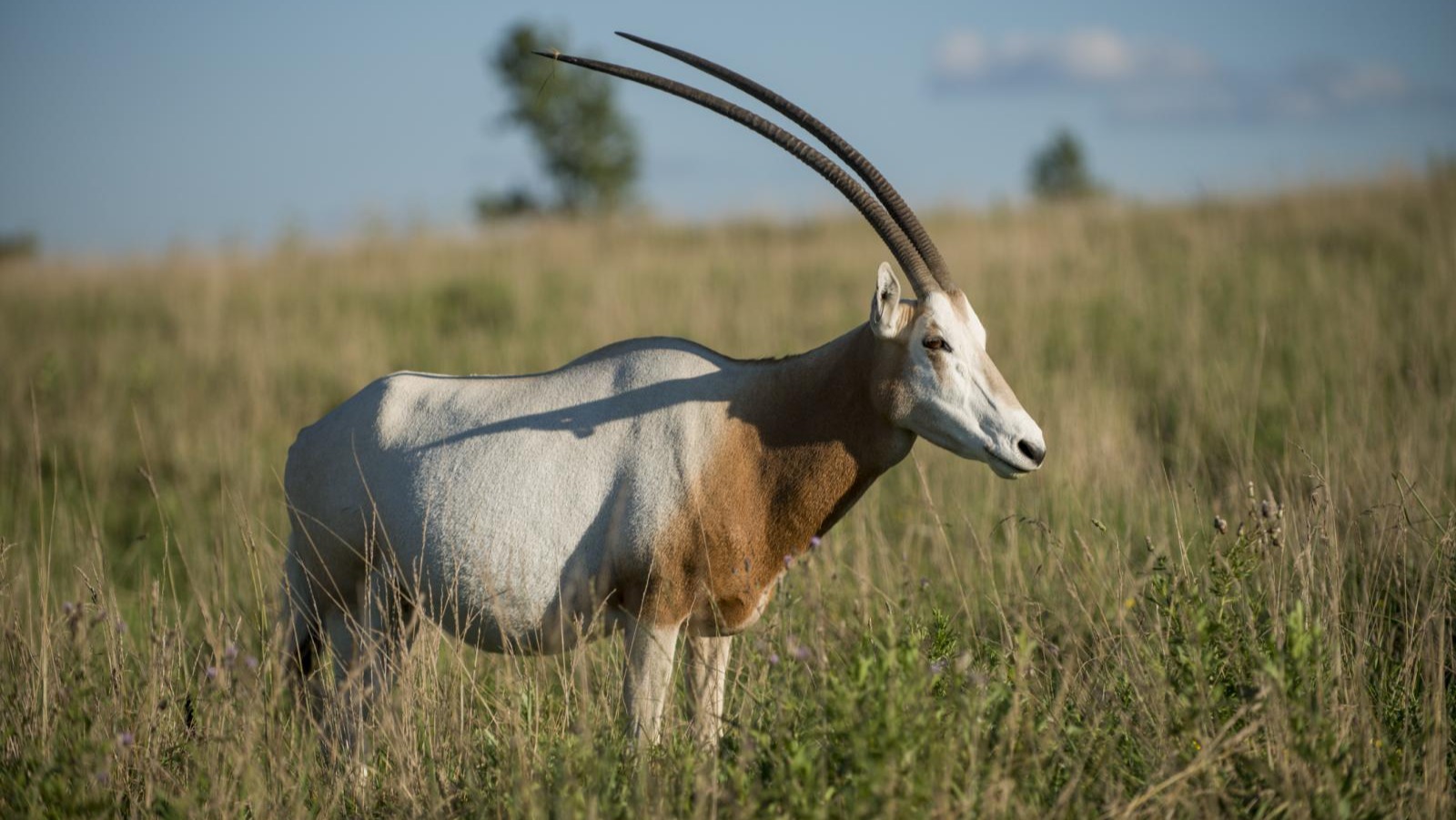
The scimitar-horned oryx, once declared extinct in the wild, now moves again across the arid grasslands of the Sahara. These elegant antelopes, with their distinctive curved horns, are at the heart of ambitious rewilding projects that seek to restore ecological balance to degraded landscapes in Chad and Niger. Their return is not merely about saving a species but about reviving entire ecosystems that have suffered from decades of overgrazing, desertification and human pressure.
Conservationists have carefully selected release sites based on vegetation surveys, water availability and minimal human-wildlife conflict. By reintroducing herds into fenced reserves, they monitor how these herbivores influence plant recovery, soil health and biodiversity. The scimitar-horned oryx are helping to restore balance to the Sahara's degraded grasslands through their natural grazing patterns, which encourage new growth and support a web of other species.

The reintroduction of the scimitar-horned oryx demonstrates how a single species can become a catalyst for broader landscape recovery in some of the world's most challenging environments.
The Dramatic Decline and Path to Extinction in the Wild
By the early 2000s, the scimitar-horned oryx had vanished from its native range across North Africa. Hunting, habitat loss and prolonged droughts pushed the population from hundreds of thousands in the 19th century to zero confirmed sightings in the wild by 2000. Their graceful form, once common on the steppe, became a symbol of conservation failure in the Sahara region.
Fortunately, dedicated breeding programmes in zoos and private collections across Europe, the United States and the Middle East maintained genetically diverse populations. These captive herds, numbering over 1,500 individuals by the mid-2010s, provided the foundation for rewilding efforts. The Species Survival Plan coordinated by the European Association of Zoos and Aquaria ensured that animals selected for release carried the strongest genetic representation of the original wild stock.
Initial trials began in fenced areas of Tunisia in the 1980s, but larger-scale reintroductions in Chad's Ouadi Rimé-Ouadi Achim Game Reserve marked a significant milestone. Between 2016 and 2022, more than 200 oryx were transported by air and road from breeding centres to acclimatisation pens in the heart of the Sahel. Similar projects in Niger have seen smaller but growing herds established in the Termit & Tin Toumma National Nature Reserve.
Understanding the Oryx's Role in Grassland Ecology
Scimitar-horned oryx are supremely adapted to arid environments. Their pale coats reflect intense sunlight, while specialised kidneys allow them to survive on moisture from vegetation alone for weeks. As selective grazers, they prefer nutritious grasses and forbs, cropping them at heights that stimulate tillering and prevent woody encroachment.
In overgrazed areas, the absence of large herbivores had allowed unpalatable shrubs to dominate, reducing biodiversity and accelerating soil erosion. The return of oryx herds, managed at densities of roughly one animal per 200 hectares, creates a grazing mosaic that favours perennial grasses. Early monitoring data from Chad shows a 25 percent increase in plant species richness within release zones after three years.
These antelopes also serve as prey for recovering predator populations, including cheetah and African wild dog, which in turn help regulate herbivore numbers. Their dung enriches nutrient-poor soils, supporting insect communities that sustain birds and small mammals. In this way, the oryx act as a keystone species in restoring the intricate relationships that once defined the Saharan steppe.
Science Behind Selecting Release Sites and Managing Herds
Choosing where to release scimitar-horned oryx requires meticulous planning. Teams conduct extensive vegetation mapping using satellite imagery and ground surveys to identify areas with sufficient perennial grass cover and seasonal water sources. Soil samples help determine recovery potential, while camera traps and community consultations assess risks from poaching or livestock competition.
In Chad, the chosen sites within the 78,000-square-kilometre Ouadi Rimé-Ouadi Achim reserve offered a balance of open grasslands and scattered acacia thickets. Fences, funded through international partnerships, span strategic sections to protect the animals during their vulnerable early years while still allowing some natural movement. Herds are released in social groups of 12 to 20 individuals to maintain natural behaviours and reduce stress.
Post-release monitoring relies on GPS collars fitted to key animals in each herd. These devices transmit location data every four hours, allowing rangers to track movement patterns, identify calving sites and detect any unusual behaviour that might signal health issues. Veterinary teams conduct regular health checks, ensuring that released oryx remain free from diseases that could spread to local livestock.
Success in rewilding the steppe depends not only on the numbers released but on understanding how these animals interact with their recovering environment over time.
Monitoring Impact on Steppe Vegetation Recovery
Researchers establish fixed monitoring plots both inside and outside the release areas to measure changes in vegetation structure. Quadrat sampling every six months records grass height, species composition and biomass. Initial results indicate that moderate oryx grazing reduces the dominance of invasive species while promoting the return of native Sporobolus and Aristida grasses.
Soil compaction decreases as oryx hooves break up hard crusts, improving water infiltration during rare rain events. Dung beetle populations have risen noticeably in release zones, accelerating nutrient cycling. These measurable improvements demonstrate how carefully managed herbivore reintroductions can reverse decades of degradation in arid grasslands.
Long-term studies, funded by organisations including the Sahara Conservation Fund, aim to track these changes over at least a decade. Data collected so far suggests that oryx presence correlates with increased insect diversity and a rise in bird species that feed on both insects and seeds. The projects also incorporate local knowledge from nomadic communities who have observed the landscape for generations.
Challenges Facing Saharan Rewilding Projects
Despite encouraging progress, significant hurdles remain. Climate change brings more frequent and severe droughts to the Sahel, testing the resilience of both oryx and the recovering grasslands. In 2020, a prolonged dry spell in Chad reduced available forage, forcing managers to provide supplementary feed in extreme cases.
Security concerns in border regions occasionally limit access for monitoring teams. Poaching, though reduced through community ranger programmes, still poses a threat. Education initiatives have helped local herders understand the value of wildlife corridors, leading to voluntary agreements that limit livestock numbers near release sites.
Genetic management continues to be crucial. With relatively small founding populations, conservationists rotate animals between reserves to maintain diversity. International studbooks track parentage, ensuring that future releases avoid inbreeding while preserving the distinctive Saharan adaptations that captive breeding might otherwise dilute.
Community Involvement and Economic Benefits
Successful rewilding extends far beyond the animals themselves. Projects in both Chad and Niger have created employment for over 150 local rangers, trackers and support staff. Training programmes build capacity in wildlife monitoring, ecotourism guiding and habitat restoration techniques.
Revenue from carefully regulated photographic safaris and scientific tourism helps fund ongoing protection. Communities receive direct benefits through conservation dividends, school scholarships and improved water infrastructure. These tangible gains encourage residents to become active stewards of the recovering landscape.
Women in particular have taken prominent roles in monitoring programmes, bringing valuable traditional knowledge about seasonal plant use and animal behaviour. Their participation strengthens community buy-in and ensures that conservation benefits reach all parts of local society.
What the Return of the Scimitar-Horned Oryx Means for the Future of the Sahara
The reintroduction of these antelopes represents a rare conservation success story in a region often associated with environmental loss. Their presence signals that even heavily degraded ecosystems can recover when given protection, scientific management and time. As herds grow, reaching an estimated 450 individuals across both countries by late 2024, the steppe begins to echo once more with the soft sounds of grazing and the occasional clash of horns.
Looking ahead, conservationists hope to expand release areas and eventually remove sections of fencing to allow more natural dispersal. Plans are underway to establish additional populations in suitable habitats across the greater Sahel region. Each new herd adds to the genetic reservoir and strengthens the ecological web that supports life in one of Earth's harshest environments.
The projects also offer valuable lessons for other rewilding initiatives worldwide. They demonstrate the importance of combining ex-situ breeding with in-situ habitat restoration, the value of local community engagement, and the power of long-term scientific monitoring. For the Sahara, the return of the scimitar-horned oryx brings renewed hope that balance can be restored to its vast and ancient grasslands.

Conclusion
The story of the scimitar-horned oryx reminds us that meaningful conservation requires patience, collaboration and respect for both scientific data and traditional knowledge. These remarkable animals are not only reclaiming their place in the wild but actively contributing to the recovery of landscapes that support countless other species and the people who have called the Sahel home for centuries.
For discerning travellers seeking a private safari beyond our set itineraries, we invite you to contact us directly. We specialise in designing exceptional, tailor-made journeys for individuals, couples, families, and private groups of up to eight guests. Drawing on our handpicked network of distinguished camps and lodges, we curate every detail with precision and care, creating a seamless, deeply personal safari experience shaped entirely around your preferences, pace, and budget.
Consider extending your African journey to witness conservation in action. Namibia safari experiences offer complementary insights into arid-land recovery, while Duba Plains Camp provides an intimate window into successful rewilding projects in Botswana. Those fascinated by antelope ecology may also wish to explore our Kenya offerings, where similar principles support diverse herbivore communities in the Laikipia region.
At Encounters Africa we remain committed to supporting these vital initiatives through responsible tourism and direct conservation partnerships. Whether you wish to visit active rewilding sites or simply learn more about how your journey can contribute to positive change, we would be delighted to hear from you. Please visit our enquiry form to begin planning your own transformative encounter with Africa's recovering wild places.
More like this
Conservation
How Sub-Zero Temperatures Challenge African Wildlife Conservation Programs
Conservation
How Tanzania's Rangers Track Elephant Movements to Strengthen Anti-Poaching Networks
Conservation
How Travelers Directly Strengthen Botswana's Anti-Poaching Networks
Conservation
How Uganda's Community Rangers Reversed Poaching Declines in Bwindi
Conservation
How Uganda's Mountain Gorillas Survive Against the Odds
Conservation