Culture
How Creole Culture Shapes Everyday Life Across the Seychelles Islands
Encounters Africa - 11 min read
Updated on 3 July 2026
Moments of culture and tradition in the Seychelles reveal themselves quietly, in the cadence of spoken Kreol, the scent of vanilla-infused curries simmering on outdoor stoves, and the rhythmic sway of sega dancers beneath coconut palms. Seychelles culture and traditions form a vibrant Creole tapestry woven from African, French, Indian, Chinese and Arab threads, creating a distinct island identity that shapes daily existence across its 115 islands. This fusion, born from centuries of migration and colonial encounters, continues to pulse through markets, kitchens, festivals and family gatherings, offering travellers meaningful windows into a living heritage rather than static displays.
With a population of just under 100,000, the Seychelles maintains one of the most concentrated Creole societies in the Indian Ocean. Culture in the Seychelles is not confined to museums or performance stages; it animates everyday interactions, from the animated bargaining at Victoria Market to the blessing of fishing boats before dawn. Understanding these practices allows visitors to move beyond the turquoise waters and granite boulders, engaging with communities in ways that honour their depth and resilience.
The Creole heart of the Seychelles beats strongest in its kitchens and communal spaces, where recipes and stories are passed between generations like precious heirlooms.
The Roots of Seychelles Creole Identity
The story of culture in the Seychelles begins with the uninhabited islands first settled in the mid-18th century by French planters, their African slaves, and later waves of migrants. By 1770, when the first 15 French settlers and seven enslaved people arrived on Ste Anne Island, the foundations of a unique Creole society were already forming. Freed slaves, Indian and Chinese labourers, and Arab traders added further layers throughout the 19th and 20th centuries, each contributing ingredients to what would become a distinctive cultural stew.
Today, over 90 percent of Seychellois identify as Creole, with Kreol, a French-based Creole language, serving as the national tongue alongside English and French. This linguistic blend mirrors the broader cultural synthesis visible in architecture, music, dance and cuisine. The Catholic Church, introduced by French colonists, remains central to community life, with 76 percent of the population identifying as Roman Catholic, yet its practices often incorporate African spiritual elements and ancestral respect.
Colonial legacies and independence in 1976 have shaped how these influences manifest today. The struggle for self-determination strengthened communal bonds, and the subsequent emphasis on nation-building elevated Creole pride. Modern Seychelles carefully balances preservation with progress, protecting traditions while embracing tourism as an economic lifeline that now accounts for nearly 60 percent of GDP.
Language as Living Heritage
Kreol is far more than a means of communication; it embodies the spirit of adaptation and resistance that defines Seychelles culture and traditions. Spoken by virtually all islanders, this melodic language carries African grammatical structures within a French vocabulary, enriched by words from multiple continents. Hearing its rolling rhythms in casual conversation offers an immediate connection to the islands' layered past.
Efforts to document and celebrate Kreol have gained momentum since the 1980s, with the establishment of the Creole Institute and annual language festivals. Schools now teach Kreol alongside French and English, ensuring younger generations maintain fluency. For visitors, learning even basic phrases such as "bonswar" (good evening) or "mersi" (thank you) opens doors to warmer, more authentic exchanges with local people.
Daily Expressions of Creole Culture
In the Seychelles, culture reveals itself most authentically through ordinary moments rather than organised spectacles. Mornings often begin with the sound of women sweeping their yards with coconut-fibre brooms while exchanging news in rapid Kreol. The preparation of breakfast might involve grating fresh coconut for a traditional ladob, a dish of plantain, cassava or sweet potato cooked in coconut milk and spices that varies slightly from household to household.
Markets serve as vital social hubs where Seychelles culture and traditions come alive through sensory experiences. The bustling Sir Selwyn Selwyn-Clarke Market in Victoria overflows with local produce, handmade crafts and the aroma of freshly baked breadfruit. Here, traders wrap purchases in banana leaves following longstanding custom, while conversations flow freely between vendors and customers, often punctuated by laughter and animated storytelling.
Markets are the beating heart of Seychelles society, where economic exchange becomes an opportunity for cultural transmission and community strengthening.
Cuisine as Cultural Memory
Food stands at the centre of Creole identity, with recipes functioning as edible archives of the islands' history. Traditional Seychellois cuisine balances French techniques with African staples, Indian spices and Chinese stir-fry methods. signature dishes like octopus curry, shark chutney and grilled fish served with a fiery pilipili sauce tell stories of resourceful adaptation to island resources.
Families guard their specific versions of these recipes with quiet pride. A grandmother's particular blend of spices for bouyon, a hearty soup containing fish, lentils and vegetables, might be adjusted according to the seasons and what the ocean provides. Cooking together across generations reinforces family bonds while transmitting knowledge that cannot be found in recipe books.
Visitors can respectfully experience this aspect of culture in the Seychelles by joining small-group cooking classes offered by several family-run enterprises on Mahé and Praslin. These sessions typically include visits to local gardens to harvest ingredients before learning to prepare dishes using traditional methods. Such experiences foster genuine appreciation rather than voyeuristic observation.
Music, Dance and Oral Traditions
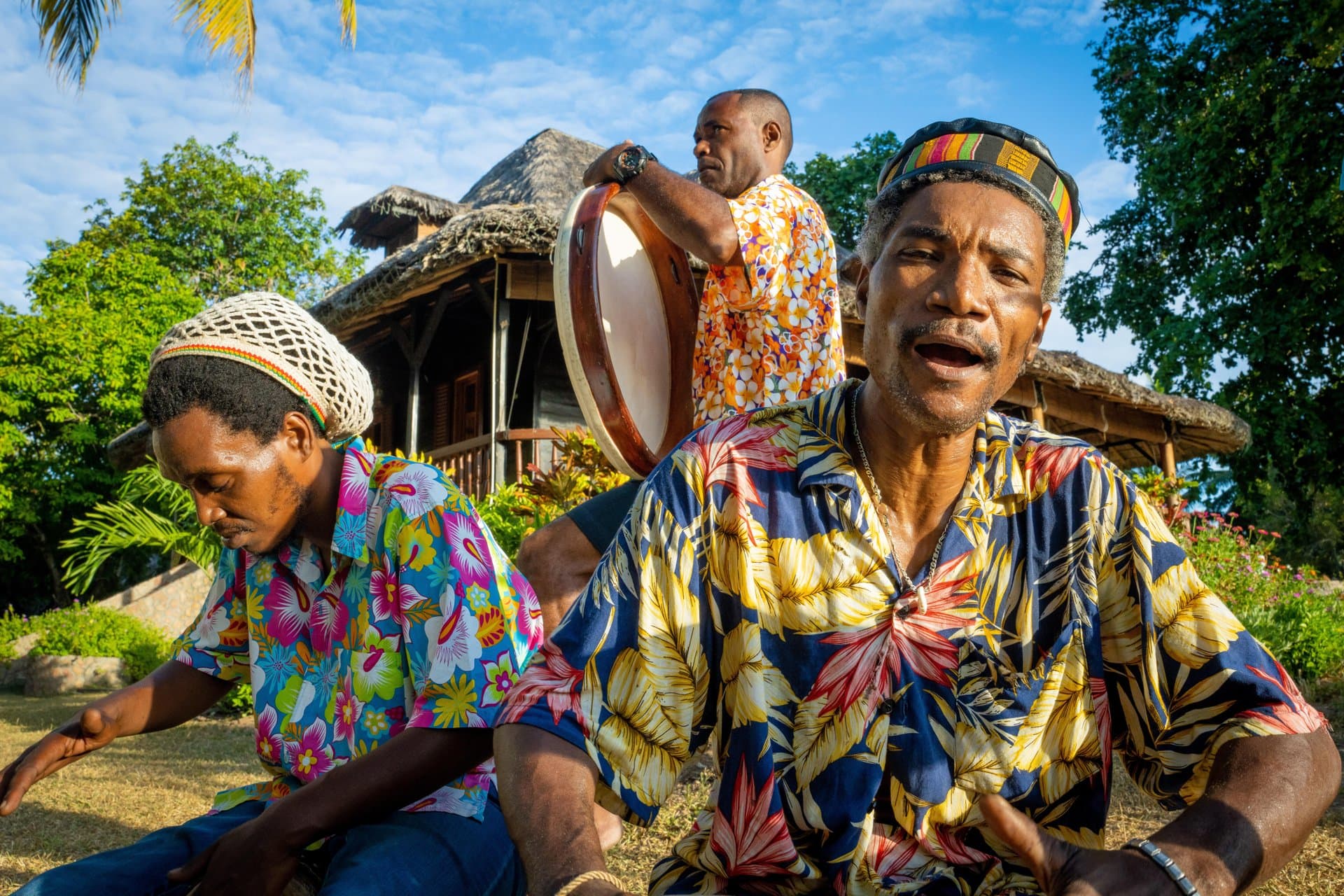
The pulsating rhythms of the sega and moutya represent some of the most recognisable expressions of Seychelles culture and traditions. Sega, with its distinctive drum patterns and swaying movements, evolved from the enslaved people's need for expression and community during difficult times. Traditionally performed at full moon gatherings, it has evolved into a national art form performed at cultural events throughout the year.
Moutya, considered more sacred and historically linked to healing rituals, features slower, more hypnotic rhythms played on traditional drums made from hollowed tree trunks. Though once discouraged by colonial authorities who associated it with "pagan" practices, moutya has experienced a strong revival since independence. Contemporary artists now blend these traditional forms with modern genres like reggae and soca, creating fresh interpretations that resonate with younger audiences.
Oral traditions remain equally important, with older generations sharing proverbs, folktales and historical accounts during evening family gatherings. Stories of the mischievous "Soungoula" spider character, similar to Anansi tales found across Africa and the Caribbean, entertain children while embedding moral lessons and cultural values.
Festivals That Mark the Calendar
The Seychelles calendar features several key celebrations that showcase moments of culture and tradition at their most vibrant. The Festival Kreol, held annually in October, transforms the islands with music, dance, food stalls and cultural exhibitions. This week-long event draws both locals and visitors to witness traditional crafts, storytelling sessions and performances that might otherwise remain private.
Religious festivals blend Catholic observance with distinctly Creole flavour. The Festival of the Assumption on 15th August sees elaborate processions and decorated fishing boats, particularly vibrant on La Digue. Easter celebrations incorporate unique local customs, including the baking of special coconut biscuits and the creation of intricate flower carpets for church processions.
Independence Day on 29th June and Constitution Day on 18th June provide opportunities to witness national pride expressed through cultural display. These public holidays feature colourful parades, traditional sports competitions and communal feasts that strengthen social connections across the archipelago.

Traditional Crafts and Environmental Wisdom
Craftsmanship forms another pillar of Seychelles culture and traditions, with skills passed through families for generations. The intricate woven baskets, hats and mats created from coconut leaves demonstrate both practical ingenuity and artistic sensibility. On outer islands especially, these traditional techniques remain essential, as imported goods prove expensive and sometimes unreliable.
The knowledge of medicinal plants represents perhaps the most endangered aspect of Creole heritage. Elders who remember which leaves, barks and roots can treat specific ailments are increasingly rare. Conservation organisations now work alongside traditional healers to document this botanical wisdom before it disappears, recognising its potential value for both cultural preservation and modern medicine.
Maritime traditions also run deep, reflecting the islands' absolute dependence on the ocean. The construction of traditional pirogues, slender outrigger canoes carved from single tree trunks, follows methods refined over centuries. Fishing techniques, from handline methods to the placement of fish traps, incorporate observations of tides, moon phases and bird behaviour accumulated through generations of close observation.
Traditional knowledge of the sea and forest represents the most practical expression of Creole wisdom, connecting islanders to their environment in ways that modern technology cannot replicate.
Respectful Engagement with Seychelles Culture
Travellers seeking authentic connection with culture in the Seychelles should approach their experiences with sensitivity and patience. The most meaningful moments often occur spontaneously rather than through formal tours. Accepting an invitation to join a family meal or watching local men play dominoes under a shady tree can provide deeper insight than any organised cultural show.
When attending public festivals or performances, respectful behaviour includes asking permission before photographing individuals, dressing modestly at religious sites, and refraining from intrusive questions about private spiritual practices. Learning a few words of Kreol demonstrates genuine interest and typically elicits warm responses from local people proud to share their heritage.
Several excellent initiatives now facilitate responsible cultural encounters. Community-based projects on islands like Silhouette and La Digue offer opportunities to learn traditional skills directly from practitioners. These programmes ensure that economic benefits flow back to local families while preserving the dignity of the cultural exchange.
What Visitors Should Know Before Experiencing Creole Culture
Many travellers wonder how to engage meaningfully with Seychelles culture and traditions without causing disruption. The answer lies in moving slowly, listening carefully, and following local cues rather than imposing expectations. Public events offer accessible entry points, while private invitations should be accepted graciously but never assumed.
Photography requires particular sensitivity. While colourful festivals provide wonderful opportunities for images, always ask permission first. Some traditional healers and older community members may prefer not to be photographed. Supporting local artisans by purchasing authentic crafts directly from makers helps sustain traditional skills and provides income to practitioners.
Remember that Creole culture continues evolving. Contemporary Seychellois artists, musicians and chefs reinterpret traditional forms for new generations. Appreciating both the preservation of old ways and the creation of new expressions demonstrates the deepest respect for this dynamic island heritage.
Embracing Seychelles' Living Heritage
The moments of culture and tradition in the Seychelles ultimately reveal themselves as an ongoing conversation between past and present, between different peoples who found themselves sharing these remarkable islands. From the early morning calls of bread sellers cycling through neighbourhoods to the evening glow of oil lamps during storytelling sessions, Creole culture and traditions continue shaping how islanders relate to each other, their environment and their history.
For those who approach with genuine curiosity and respect, these cultural encounters enrich a Seychelles journey immeasurably. They transform a beach holiday into something far more meaningful, creating connections that often last long after returning home. The warmth of a shared meal, the infectious rhythm of a sega performance, or the simple pleasure of understanding a Kreol proverb all contribute to a deeper appreciation of what makes these islands so special.
Encounters Africa specialises in designing exceptional, tailor-made journeys for individuals, couples, families, and private groups of up to eight guests. Drawing on our handpicked network of distinguished camps and lodges, we curate every detail with precision and care, creating a seamless, deeply personal safari experience shaped entirely around your preferences, pace, and budget. Whether incorporating cultural experiences in the Seychelles or combining them with wildlife encounters in Tanzania or Kenya, we ensure every element enhances your understanding and enjoyment.
For those looking for a private safari beyond our set itineraries, we would be delighted to hear from you directly. We specialise in creating beautifully tailored journeys for solo travellers, couples, families, and private groups of up to eight guests. Through our trusted network of carefully selected camps and lodges, we craft each safari around your individual interests, preferred pace, and budget, ensuring a seamless and deeply personal experience from beginning to end. Contact us today via our enquiry form to begin planning your own meaningful encounter with the rich Mahe Island culture and beyond.
More like this
Culture
How Cultural Moments in Uganda Deepen Every Safari Experience
Culture
How Cultural Tribes in South Africa Shape Everyday Life and Landscapes
Culture
This Is How Kenya’s Living Traditions Shape Memorable Journeys
Culture
How Rwandan Families Keep Oral Traditions Alive Across Generations
Culture
Seychelles Blend Creole Flavours and Traditional Dance into Daily Life
Culture