tips and advice
What a Night in a Star Bed on Safari Actually Feels Like
Encounters Africa - 8 min read
Updated on 28 August 2026
Sleeping out on safari brings an intimacy with the African night that no conventional lodge room can replicate. From the distant whoop of hyenas to the faint rustle of leaves overhead, these experiences connect travellers directly to the rhythms of the wild. Encounters Africa is the specialist arm for safaris beyond Namibia, covering South Africa, Botswana, Kenya, Tanzania, Rwanda, Uganda, Zambia and Zimbabwe. Cape Town-based with three decades of combined experience, we book directly with camps and lodges, tailoring journeys for individuals, couples, families and private groups of up to eight using our 81 published itineraries that can all be reshaped. Read more at our sister brand's ultimate all-inclusive Namibia safari and compare all-inclusive options here all-inclusive safari collection.
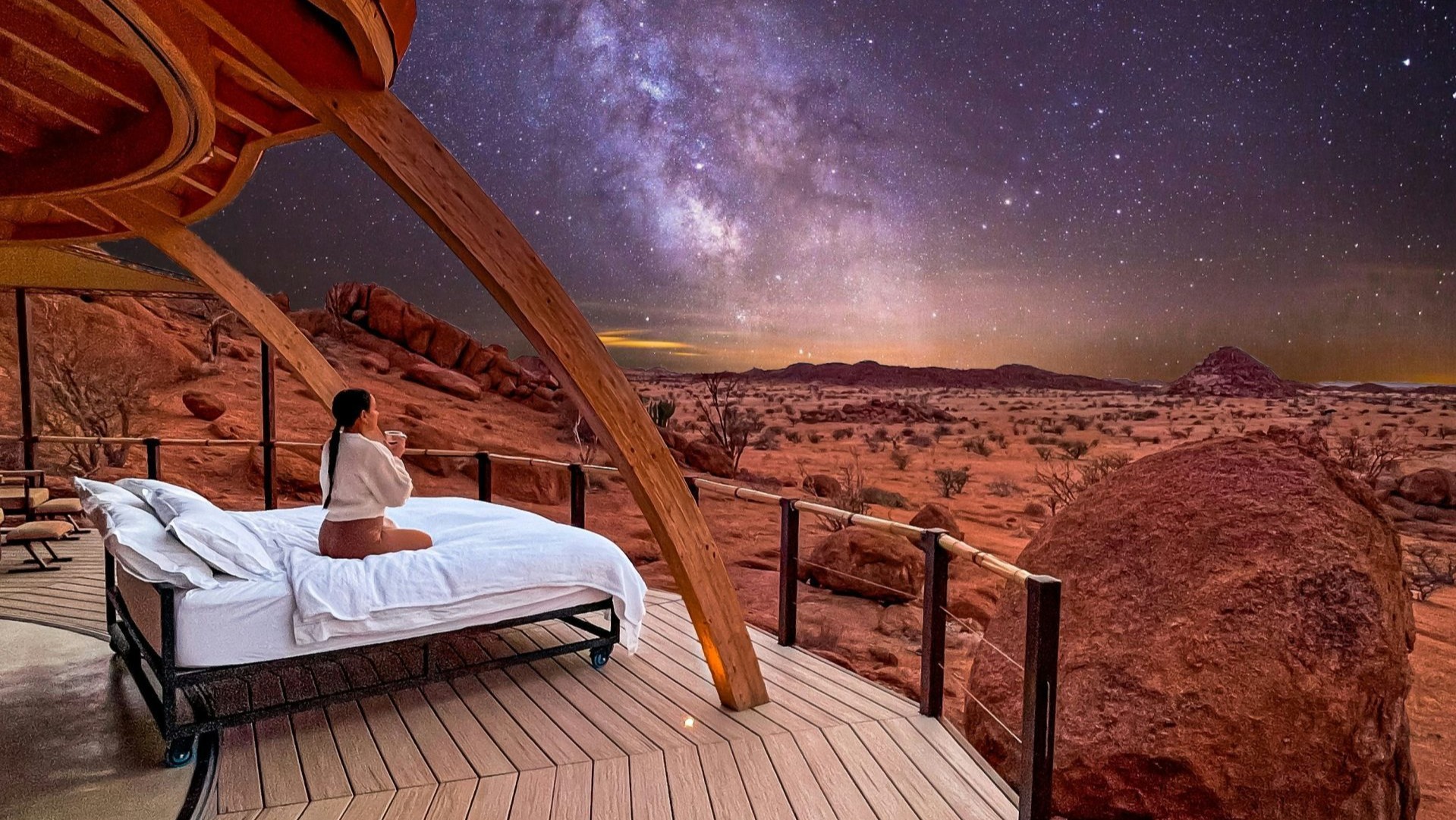
A star bed on safari is an elevated platform or specially adapted tent with a fully open or retractable roof, allowing guests to sleep directly beneath the night sky while remaining protected from wildlife. These setups range from simple raised beds with mosquito netting to luxurious versions complete with en-suite facilities positioned nearby. The design prioritises safety through elevation or sturdy enclosures while maximising the sensory connection to the surrounding bush.
What a Star Bed on Safari Actually Feels Like
The first sensation is one of profound exposure. As the last light fades, the canvas or netting above retracts, revealing a vast canopy of stars that seems close enough to touch. The air carries the sharp scent of dry grass mixed with woodsmoke from the campfire a respectful distance away. You lie back, heart beating slightly faster than usual, aware that this thin barrier between you and the wild is both thrilling and strangely comforting.
Sounds become your constant companions. A lion's low cough might drift across the plains, answered by the whooping chorus of spotted hyenas. Closer still comes the rustle of small creatures in the undergrowth or the soft padding of hooves as antelope move past your platform. These nights heighten every sense, turning what might be background noise in a solid-walled room into an immersive wildlife soundtrack.
The African night does not sleep. It breathes, shifts and occasionally roars, reminding every guest that we are merely visitors in a world that continues its ancient rhythms long after we have switched off our torches.
The Different Ways to Sleep Beneath African Skies
Star beds represent one end of the spectrum, offering a semi-permanent structure that balances comfort with immersion. Many Chief's Camp in the Okavango Delta and similar properties in Botswana provide these with thoughtful touches like comfortable mattresses and discreet solar lighting. The experience feels luxurious yet raw, allowing you to drift off under constellations while knowing hot showers await at dawn.
Fly camping takes the concept further into simplicity. Lightweight tents or simply a bedroll under a mosquito net are pitched in remote locations, often after a day of walking. These setups appear in places like the private concessions around Masai Mara and certain areas of South Africa. The absence of solid walls means the bush feels immediate; the crack of a twig at 2am carries particular weight.
Mobile camps occupy the middle ground, providing comfortable canvas tents that move with the seasons or with specific wildlife movements. These operations typically include proper beds, en-suite bathrooms and a full dining setup. They allow travellers to follow the Kenya migration or explore remote corners of Botswana without sacrificing too many creature comforts.
What is a Star Bed on Safari?
What is a star bed on safari? A star bed on safari is an elevated platform or specially adapted tent featuring a fully open or retractable roof that enables guests to sleep directly under the night sky. These installations maintain protection from wildlife through elevation, sturdy construction, or surrounding barriers while offering an unparalleled connection to the African wilderness after dark. Most include mosquito netting, comfortable bedding, and nearby facilities, with professional guides and rangers ensuring safety throughout the night. The concept has grown in popularity across Southern and East Africa since the early 2000s, appearing in both permanent lodges and seasonal mobile operations.
The Realities of a Night in the Bush
Expect broken sleep. The African night pulses with activity, and most guests wake several times to listen more closely to unfamiliar sounds. One moment you might hear the distant trumpet of an elephant, the next the high-pitched alarm call of a tree squirrel. These interruptions rarely feel unwelcome. Instead, they create a profound awareness of being part of something much larger than yourself.
Temperature fluctuations add another dimension. Even in warmer regions, nights can turn surprisingly cool, particularly in the hours before dawn. Good operators provide quality bedding and hot water bottles when needed. The transition from day to night brings its own drama as the sun sets in a blaze of colour and the first stars appear while you enjoy a sundowner around the fire.
Nothing quite prepares you for the moment a leopard's rasping call echoes from just beyond the firelight, or when the Milky Way emerges so clearly that it feels like a river flowing overhead.
Safety Arrangements That Make Sleep Possible
Professional operators maintain multiple layers of protection that allow guests to rest with confidence. Armed rangers or guides remain on duty throughout the night, often positioned discreetly between sleeping areas and the surrounding bush. Their knowledge of animal behaviour helps them anticipate and prevent potential encounters before they develop.
Physical barriers play an important role too. Star beds are typically raised on sturdy platforms several metres off the ground, placing guests beyond the reach of most predators. Fly camps and mobile setups use carefully chosen locations with good visibility and natural wind direction that carries human scent away from game paths. Perimeter lighting or subtle electric fencing appears at some properties, though many prefer to rely on traditional knowledge and vigilance.
Communication systems connect sleeping areas with central staff quarters, while emergency protocols are clearly explained before guests retire. The key lies in experienced placement. Camps select locations based on daily game movements, ensuring that the night's visitors remain at a respectful distance. This combination of human expertise, thoughtful design and respect for the environment creates the foundation for these memorable experiences.
Choosing the Right Sleep-Out Experience
Your choice depends on comfort levels and what you hope to gain from the night. Those seeking romance or a special occasion might prefer the relative luxury of a star bed at Duba Plains Camp, where the structure blends seamlessly with the surrounding landscape. More adventurous travellers often gravitate toward fly camping, embracing the simplicity that brings them closer to the raw essence of the African bush.
Consider the season and location carefully. Dry season nights in many areas offer clearer skies and more comfortable temperatures, though wildlife concentrations vary. Mobile camps following migration patterns provide different perspectives throughout the year. Discussing your preferences with a specialist allows for proper matching between experience type and personal comfort requirements.
Many properties now offer the option to try a sleep-out as an add-on to a more conventional stay. This flexibility lets travellers test their appetite for the experience before committing to multiple nights. The sensory memories created during these hours often become the most treasured recollections of an entire safari.
Embracing the African Night
A night spent under the stars transforms how we perceive the African wilderness. It strips away the comforts of modern life and replaces them with something more elemental: the direct experience of sharing space with creatures that have inhabited these landscapes for millennia. The memories formed during these hours, whether of a hyena's silhouette against the moonlight or simply the vast silence between animal calls, stay with travellers long after they return home.
For discerning travellers seeking a private safari beyond our set itineraries, we invite you to contact us directly. We specialise in designing exceptional, tailor-made journeys for individuals, couples, families, and private groups of up to eight guests. Drawing on our handpicked network of distinguished camps and lodges, we curate every detail with precision and care, creating a seamless, deeply personal safari experience shaped entirely around your preferences, pace, and budget.
Whether incorporating a star bed experience into a broader journey across Kenya's conservancies or pairing fly camping with exploration of Botswana's wetlands, the right guidance ensures these nights enhance rather than overwhelm your safari. Reach out to Encounters Africa to begin shaping a journey that includes at least one unforgettable night beneath the African sky.
More like this
tips and advice
What Experienced Guides Pack for Rainy Season Safaris in Africa
tips and advice
What It Really Takes to Serve Fresh Meals at Remote African Safari Camps
tips and advice
What Shoulder Season Really Delivers on an African Safari
tips and advice
What to Expect on a Pre-Dawn Hot Air Balloon Safari Across African Plains
tips and advice
What to Expect When Camping Under Canvas Near Lions and Leopards
tips and advice