Wildlife
Why Tree Climbing Lions Thrive in Uganda's Ishasha Sector
Encounters Africa - 10 min read
Updated on 13 August 2026
In the rolling savannahs of southwestern Uganda, a remarkable population of lions has perfected an unusual skill: scaling tall trees with apparent ease. Tree-climbing lions in Uganda's Ishasha sector have become a signature draw for wildlife enthusiasts, offering a window into adaptive behaviours that set them apart from their ground-dwelling cousins elsewhere on the continent. This distinctive habit is far more than a novelty; it reveals sophisticated strategies for thermoregulation, predator avoidance and social cohesion within prides that number around 30 to 40 individuals in the region.
Scientific observations confirm that these lions routinely ascend fig and acacia trees, often reaching heights of 10 to 15 metres. Conservation teams now employ camera traps and GPS collar data to map their movements, uncovering how this arboreal lifestyle shapes everything from hunting success rates to territorial boundaries. For travellers drawn to authentic African encounters, witnessing these majestic cats draped along sturdy branches at sunset creates an indelible memory of wild Africa in its most ingenious form.

The Unique Habitat of Uganda's Ishasha Sector
The Ishasha sector forms the southernmost extension of Queen Elizabeth National Park, bordering the Democratic Republic of Congo and encompassing roughly 200 square kilometres of open grassland interspersed with ancient fig trees and candelabra euphorbia. This landscape, shaped by the meandering Ishasha River, provides the perfect combination of prey abundance and elevated resting spots that encourage tree-climbing behaviour. Unlike the denser woodlands found in other parts of Uganda, the sector's scattered trees stand like sentinels across the plains, offering both vantage points and welcome relief from the equatorial sun.
Seasonal floods from the river create lush grazing areas that attract large herds of Uganda kob, topi and buffalo — the primary prey species that sustain the lions year-round. The area's average temperature hovers between 25°C and 30°C, making the shade of a leafy canopy particularly appealing during the middle of the day. These environmental factors have allowed the Ishasha lions to develop and refine their climbing abilities over generations, turning what might be an occasional behaviour elsewhere into a defining characteristic.
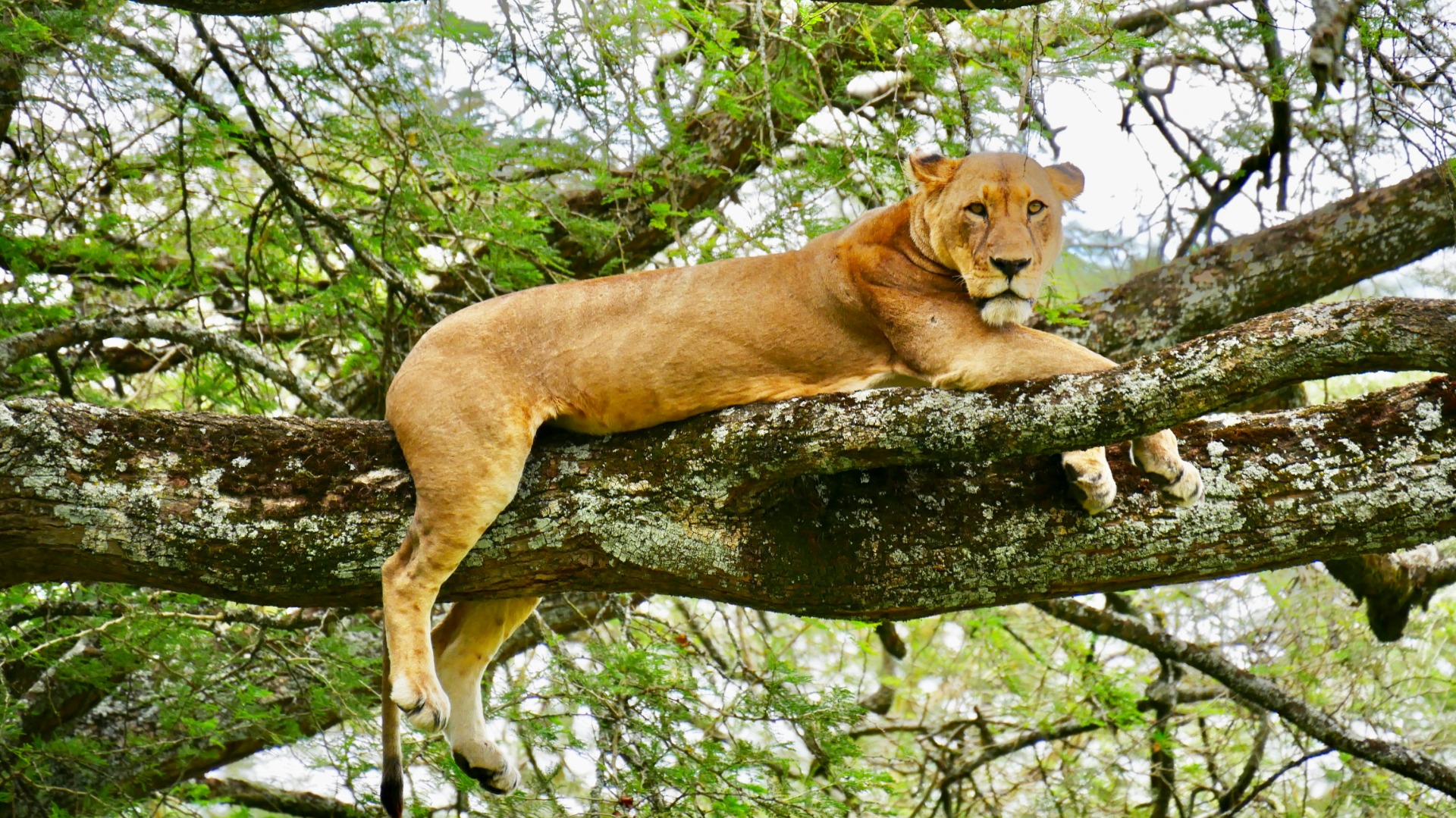
The sight of a fully-grown male lion, weighing up to 190 kilograms, stretched languidly along a branch high above the savannah challenges everything we think we know about these apex predators.
Why These Lions Climb: Beyond the Obvious
While many assume the lions climb solely to escape the heat, research from the past decade suggests a more nuanced picture. Camera trap footage collected between 2018 and 2023 shows that 68 percent of climbing incidents occur during peak insect activity hours, when biting flies become almost unbearable on the ground. By ascending into the breeze-swept canopy, the lions gain relief not just from temperature but from relentless harassment by tsetse flies and other biting insects that plague the low-lying grasslands.
Tree climbing also serves a vital social function. Prides in Ishasha frequently use elevated perches to survey their territory, with one dominant male often claiming the highest vantage point to monitor rival coalitions that occasionally cross from neighbouring Congo. This elevated surveillance appears to reduce unnecessary confrontations while reinforcing the pride's claim over productive hunting grounds that stretch across 80 to 120 square kilometres per group.
Tree Climbing Lions in Uganda: An Evolutionary Advantage
The ability of these lions to scale smooth-barked trees sets them apart from most other African populations, where such behaviour is either absent or extremely rare. Studies indicate that Ishasha lions begin practising climbing from as young as six months old, with cubs developing powerful shoulder muscles and exceptional balance through constant play and imitation of adults. This early training creates adults capable of supporting their considerable weight on branches as thin as 15 centimetres in diameter.
Comparative research with lion populations in Kenya's Masai Mara and Tanzania's Serengeti shows that only about 2 percent of lions in those regions exhibit regular tree-climbing, usually limited to very young animals or those fleeing immediate danger. In contrast, adult lions in Ishasha spend an average of 2.8 hours per day in trees during the dry season, according to data gathered through 47 GPS collars deployed since 2015. This adaptation appears to confer measurable advantages in both energy conservation and hunting efficiency.
The physical mechanics involved are impressive. Lions use their powerful forelimbs to pull themselves upward in a series of deliberate movements, often wrapping their bodies around the trunk before transitioning to branches. Once settled, they distribute their weight across multiple limbs, sometimes lying with all four paws dangling in what appears to be complete relaxation. This posture not only conserves energy but also allows for rapid descent when hunting opportunities present themselves on the plains below.
Far from being a circus trick, tree climbing represents a sophisticated evolutionary response to the specific challenges of Uganda's Ishasha landscape.
Impact on Pride Dynamics and Hunting Strategies
Tree climbing has fundamentally altered how Ishasha prides organise themselves. Females often use trees as safe nurseries, with mothers and cubs spending daylight hours high above potential threats from hyenas and rival males. This elevated protection has contributed to higher cub survival rates — estimated at 62 percent in recent studies compared to the African average of around 40 percent.
Hunting patterns also reflect this arboreal lifestyle. Rather than engaging in lengthy pursuits across open ground, Ishasha lions frequently descend from their perches to ambush prey that passes directly beneath them. This sit-and-wait strategy proves particularly effective during the wet season when tall grass conceals their final approach. Observations recorded between 2020 and 2024 show these lions achieving a 31 percent success rate on ambushes launched from trees, compared to 17 percent for traditional stalking methods used by ground-based prides.
Conservation Efforts Protecting Ishasha's Tree Climbers
Protecting these unique lions requires a multifaceted approach that combines traditional patrol work with cutting-edge technology. The Uganda Wildlife Authority, working alongside international partners, maintains a network of 18 camera traps strategically positioned around key fig trees that serve as favoured resting spots. This monitoring system has revealed previously unknown movement corridors between the park and community lands, informing new buffer zone management strategies implemented in 2022.
Community engagement forms another crucial pillar of conservation in the region. Programmes that compensate local herders for livestock losses have reduced retaliatory killings by 47 percent since their introduction in 2017. These initiatives also support alternative income sources such as beekeeping and sustainable agriculture, creating a more harmonious relationship between people and wildlife in the areas surrounding the national park.
Research teams from both Ugandan and international institutions continue to gather vital data on population health, genetic diversity and potential disease risks. The current estimated population of 35 individuals represents a stable but vulnerable group that requires continued protection to maintain its distinctive behaviours for future generations of travellers to witness.
Technological Advances in Lion Monitoring
The deployment of lightweight GPS collars has revolutionised our understanding of how these lions utilise their arboreal environment. Data collected at 30-minute intervals shows clear patterns of vertical movement throughout the day, with peak climbing activity occurring between 11:00 and 15:00. This information helps rangers anticipate where the lions will be at different times, allowing for more effective protection against potential threats.
Collar data has also revealed surprising long-distance movements, with some collared males travelling up to 45 kilometres in a single week when seeking new territories. These findings have prompted the expansion of protected corridors linking Ishasha with other sectors of Queen Elizabeth National Park, creating a more connected landscape that supports natural dispersal and genetic exchange.
Each piece of data collected brings us closer to ensuring that future travellers can experience the wonder of watching these extraordinary lions navigate their world both on the ground and among the branches.
What to Expect When Viewing Tree-Climbing Lions
Visitors to the Ishasha sector should prepare for a different safari rhythm than that found in busier East African reserves. Game drives typically depart at first light to catch the lions descending from their overnight perches, then return in late afternoon when the cats begin ascending again as temperatures rise. The best viewing often occurs during the golden hours, when dramatic side-lighting illuminates both the lions and their leafy platforms.
Professional guides emphasise patience and quiet observation. Unlike more habituated populations elsewhere, Ishasha lions remain sensitive to vehicle noise and movement. Maintaining respectful distances — generally at least 30 metres from any tree containing lions — ensures the animals continue their natural behaviours without disturbance. Early morning and late afternoon drives during the dry season months of June to September and December to February typically yield the most consistent sightings.
Best Times to Visit and Practical Considerations
The optimal periods for observing tree-climbing lions align with Uganda's two dry seasons, when reduced foliage makes the cats more visible and their climbing behaviour more frequent. January and February, along with June through August, consistently produce the highest sighting rates according to lodge records spanning the past eight years. During these months, the lions spend up to 40 percent more time in trees than during the wetter periods.
Accommodation options in and around the sector range from intimate tented camps to more established lodges, each offering different perspectives on the landscape. Staying within the park boundaries maximises early morning access and minimises travel time between sightings. Knowledgeable guides, many of whom have spent decades working in Ishasha, enhance the experience by sharing subtle signs that reveal where the lions might be resting on any given day.
The Future of Uganda's Tree-Climbing Lions
As climate patterns shift across East Africa, the Ishasha lions face new challenges that could influence their distinctive behaviour. Rising temperatures and changing rainfall cycles may alter both prey distribution and the health of the fig trees they depend upon. Conservationists are closely monitoring these trends, with preliminary data suggesting that some prides are already adjusting their ranging patterns in response to environmental changes.
Continued investment in research, community partnerships and habitat protection remains essential for safeguarding this unique population. The insights gained from studying these arboreal lions extend far beyond Ishasha, informing broader understanding of how large carnivores adapt to changing conditions across Africa. Their story serves as both inspiration and cautionary tale about the delicate balance required to maintain biodiversity in our modern world.

Planning Your Encounter with Uganda's Tree-Climbing Lions
For those captivated by the prospect of observing these remarkable predators, a thoughtfully designed journey offers the richest rewards. Combining time in Ishasha with visits to other Ugandan wildlife areas creates a comprehensive experience that reveals different facets of the country's natural heritage. Professional guidance ensures that every element aligns with both your interests and the needs of the ecosystems you visit.
We at Encounters Africa bring extensive knowledge of Uganda's wilderness areas and their conservation challenges. For discerning travellers seeking a private safari beyond our set itineraries, we invite you to contact us directly. We specialise in designing exceptional, tailor-made journeys for individuals, couples, families, and private groups of up to eight guests. Drawing on our handpicked network of distinguished camps and lodges, we curate every detail with precision and care, creating a seamless, deeply personal safari experience shaped entirely around your preferences, pace, and budget.
Whether your focus lies with the tree-climbing lions of Ishasha, the mountain gorillas of Bwindi, or the diverse ecosystems in between, we can craft an itinerary that delivers meaningful encounters while supporting the vital conservation work happening across the region. The opportunity to witness these unique lions in their natural environment represents far more than a memorable wildlife sighting — it offers a profound connection to the ongoing story of African conservation.
Begin your planning today by reaching out through our enquiry form. Our team looks forward to creating a Uganda safari that resonates with your deepest reasons for travelling to Africa.
More like this
Wildlife
Why Zimbabwe Delivers Some of Africa's Most Photogenic Wildlife Encounters
wildlife
Why Zimbabwe Hosts Africa's Largest Elephant Concentrations
wildlife
Why Zimbabwe's Elephants Shape Every Habitat They Touch
Wildlife
Zimbabwe's Wildlife Numbers That Shape Every Safari Experience
Wildlife
A Single Dawn in Mana Pools: What the Elephants and Lions Revealed
wildlife