wildlife
Inside the Crocodile Clan: How Africa's Ancient Reptiles Maintain Rigid Social Orders
Encounters Africa - 10 min read
Updated on 20 August 2026
From sun-warmed riverbanks in the Okavango to remote Zambezi pools, Nile crocodiles live in tightly structured clans where size dictates rank and dominant females fiercely guard their young. This narrative explores the surprising social intelligence and maternal devotion that have allowed these living fossils to thrive for millions of years. Encounters Africa has observed these ancient reptiles across countless journeys, witnessing behaviours that challenge the cold-blooded stereotype and reveal a complex society governed by hierarchy and fierce parental care.
The Nile crocodile, Crocodylus niloticus, has patrolled African waterways for over 200 million years with remarkably little change in form. Yet beneath their armoured exterior lies a sophisticated social system that scientists continue to decode. Recent studies from 2018 to 2023 in Botswana and Zambia have documented clear dominance hierarchies, vocal communication, and cooperative hunting tactics that suggest these reptiles possess a form of social intelligence once thought exclusive to mammals and birds.

The crocodile clan operates with military precision: every individual knows its place, and that order ensures survival in environments where resources fluctuate dramatically between dry and wet seasons.
The Ancient Lineage of Africa's River Guardians
Long before the first mammals appeared, crocodilians dominated prehistoric landscapes. Today's Nile crocodiles represent one of the most successful vertebrate lineages on Earth, having survived the asteroid impact that wiped out the dinosaurs. Their sensory capabilities remain exquisitely tuned to their aquatic world: pressure-sensitive skin detects the slightest movement in water, while their eyes and nostrils sit high on the skull allowing near-complete submersion.
In the shimmering channels of the Okavango Delta, these reptiles can reach lengths of six metres and weights exceeding 800 kilograms. Such size confers not only physical advantage but social status. Larger individuals command prime basking sites, first access to kills, and mating priority. This size-based ranking system has been documented in detailed observations spanning more than 15 years at research stations along the Chobe and Zambezi systems.
What distinguishes crocodiles from many other reptiles is their capacity for learning and memory. Individuals recognise familiar clan members and remember past encounters, adjusting their behaviour accordingly. This social memory helps maintain stability within groups that may number between 20 and 100 animals sharing the same stretch of river or lagoon.
Decoding the Crocodile Hierarchy: Size, Strength and Status
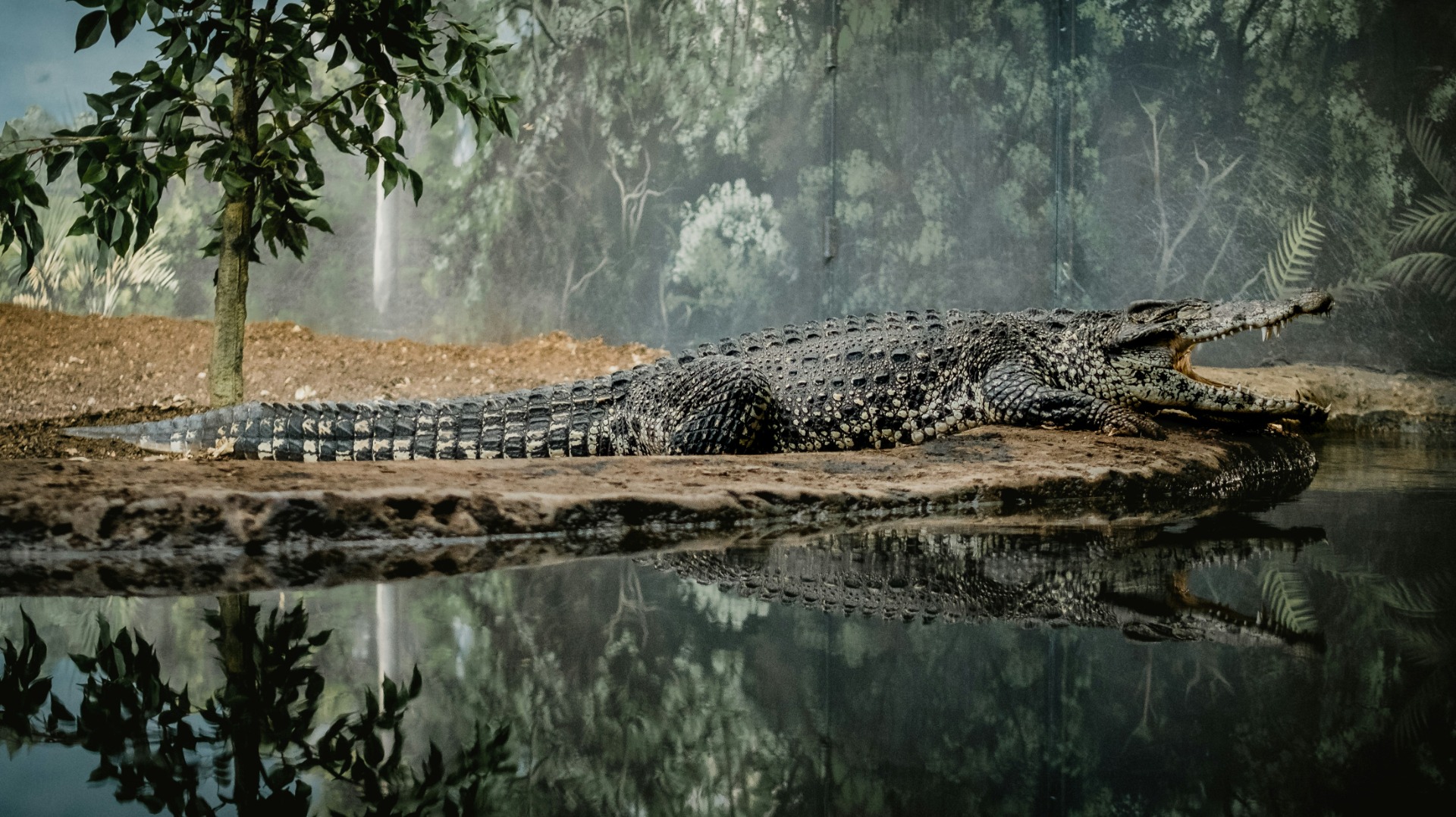
At first glance, a crocodile basking group appears to be a random collection of reptiles. Closer observation reveals a rigid social order where position on the bank corresponds directly to dominance. The largest, most powerful males occupy the highest, driest spots with optimal sun exposure and quickest escape routes into water. Subordinate animals arrange themselves in descending order of size, with the smallest individuals relegated to the water's edge or forced to bask on less favourable ground.
This hierarchy is enforced through a sophisticated repertoire of visual signals, sounds, and physical displays. Dominant crocodiles lift their heads high and open their jaws in a behaviour known as the «high walk» display. Lower-ranking animals respond with submissive postures, pressing their bodies flat against the earth and averting their gaze. Research conducted between 2015 and 2022 recorded over 40 distinct social signals used to maintain order without constant physical conflict.
Interestingly, these hierarchies remain relatively stable over years rather than shifting with every encounter. Once established, the order reduces energy-wasting fights and allows the clan to focus on hunting and reproduction. During the dry season, when water levels drop and animals concentrate around shrinking pools, this social structure becomes even more critical for peaceful coexistence.
In the crocodile world, brute strength alone does not guarantee leadership. Experience, memory of past conflicts, and the ability to read subtle social cues determine who truly rules the clan.
Cooperative Hunting Strategies
Perhaps the most compelling evidence of crocodile social intelligence comes from their coordinated hunting techniques. In the Chobe River Front, observers have documented groups of up to seven crocodiles working together to drive fish into shallow water where they become easy prey. One or two individuals act as beaters while others position themselves at strategic points to intercept fleeing fish.
During the annual sardine run in certain East African rivers, crocodiles have been seen forming living dams across narrow channels, allowing others to feed on trapped fish before rotating positions. Such behaviour requires communication, planning, and a willingness to share resources, characteristics rarely associated with reptiles.
Maternal Instincts: The Devoted Crocodile Mother
Among the most remarkable aspects of crocodile society is the extraordinary maternal care displayed by females. After laying between 40 and 80 eggs in carefully constructed nests, the mother remains nearby for the entire 80 to 90-day incubation period. She defends the nest against monitor lizards, honey badgers, and even marauding male crocodiles who would readily devour the vulnerable eggs.
When the time comes for hatching, usually between late December and early March depending on the region, the mother hears the high-pitched calls of her young from within the eggs. She carefully excavates the nest and gently carries the hatchlings to water in her powerful jaws, a feat of delicacy that seems at odds with her fearsome appearance. Studies from 2019 documented mothers transporting up to 20 hatchlings in a single journey, making multiple trips until the entire clutch reached safety.
Protection does not end at the water's edge. Female crocodiles continue to guard their young for up to two years, responding to distress calls and chasing away predators. This extended parental investment is unique among reptiles and has undoubtedly contributed to the species' remarkable success across diverse African habitats.
The Role of the «Aunties»
Recent research has revealed that maternal duties are sometimes shared within the clan. Younger females or those without current nests may assist dominant mothers by helping protect hatchling groups. These «aunties» provide additional eyes and ears, allowing the primary mother occasional opportunities to hunt and regain strength after her long fast during nesting season.
This cooperative breeding behaviour further illustrates the depth of social bonds within crocodile clans and challenges traditional views of these animals as solitary and aggressive.
Communication: The Hidden Language of Crocodiles
For decades, crocodiles were considered largely silent creatures. Modern acoustic research has overturned this assumption, revealing a complex vocal repertoire used for everything from territory advertisement to mother-offspring recognition. Hatchlings produce distinct calls that prompt their mother to respond, while adults use bellows, growls, and infrasound vibrations that travel through both air and water.
During the breeding season, dominant males produce deep, resonant bellows that can be heard from several kilometres away. These calls serve both to attract females and warn rival males. The lowest frequency components of these vocalisations travel through the ground as seismic waves, allowing crocodiles to detect approaching threats or potential mates long before they come into view.
Sub-adult crocodiles employ a different set of sounds to signal submission or request tolerance from larger clan members. This nuanced communication system helps maintain the delicate balance of power within the group and reduces unnecessary aggression.
What appears as a silent, sun-baked log to human observers is actually engaged in constant conversation with its clan mates through sounds below the range of our hearing and signals we cannot see.
Conservation Challenges Facing Crocodile Clans
Despite their ancient resilience, Nile crocodile populations face mounting pressures across Africa. Habitat loss, pollution, and conflict with expanding human communities have reduced numbers in many areas. In some regions, indiscriminate killing driven by fear or traditional beliefs has removed key breeding adults, disrupting established social structures.
Yet there is hope. Well-managed crocodile ranching programmes in South Africa and Zimbabwe have demonstrated that sustainable utilisation can support both conservation and local economies. These initiatives have helped maintain healthy wild populations while providing economic incentives for communities living alongside these formidable reptiles.
Modern conservation approaches increasingly recognise the importance of preserving not just individual animals but entire clan structures. By protecting key river systems and reducing human-wildlife conflict, initiatives aim to maintain the complex social dynamics that have sustained crocodile populations for millennia.
Observing Crocodiles Responsibly on Safari
For those fortunate enough to witness these ancient societies firsthand, certain guidelines ensure both safety and respect for the animals' natural behaviour. Early morning and late afternoon offer the best opportunities to observe social interactions as crocodiles move between basking sites and hunting grounds.
Experienced guides know the subtle signs that indicate a crocodile's mood and intentions. A relaxed animal lies with its jaws slightly agape and eyes half-closed. Tension shows in raised heads, rapidly closing jaws, or sudden changes in posture. Understanding these signals allows for safe, close-range observation without disturbing the delicate social balance.
Specialist camps positioned along productive waterways provide exceptional opportunities to study crocodile behaviour over multiple days. The gradual accumulation of observations often reveals patterns invisible during brief encounters, offering deeper appreciation of these remarkable reptiles.
Best Times to Witness Crocodile Behaviour
The dry season, typically from May to October across much of Southern Africa, concentrates crocodiles around permanent water sources and makes social hierarchies more visible. Nesting and hatching occur during the warmer, wetter months, providing opportunities to witness maternal care at its most intense.
Regardless of season, patience rewards those who sit quietly beside the water. The most fascinating behaviours often unfold when human observers remain still long enough for the crocodiles to resume their natural activities.

Understanding the Crocodile Clan
The intricate social world of Nile crocodiles offers a powerful reminder that intelligence and complex behaviour exist across the animal kingdom in forms quite different from our own. Their rigid hierarchies, sophisticated communication, and devoted maternal care have enabled these living fossils to thrive through dramatic climate shifts and mass extinctions.
As we continue to study and protect these ancient clans, we gain not only scientific knowledge but a deeper respect for the sophisticated societies that have existed alongside our own ancestors for millions of years. Their continued presence in African rivers and wetlands serves as both a link to our planet's deep past and a barometer for the health of aquatic ecosystems.
For discerning travellers seeking a private safari beyond our set itineraries, we invite you to contact us directly. We specialise in designing exceptional, tailor-made journeys for individuals, couples, families, and private groups of up to eight guests. Drawing on our handpicked network of distinguished camps and lodges, we curate every detail with precision and care, creating a seamless, deeply personal safari experience shaped entirely around your preferences, pace, and budget.
Whether observing crocodile clans from the decks of Chobe Game Lodge, exploring the hidden waterways of the Okavango with expert guides, or following the dramatic movements of the Great Migration, our Great Migration safari reveals the countless stories written in Africa's wild places. We would be delighted to craft an experience that brings you face to face with the continent's most fascinating inhabitants.
Begin your journey by visiting our enquiry form today. The crocodile clan has waited 200 million years to share its secrets. Your opportunity to witness their ancient society awaits.
More like this
Wildlife
Inside the Quiet Efforts That Keep Tanzania's Elephants Roaming Free
wildlife
Kenya Wildlife Planner: Masai Mara Species, Behaviors, and Seasonal Peaks
Wildlife
Kenya's Wildlife: Essential Facts Every Safari Traveler Should Know
wildlife
Kruger Wildlife Guide: Iconic Species, Behaviors, and Viewing Seasons
wildlife
Leopard Shadows and Elephant Trails: A Week Tracking Zambia's Predators
Wildlife