culture
South Africa's Cultural Essentials: Xhosa, Zulu, and Sotho Traditions Explained
Encounters Africa - 6 min read
Updated on 1 May 2026
In the sun-drenched landscapes of South Africa, culture unfolds as a vibrant tapestry woven from ancient customs and resilient spirits. Xhosa click languages echo in Eastern Cape ceremonies, Zulu reed dances honour kings in KwaZulu-Natal, Sotho initiates climb mountains. Key facts for informed South Africa visits emerge through these traditions, offering travellers profound insights into a nation's soul.
From the rolling hills of the Drakensberg to the coastal fringes of the Wild Coast, South Africa's cultural essentials reveal themselves in daily rituals, festivals, and communal gatherings. These practices, rooted in centuries of adaptation, provide a lens into the lives of the Xhosa, Zulu, and Sotho peoples. Encounters Africa guides discerning travellers to respectful encounters with these living heritages.
Understanding South Africa's Cultural Mosaic
South Africa's cultural landscape comprises over 11 official languages and myriad ethnic groups, with the Xhosa, Zulu, and Sotho forming pivotal threads. The Xhosa, numbering around 8 million, predominantly inhabit the Eastern Cape, their identity forged in resistance and oral histories. Zulu traditions dominate KwaZulu-Natal, where 12 million people trace lineage to King Shaka's warrior legacy, while the Sotho, split between northern and southern branches, span the Free State and Lesotho borders with mountain-hardened customs.
These groups' traditions persist amid modernisation, blending ancestral rites with contemporary expressions like urban jazz and township art. Travellers witness this fusion in markets buzzing with beadwork and bead dances, or ceremonies where elders invoke spirits under starlit skies. The best time to immerse in these cultures spans May to October, when dry winters enhance festival visibility and mountain treks.
Ethical engagement matters: always seek permissions, support community-led initiatives, and book through specialists like Encounters Africa for guided, respectful access.
South Africa's cultures thrive not in isolation, but in a dynamic interplay of resilience and renewal.
Xhosa Traditions: Clicks, Ceremonies, and Coastal Heritage
The Xhosa people's culture in South Africa centres on a unique click-language family, with sounds derived from Khoisan influences punctuating everyday speech and songs. In the Eastern Cape's verdant valleys, umkhuluwo ceremonies mark manhood through ritual slaughter and ancestral dialogues, filling the air with incense and rhythmic chants. Women don intricate beadwork symbolising marital status, their geometric patterns narrating personal stories.
Key Xhosa Rituals and Festivals
Intonjane, a girl's puberty rite, involves seclusion and teachings from elders, emerging with feasts of umqombothi beer. The Nongqawuse prophecy of 1856-57, foretelling cattle-killing for renewal, scarred history but underscores prophetic traditions still echoed in modern storytelling. Annual harvest festivals in June blend Christian and indigenous elements, drawing communities to dance under acacia trees.
Umkhuluwo initiation: Boys endure bush trials, returning as men with scarred foreheads and new names.
Beadwork artistry: Colours denote clan affiliations, worn in weddings lasting up to a week.
Stick fighting: Ukhwahla displays prowess, a non-lethal martial art honing Zulu-influenced skills.
Visit the Eastern Cape during winter for these events, where sea breezes mingle with woodsmoke from ritual fires.
Where to Experience Xhosa Culture
Head to Qunu, Nelson Mandela's birthplace, for homestead tours revealing Xhosa hospitality through shared meals of samp and stew. Community lodges in the Wild Coast offer homestays, immersing guests in daily chores like milking cows at dawn.
Zulu Culture: Warriors, Reed Dances, and Royal Legacy
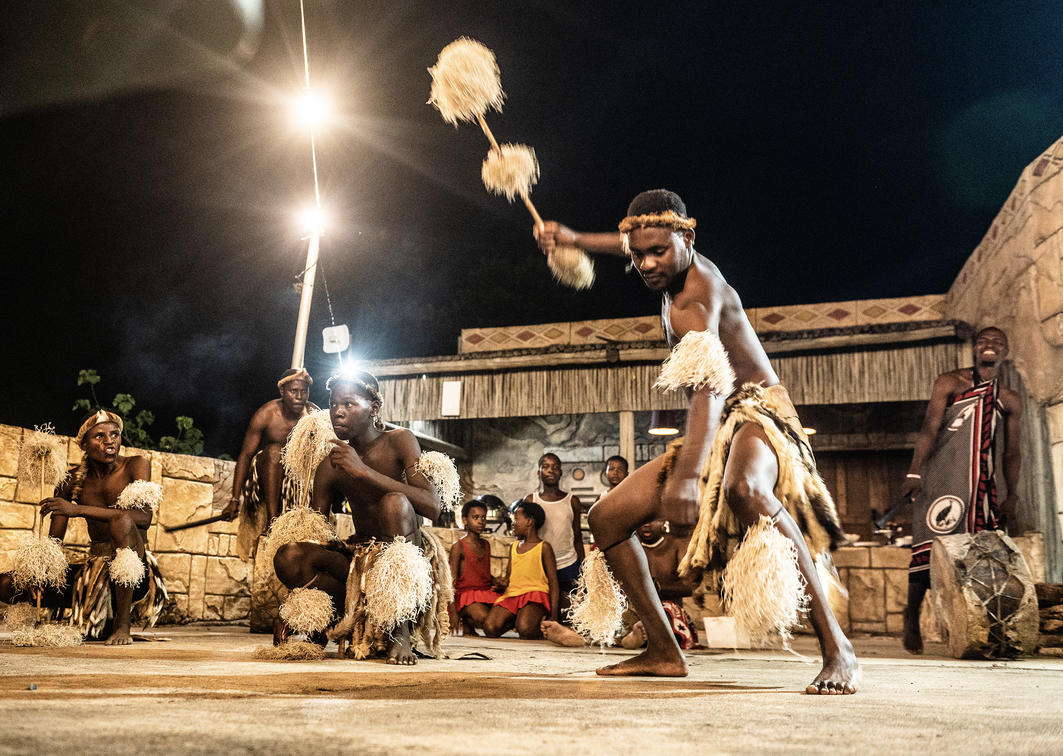
Zulu traditions pulse with regal energy in KwaZulu-Natal, where reed dances at Enyobane Palace honour King Goodwill Zwelithini, drawing thousands of maidens in September. These ceremonies, revived in 1991, symbolise purity and unity, with bare-breasted dancers presenting reeds amid ululating cheers. The king's passing in 2021 amplified their significance, cementing Zulu identity.
Isigodlo, the king's enclosures, host umhlanga competitions testing grace and song, while cattle remain currency in lobola marriages, negotiating bride prices in livestock. Zulu beadwork dazzles with bold geometries, contrasting Xhosa subtlety, adorning everything from aprons to necklaces.
Umhlanga Reed Dance: Annual September event at Nongoma, lasting three days with over 25,000 participants.
Lobola negotiations: Families barter cattle, typically 10-15 head, sealing alliances.
Zulu stick fighting: Men spar with induku clubs, building strength for protection duties.
Zulu reed dances weave a thread of continuity, linking ancient kings to tomorrow's guardians.
Immersing in Zulu Heartlands
Explore Shakaland, a living museum recreating 19th-century villages with demonstrations of spear-throwing and beer-brewing. For authentic stays, venture to rural homesteads near Hluhluwe, where evenings resound with mbube choral harmonies.
Sotho Traditions: Mountain Initiations and Basotho Blankets
Sotho culture in South Africa emphasises endurance, with Basotho initiates scaling Maluti Mountains in summer for lebollo rites, emerging with tattoos and secret knowledge. Northern Sotho (Pedi) favour vibrant dinaka drum festivals, while southern Sotho blanket patterns—seqhaqha stripes—signal status and warmth against highveld chills.
These groups, about 10 million strong, herd Basotho ponies across Lesotho borders, their conical hats mimicking mountain peaks. Weddings feature mokgonya feasts with morogo greens and papa porridge, binding clans in joyous song.
Signature Sotho Customs
Bogwera for boys and bojale for girls involve months of seclusion, teaching lore through riddles and dances. The Morija Arts Festival in Lesotho, held July annually since 1976, showcases Sotho choirs blending hymns with traditional rhythms.
Lebollo initiation: Ages 12-18 climb peaks, fasting for spiritual visions.
Basotho blankets: Woollen weaves with symbolic motifs, worn layered for ceremonies.
Dinaka drum circles: Northern Sotho events with 50+ drummers, echoing across valleys.
Optimal viewing aligns with dry season (May-August), minimising rain on mountain paths.
Sotho Cultural Hotspots
The Golden Gate Highlands National Park reveals Sotho rock art, 4,000 years old, depicting hunts and trances. Community visits in Harrismith offer blanket-weaving workshops and pony treks.
Planning Your Cultural Journey in South Africa
What is the best time to experience South Africa's Xhosa, Zulu, and Sotho traditions? May to October offers clear skies for festivals like Umhlanga (late August/September) and lebollo climbs, with milder temperatures (15-25°C) ideal for outdoor rites.
Combine with wildlife in Addo Elephant National Park near Xhosa lands or Hluhluwe-iMfolozi for Zulu safaris. Ethical tours via Encounters Africa ensure cultural sensitivity, funding local projects.
Pack layers for highveld chills and coastal humidity.
Learn basic phrases: Molo (Xhosa hello), Sawubona (Zulu), Thokoza (Sotho).
Support artisans buying direct from cooperatives.
For seamless integration, pair cultural visits with luxury stays like those in our South Africa safari itineraries.
Embracing South Africa's Cultural Depth
South Africa's Xhosa click ceremonies, Zulu reed dances, and Sotho mountain rites form an enduring cultural essentials framework, inviting travellers to connect authentically. These traditions, alive in every drumbeat and blanket fold, remind us of humanity's shared rhythms.
For discerning travellers seeking private safaris beyond set itineraries, contact Encounters Africa directly. We specialise in designing exceptional, tailor-made journeys, curating details around your preferences. Explore these cultural heartlands with our expert guidance—reach out today to craft your personal South Africa experience.
More like this
Culture
Tanzania's Vibrant Traditions: What Every Visitor Should Know Before Arrival
Culture
Tracing Zambia’s Cultural Roots from Ancient Kingdoms to Modern Traditions
culture
Uganda's Cultural Mosaic: Key Groups and Their Distinct Traditions
culture
Weaving Threads Through Zambian Village Life
Culture
What a Tanzanian Initiation Ceremony Taught Me About Identity and Respect
Culture