tips and advice
Walking Among Giants: Practical Safety Protocols for Foot Safaris in Big Game Country
Encounters Africa - 10 min read
Updated on 21 August 2026
Photographing on foot in big game country demands far more than a steady hand and the right lens. Professional guides in Africa's premier reserves follow precise safety protocols that turn potential encounters with elephants, lions and buffalo into moments of profound connection rather than risk. These time-tested practices allow travellers to capture intimate wildlife images while remaining firmly on the right side of nature's delicate balance.
The most important principle remains constant across Botswana, Kenya and South Africa: respect for the animals' space and behaviour creates the safest environment for both guests and wildlife. When done correctly, walking safaris offer unparalleled opportunities to photograph the subtle details that vehicles simply cannot reach, from the texture of an elephant's skin to the intricate patterns in a lion's whisker.

Why Walking Safaris Create Exceptional Photography Opportunities
Approaching wildlife on foot changes everything about how animals perceive your presence. Without the mechanical noise and silhouette of a vehicle, encounters often become more natural and revealing. A herd of buffalo may continue grazing rather than staring warily, while a pride of lions might display their full range of social behaviours when they do not feel the pressure of an engine.
Photographers who master foot safaris frequently return with images that capture genuine emotion and behaviour rather than startled reactions. The sensory experience itself, the feeling of dry grass underfoot, the warm breeze carrying the scent of wild sage, and the distant rumble of a lion's call, adds an irreplaceable depth to the resulting photographs.
The difference between photographing from a vehicle and walking among wildlife is the difference between watching a performance and being quietly admitted into the circle.
Essential Equipment and Preparation Before Your Walk
Successful and safe photography on foot begins long before you leave camp. Guides recommend carrying the minimum gear necessary to move quietly and quickly if required. A lightweight camera body with a versatile 70-200mm lens often proves more practical than heavy telephoto equipment that can become cumbersome in thick vegetation.
Clothing choices matter enormously. Neutral earth tones help you blend into the landscape, while soft-soled shoes allow silent movement. Many experienced travellers choose quick-drying fabrics that offer protection from thorns without creating noise. A brimmed hat and high-factor sunscreen become essential when spending hours in direct sunlight.
Always carry water, even on short walks. Dehydration affects both concentration and reaction time, two critical factors when working in close proximity to dangerous animals. A small daypack with essentials should sit comfortably without restricting movement or creating unnecessary bulk.
Understanding Your Guide's Signals and Commands
Your professional guide serves as both protector and interpreter during these experiences. They spend thousands of hours in the bush and can read subtle changes in animal behaviour long before they become obvious to visitors. Learning to respond instantly to their hand signals can make the difference between a successful encounter and a tense retreat.
Common signals include a closed fist for "stop immediately," a crouched position indicating you should lower yourself, and specific gestures for moving in particular directions. Never hesitate to follow these instructions precisely, even if they seem counterintuitive at first. The guides' decisions are based on years of accumulated knowledge about specific animals in their area.
Core Safety Protocols for Photographing on Foot
Professional guides follow a consistent set of protocols that have been refined over decades of experience. The first and most critical rule is maintaining the correct distance. While exact measurements vary by species and situation, a general guideline suggests staying at least 30 metres from lions and 50 metres from elephants and buffalo unless the animals themselves choose to approach.
Always position yourself downwind when possible. Animals rely heavily on scent, and approaching from downwind significantly reduces the chance of detection. This awareness becomes particularly important when photographing elephants, whose sense of smell is remarkably acute.
Movement must remain deliberate and calm. Sudden gestures or rapid changes in position can trigger defensive responses. Professional photographers learn to anticipate shots rather than reacting abruptly, allowing them to capture images while maintaining composed body language that does not alarm the animals.
In the bush, silence and stillness often prove more powerful than any camera setting or lens choice.
Reading Animal Body Language: The Key to Safe Encounters
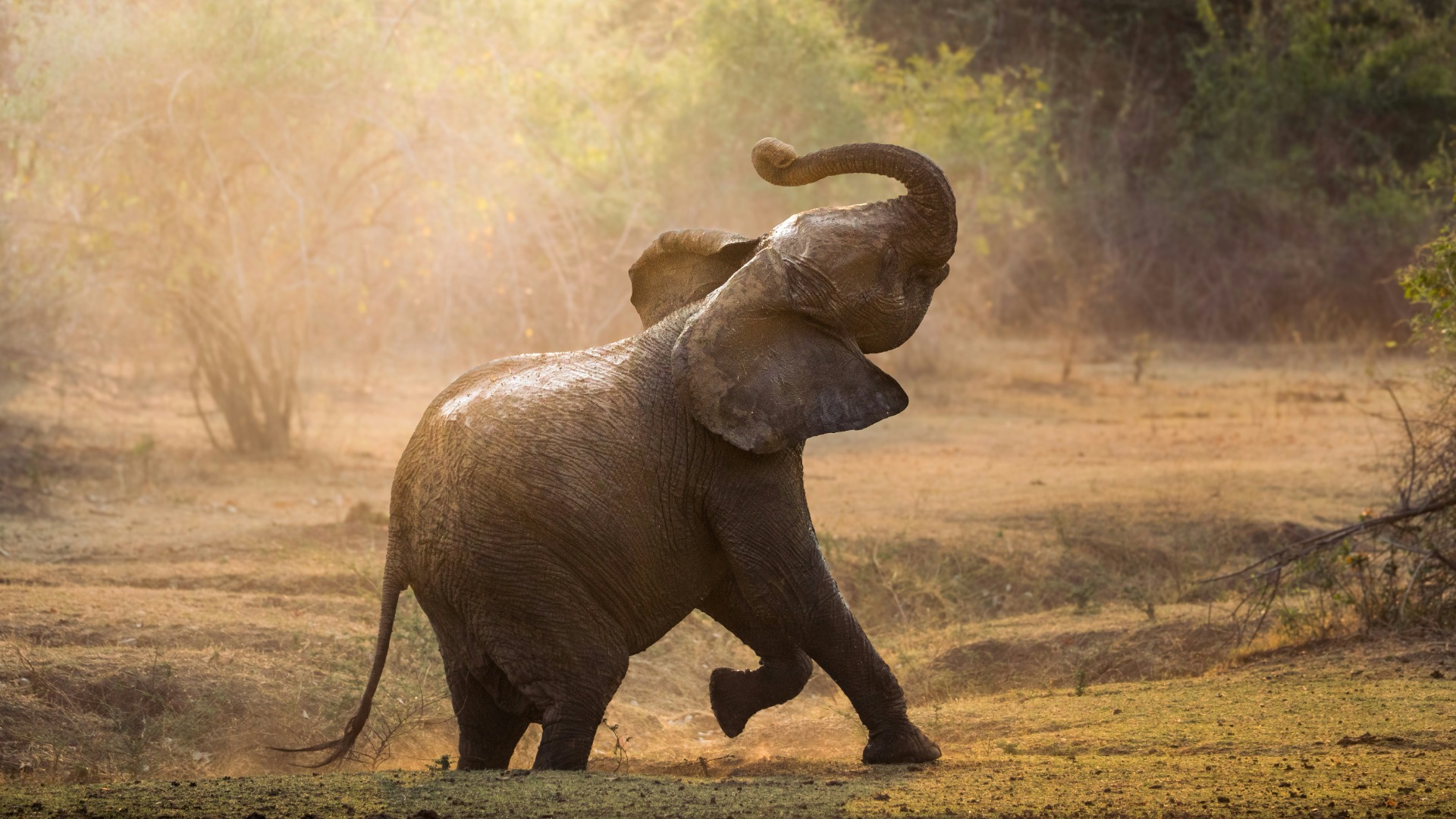
Understanding the physical signals animals display allows photographers to gauge comfort levels in real time. An elephant that flaps its ears rapidly while facing you directly may be expressing irritation. A lioness that stares intently with her ears pricked forward is assessing potential threat. Learning these nuances helps you decide when to take photographs and when to create more distance.
Buffalo present particular challenges because they can appear deceptively calm before charging with surprising speed. Guides watch for specific signs including raised heads, fixed stares, and the characteristic way these animals position themselves to protect the herd's vulnerable members.
Lions communicate extensively through subtle ear movements, tail flicks and facial expressions. A relaxed lion may rest with eyes half-closed and tail gently moving, while one that feels threatened might fix its gaze directly on the group with ears flattened.
Species-Specific Safety Approaches
Each of Africa's dangerous animals requires its own careful approach. Elephants demand particular respect for their personal space and family dynamics. Never position yourself between a mother and calf, and be especially cautious with lone bulls who may be in musth, a periodic state of heightened aggression indicated by temporal gland secretions and distinct behaviour patterns.
Lions require constant awareness of the entire pride. A seemingly solitary male may have females positioned nearby in the grass. Professional guides maintain visual contact with all visible animals while using their knowledge of typical pride sizes to estimate where others might be concealed.
Buffalo in large herds can be surprisingly tolerant if approached correctly, yet lone "dagga boys" - older males separated from the main herd - often display more unpredictable behaviour. These solitary individuals require extra caution and larger safety margins.
What to Do If an Animal Charges
Despite careful protocols, charges can occasionally occur. The correct response varies by species. For elephants and buffalo, standing your ground while appearing large and making noise often deters the animal before contact. Running typically triggers a pursuit response.
Lion charges require different tactics. If a lion charges without vocalising, it may be a mock charge. However, a silent, low charge with ears back usually indicates genuine intent. In these rare situations, guides may use warning shots or other deterrents while guests remain in a tight group.
The most important response in any tense situation is to follow your guide's instructions without hesitation. Their training includes specific techniques for different scenarios, developed through years of practical experience across various African landscapes.
Best Times and Locations for Safe Walking Safaris
The optimal conditions for foot safaris occur during the early morning and late afternoon when temperatures are cooler and animals tend to be more active. The golden light during these hours also dramatically improves photographic conditions, creating rich textures and warm tones that enhance wildlife portraits.
Certain landscapes lend themselves particularly well to safe walking experiences. Open woodlands with good visibility allow both guests and guides to maintain awareness of their surroundings. Areas with reliable water sources often concentrate animals in predictable patterns, making encounters more manageable.
Private concessions and conservancies frequently offer better opportunities for walking safaris than crowded national parks. Properties such as those in the Mara North Conservancy and select areas of the Okavango Delta maintain lower vehicle densities, creating more authentic wilderness experiences with enhanced safety margins.
Experienced operators carefully assess daily conditions before offering walking activities. Factors including recent animal movements, weather patterns and vegetation density all influence whether a particular area is suitable for foot access on any given day.
Common Questions About Safety on Walking Safaris
How dangerous are walking safaris really? When conducted with professional guides following established protocols, serious incidents remain exceptionally rare. The guiding industry has developed these practices over many decades, resulting in an outstanding safety record across Southern and East Africa. The key lies in choosing experienced operators who prioritise safety above all else.
What should I do if I feel nervous during a walk? Honest communication with your guide is essential. Professional guides understand that different people have varying comfort levels and will adjust the experience accordingly. Many travellers discover that their anxiety decreases as they learn to read animal behaviour and trust their guide's expertise.
Can children join walking safaris? Most operators set minimum age requirements, typically between 12 and 16 years depending on the destination and specific camp policies. This ensures young people possess sufficient maturity to follow instructions precisely during unexpected situations.
Trust between guide and guest forms the invisible shield that makes these intimate wildlife encounters possible.
Conservation Benefits of Responsible Walking Safaris
Beyond the photographic rewards, walking safaris play an important role in broader conservation efforts. They create economic incentives for protecting wilderness areas while fostering deeper appreciation for African ecosystems among international visitors. Revenue from these specialised experiences often supports anti-poaching initiatives and community development projects in regions where wildlife and people share limited space.
Many lodges work closely with local communities to ensure that benefits from safari activities reach those living alongside dangerous animals. This connection between responsible tourism and conservation creates powerful motivations for protecting habitats and the magnificent creatures that inhabit them.
Photographers who approach wildlife respectfully on foot often become passionate advocates for the places and animals they have experienced so intimately. Their images, captured through patient observation rather than intrusion, frequently tell more compelling conservation stories than dramatic action shots taken from vehicles.

Embracing the Ancient Art of Moving Quietly Through Wild Places
Walking among Africa's giants represents one of the most rewarding ways to experience and document the continent's extraordinary wildlife. When approached with proper preparation, respect and professional guidance, these encounters offer not only exceptional photographic opportunities but also moments of genuine connection with the natural world that remain with travellers long after they return home.
The protocols outlined here represent the collective wisdom of generations of professional guides who have dedicated their lives to understanding and protecting Africa's wildlife. By following their lead and maintaining constant awareness, photographers can safely capture images that celebrate rather than disturb the delicate balance of these magnificent ecosystems.
For discerning travellers seeking a private safari beyond our set itineraries, we invite you to contact us directly. We specialise in designing exceptional, tailor-made journeys for individuals, couples, families, and private groups of up to eight guests. Drawing on our handpicked network of distinguished camps and lodges, we curate every detail with precision and care, creating a seamless, deeply personal safari experience shaped entirely around your preferences, pace, and budget.
Whether you dream of photographing a lioness and her cubs at dawn in Kenya or capturing the gentle giants of the Okavango Delta on foot, reach out to Encounters Africa to begin planning your journey. Our team of specialists will ensure your walking safaris are conducted with the highest safety standards while delivering the intimate wildlife experiences that create truly memorable photographs and lasting connections with Africa's wild places.
More like this
tips and advice
What a Night in a Star Bed on Safari Actually Feels Like
tips and advice
What Experienced Guides Pack for Rainy Season Safaris in Africa
tips and advice
What It Really Takes to Serve Fresh Meals at Remote African Safari Camps
tips and advice
What Shoulder Season Really Delivers on an African Safari
tips and advice
What to Expect on a Pre-Dawn Hot Air Balloon Safari Across African Plains
tips and advice