Photography
What the Lower Zambezi Taught Me About Patience Behind the Lens
Encounters Africa - 11 min read
Updated on 2 July 2026
Photography in the Lower Zambezi rewards those who understand that the river sets the pace. Here, in this wild stretch of Zambia, the Zambezi flows with deliberate power, shaping not only the landscape but the way one must approach the craft of capturing it. A photographer reflects on adapting to the Lower Zambezi’s rhythms, where waiting for hippos to surface at golden hour or tracking lion movement through tall grass reshapes both technique and expectations.
Over eight days spent along its banks and drifting on its channels, I learned that patience behind the lens is not passive waiting but an active, almost meditative state of readiness. The light changes with startling speed as it filters through the winterthorn and mopane, while animals appear and vanish according to their own ancient schedules. This is not a place for rapid-fire bursts or preconceived shots; it is a landscape that teaches composure and presence.
The Lower Zambezi does not yield its finest frames to those in a hurry. It offers them instead to the photographer willing to sit still long enough for the river to reveal its secrets.
The Unique Character of Light and Landscape
The Lower Zambezi National Park stretches along 120 kilometres of the river’s northern bank, creating a corridor where the water’s reflective surface becomes both subject and light source. Early mornings often bring a soft mist that rises from the water, diffusing the first rays of sun into gentle, ethereal tones. By midday the light can become harsh and contrasty, particularly on the exposed sandbanks where crocodiles bask motionless for hours.
Late afternoon transforms the scene entirely. The setting sun paints the escarpment in deep oranges and purples while casting long, dramatic shadows across the floodplains. This is when the park’s elephants appear in their greatest numbers, moving in stately processions toward the water. The golden hour here lasts longer than in many African destinations, sometimes stretching for nearly 90 minutes during the dry season months from June to October.
What surprised me most was how the river itself acts as a natural reflector. When photographing from a canoe or boat, the water bounces light upward, illuminating the undersides of birds’ wings and creating catchlights in the eyes of animals drinking at the edge. This upward fill light is a gift for wildlife photographers, yet it demands constant adjustment of exposure compensation to avoid blown highlights on the water’s surface.
Understanding Seasonal Variations
The dry season, running from late May through October, concentrates wildlife along the river, making it the most productive time for photography in the Lower Zambezi. Water levels drop dramatically, exposing sandbars that become gathering places for buffalo herds numbering in the hundreds and providing perfect vantage points for observing predator-prey interactions.
By contrast, the green season from November to April brings dramatic thunderstorms and lush vegetation. While animal sightings become more dispersed, the photographic opportunities shift toward intimate portraits against vibrant green backdrops and powerful images of lightning illuminating the night sky. Fewer visitors during these months also mean more exclusive access to prime riverfront positions.

Learning to read the river’s seasonal moods changed how I approach every frame. What I once saw as obstacles became the very elements that give Lower Zambezi photography its distinctive character.
Essential Tips for Photographers in the Lower Zambezi
Success in this environment depends on preparation and adaptability. The combination of water, dust, and variable weather creates specific challenges that reward thoughtful gear choices and shooting techniques. Here are the practical lessons I gathered from mornings spent in canvas hides and afternoons drifting silently in canoes.
Gear Considerations for Riverine Conditions
Weather-sealed bodies and lenses are essential. The morning mist can turn to fine drizzle without warning, while the afternoon breeze carries fine particles of dust from the floodplains. I relied on a weather-sealed full-frame mirrorless camera with two bodies: one fitted with a 100-400mm zoom for versatility, the other with a 24-70mm for tighter environmental portraits and canoe-based work.
A sturdy tripod with a fluid head proved invaluable for tracking moving subjects from stationary boats. The gentle current creates a subtle rocking motion that can blur images shot at slower shutter speeds, particularly when using longer lenses. Counterintuitively, I found that a monopod offered better stability in moving canoes than attempting to handhold, as it allowed me to brace against the boat’s structure while maintaining mobility.
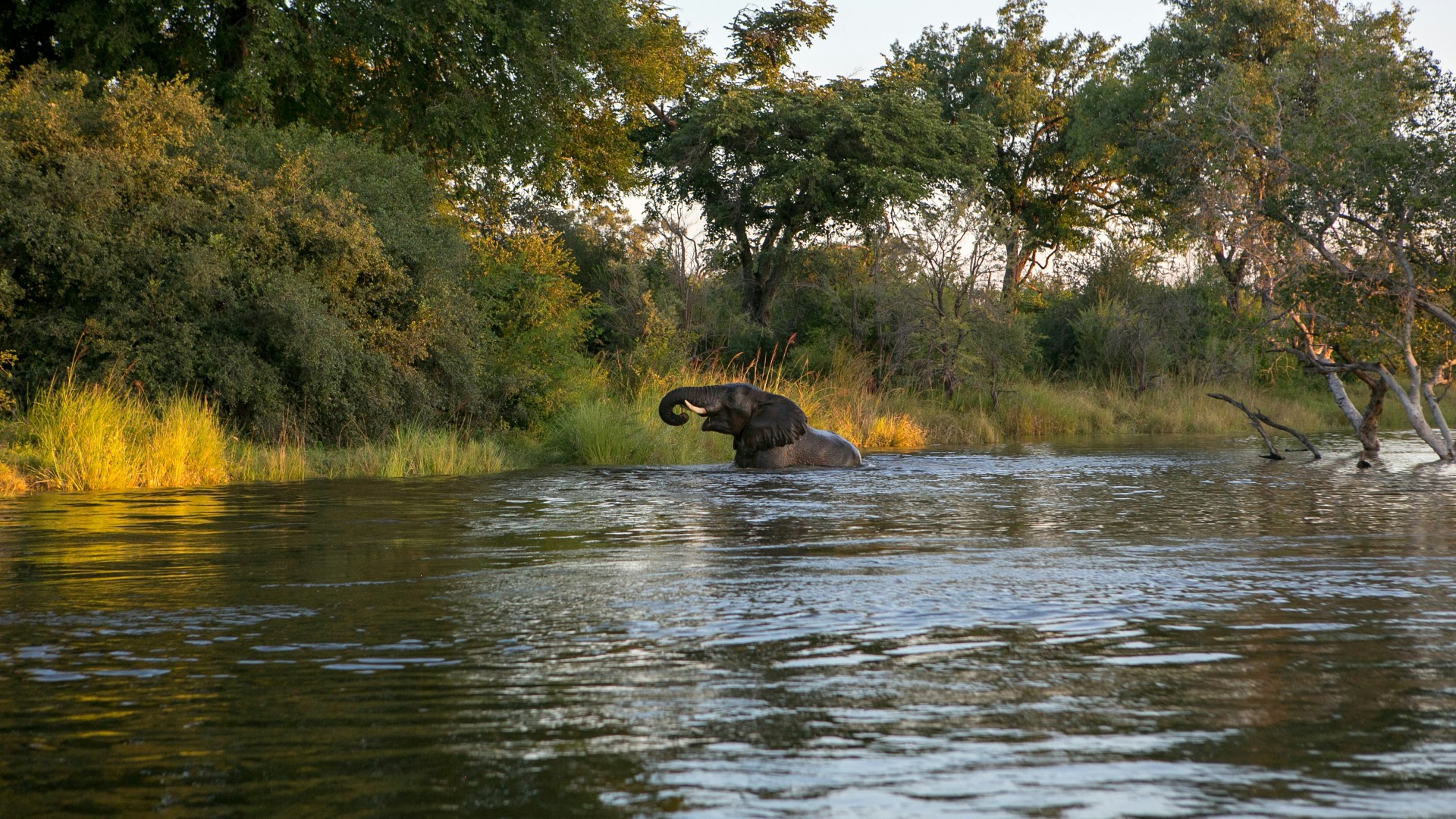
Protective filters became crucial. A circular polariser helped cut through the river’s glare and deepened the blue of the sky during midday hours. Neutral density filters allowed for longer exposures that smoothed the water’s surface, creating ethereal images of elephants crossing channels with their reflections perfectly mirrored below.
Mastering the Art of Anticipation
The most valuable skill I developed was learning to predict animal behaviour rather than simply reacting to it. Hippos surface predictably every three to five minutes, but their direction of movement is harder to anticipate. By studying their breathing patterns and the direction of their ears, I learned to pre-focus on the spot where they were likely to emerge, often capturing the dramatic spray of water backlit by the rising sun.
Lions in the Lower Zambezi frequently use the tall grass and winterthorn thickets for cover. Rather than searching for the animals themselves, I began watching the behaviour of prey species and the sudden silence that falls over the birdlife when a predator is near. This indirect approach led to several memorable encounters, including a sequence of a young male lion emerging from the grass to scan the floodplain at first light.
Bird photography here requires particular patience. The African fish eagle, with its distinctive call that echoes across the water, often perches on dead trees along the riverbank. By positioning ourselves downwind and remaining motionless for up to 40 minutes, we were rewarded with stunning images of these raptors diving for fish, their wings creating perfect arcs against the golden sky.
Working with Professional Guides and Local Knowledge
The quality of your guiding makes an enormous difference to photographic success in the Lower Zambezi. Skilled guides not only understand animal behaviour but also know how to position vehicles and boats for the best light and background combinations. They recognise when to maintain distance and when a closer approach will not disturb the subject.
I was fortunate to work with guides who had spent decades in the park. Their ability to read subtle signs in the landscape, from fresh tracks in the mud to the particular alarm call of a go-away bird, consistently put us in the right place at the right moment. On one memorable morning, our guide noticed a change in the wind direction and repositioned our canoe accordingly, allowing us to capture a family of elephants crossing the channel directly toward us with perfect side-lighting.
Building trust with your guide and communicating your photographic goals clearly from the outset creates a collaborative experience. I found that sharing examples of the type of images I hoped to capture helped them understand my priorities, whether that meant waiting for specific behaviour or seeking out particular compositions.
A good guide in the Lower Zambezi becomes an extension of your vision, translating the landscape’s language into photographic opportunities you might otherwise miss.
Canoe Safaris: A Different Perspective
Drifting silently along the river in a canoe offers one of the most intimate ways to experience and photograph the Lower Zambezi. The low angle creates striking compositions, particularly of animals on the banks looking down toward the water. However, this proximity brings both opportunities and responsibilities.
Staying low in the canoe helps maintain a lower profile, reducing the chance of disturbing wildlife. We found that approaching at an angle rather than directly toward animals allowed us to observe natural behaviour for longer periods. The gentle paddling rhythm also creates a meditative pace that aligns perfectly with the patience this environment demands.
From the canoe, I captured some of my most memorable images: a crocodile sliding silently into the water with barely a ripple, a saddle-billed stork spearing a fish with clinical precision, and a pod of hippos yawning in perfect synchronisation as the sun dipped below the horizon. The absence of engine noise meant we could hear every splash, snort and birdsong, adding another sensory layer to the photographic experience.
Technical Challenges of Mobile Photography
Shooting from a moving canoe requires different techniques than working from a vehicle. I learned to use a combination of image stabilisation and slightly faster shutter speeds than I would normally choose on land. Keeping my elbows braced against my body and timing my shots between paddle strokes helped minimise camera shake.
The changing perspective as the canoe drifts creates constantly evolving compositions. What begins as a side profile of an elephant might transform into a more dramatic head-on view within moments. This fluidity encourages a more responsive, in-the-moment approach to composition that I found both challenging and liberating.

Conservation Through the Lens
Photography in the Lower Zambezi carries a responsibility that extends beyond creating beautiful images. The park forms a critical part of the larger Zambezi ecosystem, supporting one of Africa’s healthiest populations of wild dogs and serving as an important corridor for elephant movement between Zambia and Zimbabwe.
By choosing to work with operators who support conservation initiatives, photographers can ensure their presence contributes positively to the area’s protection. Several camps in the region work closely with anti-poaching teams and community development projects, creating genuine benefits that extend far beyond the river’s banks.
I found that taking time to understand these conservation efforts enriched my photography. Knowing the stories behind the landscape, the challenges faced by local communities, and the success of rewilding programmes gave deeper meaning to the images I created. The most powerful photographs often emerge not just from technical excellence but from genuine connection to the place and its inhabitants.
The images we make in the Lower Zambezi become part of the story we tell about this remarkable place. They have the power to inspire others to care for and protect these wild spaces for future generations.
What the Lower Zambezi Taught Me About Patience Behind the Lens
Looking back on my time along the river, I realise that the greatest lesson was not technical but philosophical. In our increasingly hurried world, the Lower Zambezi demands that we slow down, observe more carefully, and wait for the moment rather than trying to create it.
This patience translates into more considered compositions and a deeper appreciation for the subtle interactions that make this ecosystem so special. The frame that stays with me most powerfully is not one of dramatic action but of a lone elephant standing motionless on a sandbar at dusk, its reflection perfectly mirrored in the still water while a fish eagle called from a nearby tree.
That image required nearly two hours of waiting in a canoe as the light gradually changed around us. In those quiet moments of anticipation, I came to understand that sometimes the most important part of photography happens when we are not actually pressing the shutter.
Planning Your Own Photographic Journey
For those inspired to explore photography in the Lower Zambezi, the dry season months from June to October generally offer the most consistent wildlife viewing and dramatic light conditions. However, the shoulder months of May and November can provide excellent value with fewer visitors and spectacular storm light.
Consider combining time in the national park with stays in neighbouring private concessions, which often allow for walking safaris and more flexible vehicle access. These different perspectives create a richer and more varied photographic portfolio.
Encounters Africa specialises in designing exceptional, tailor-made journeys for individuals, couples, families, and private groups of up to eight guests. Drawing on our handpicked network of distinguished camps and lodges, we curate every detail with precision and care, creating a seamless, deeply personal safari experience shaped entirely around your preferences, pace, and budget.
Whether you seek the intimate perspective of canoe drifts at dawn or the elevated views from vehicles positioned for perfect golden hour light, we can connect you with the right locations and expert guides who understand the specific needs of serious photographers.
If you would like to discuss creating a private photography-focused safari along the Lower Zambezi, we would be delighted to hear from you directly. Through our trusted network of carefully selected camps and lodges, including Chichele Presidential Lodge and experiences in the broader Zambia wilderness, we craft each journey around your individual interests and vision. For those looking for a private safari beyond our set itineraries, we would be delighted to hear from you directly. We specialise in creating beautifully tailored journeys for solo travellers, couples, families, and private groups of up to eight guests. Please visit our enquiry form to begin the conversation about your perfect Zambezi photographic adventure.
Related reading: Discover more about wildlife photography techniques across Southern Africa or explore our guide to photographing the Okavango Delta’s unique light and landscapes.
More like this
Photography
What the San Hunters Taught Me About Framing Light Across the Pans
photography
What the Zambezi Taught Me About Capturing Africa's Wild Pulse
photography
What Zimbabwe's Ancient Rock Formations Teach About Composition and Light
Photography
When the Zambezi Meets the Lens: Photography Moments in Zambia
photography
Why Amboseli’s Swamps Sustain Wildlife Long After Rains Depart
Photography