wildlife
How Elephants Send Messages That Travel for Miles Without Making a Sound
Encounters Africa - 10 min read
Updated on 20 August 2026
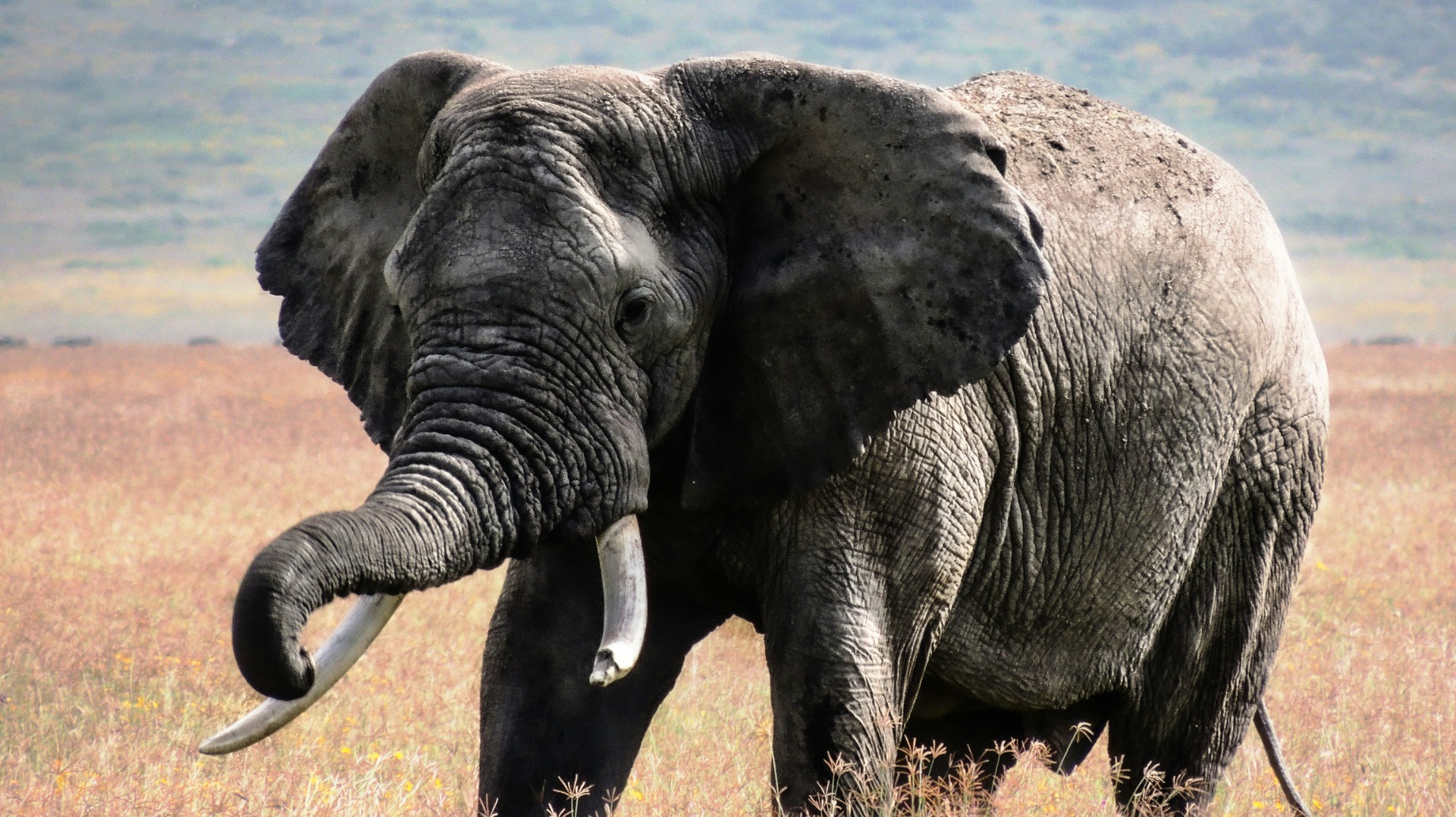
Deep in the savanna, elephants produce infrasound calls below the range of human hearing, allowing family groups separated by ten kilometers or more to coordinate movements, locate water, and warn of danger. This remarkable ability reveals layers of elephant society that researchers have only begun to decode through patient observation and innovative technology. For those planning an African safari, understanding these hidden conversations adds profound depth to every sighting of these gentle giants.
The secret language of giants unfolds across vast distances without a single audible rumble to our ears. What appears as silent swaying or subtle ear flaps often accompanies messages that ripple through both air and ground. Encounters Africa has witnessed how this knowledge transforms the way travellers experience wildlife encounters, turning a distant herd into a living, communicating network.

The First Clues: Discovering a Voice Below Human Hearing
In the early 1980s, American biologist Katy Payne noticed something peculiar while watching elephants at a zoo in Portland, Oregon. The animals would stand motionless for long periods, yet she felt a strange fluttering sensation in her chest. This intuition led her to record their vocalisations using equipment sensitive enough to capture frequencies as low as 14 hertz, well below the 20 hertz threshold of human hearing.
Payne's breakthrough came when she played back the recordings at accelerated speeds. Suddenly, the deep rumbles became audible calls rich with meaning. What followed was a lifetime dedicated to studying these infrasonic communications in the wild, first in Kenya and later across southern Africa. Her work revealed that elephants maintain contact across territories spanning dozens of square kilometres.
The ground itself becomes their telephone wire, carrying messages that can travel up to 32 kilometres under the right conditions.
Subsequent researchers built upon these foundations with seismic sensors and collar-mounted microphones. In the late 1990s, teams in Namibia and South Africa began mapping how these low-frequency waves propagate differently through air and earth. The results showed elephants possess an extraordinary sensory world that remains largely invisible to us.
How Infrasound Travels: The Physics of Elephant Conversation
Elephants generate infrasound primarily through their massive vocal tracts and by manipulating air in their trunks and chests. These calls measure between 15 and 35 hertz with amplitudes reaching 117 decibels, loud enough that the sound waves cause physical vibrations detectable several kilometres away. The lower the frequency, the farther it travels with less energy loss.
Atmospheric conditions play a crucial role in transmission. During the cooler hours of early morning and late evening, temperature inversions allow sound waves to refract downwards, extending their range dramatically. Dry, open landscapes with firm soil further aid seismic propagation, turning the earth into a natural sounding board that elephants can detect through sensitive nerve endings in their feet.
Researchers have documented calls that maintain coherence over distances exceeding 10 kilometres in optimal conditions. This range allows matriarchs to guide scattered family members toward newly discovered water sources or warn them of approaching threats long before visual confirmation.
The Anatomy Behind the Sound
An elephant's larynx and trunk work in concert to produce these powerful vibrations. The trunk acts as a variable resonator, lengthening or shortening to fine-tune frequency. Their enormous bodies provide the perfect instrument for generating long-wavelength sounds that simply cannot be produced by smaller mammals.
Specialised pads in their feet contain Pacinian corpuscles, sensory receptors exquisitely tuned to detect minute vibrations. When an infrasonic call reaches them, these pads register the signal much like an ear receives airborne sound. This dual reception through air and ground gives elephants a sophisticated three-dimensional understanding of their acoustic environment.
Decoding the Messages: What Elephants Actually Say
Modern research has identified distinct categories within the infrasonic repertoire. Contact calls, often described as "let's go" rumbles, help maintain group cohesion when members are dispersed. These distinctive low-frequency pulses carry individual signatures allowing elephants to recognise specific voices across vast distances, much like humans identify familiar voices on a telephone.
Alarm calls differ markedly in structure, featuring sharper onsets and more rapid repetition rates. When a matriarch detects lions or poachers, her urgent infrasonic warnings can mobilise distant family groups within minutes. Researchers in the early 2000s documented how entire herds would suddenly change direction in response to these silent signals, demonstrating remarkable coordination without visual cues.
Each elephant possesses a unique voice print that travels through the landscape, allowing recognition between individuals separated by days of travel.
Reproductive messages form another crucial category. Males in musth produce distinctive rumbles that advertise their condition to receptive females many kilometres away. Females respond with oestrous calls that can attract bulls from across entire landscapes, facilitating genetic mixing essential for healthy populations.
Seismic Communication in Action
Elephants don't merely listen to airborne sounds. They actively engage with ground vibrations by leaning forward, lifting one foot, or pressing their trunks against the earth. Studies using geophones have recorded how breeding herds create coordinated seismic signals during group movement, almost like an underground drumbeat that reinforces social bonds.
In Botswana's vast wilderness areas, researchers have observed family groups using infrasound to locate each other after seasonal separations. A matriarch might send a specific "homing" call that prompts younger females to return from distant foraging areas, ensuring the group's collective knowledge remains intact.
Following the Researchers: Field Studies That Changed Our Understanding
Dr Joyce Poole, who collaborated with Katy Payne for decades, spent years in the field documenting the behavioural context of these calls. Her detailed observations in Amboseli National Park revealed how elephants combine infrasound with visual signals, creating rich, multi-layered communication systems. A subtle ear flap might accompany a contact rumble, visible only to those watching closely.
More recent work by teams from the University of Vienna has employed artificial intelligence to analyse thousands of hours of recordings. Their algorithms can now distinguish between 22 distinct infrasonic call types with 85 percent accuracy. This technological leap has confirmed what experienced field guides have long suspected: elephant society operates with sophisticated social intelligence supported by constant acoustic exchange.
In northern Kenya, the Save the Elephants research team has combined GPS collar data with acoustic monitoring. Their findings show that family groups separated by 15 kilometres can synchronise their movements with remarkable precision, arriving at the same waterhole within hours of each other despite no visual contact.
What we perceive as majestic silence often represents the busiest conversations in the African bush.
Technology Meets Traditional Knowledge
Indigenous tracking experts have long understood that elephants communicate in ways beyond human senses. Their observations align closely with scientific measurements, creating powerful partnerships in conservation. In community conservancies across East Africa, local knowledge about elephant movement patterns now informs protection strategies that respect these invisible communication networks.
Researchers increasingly deploy autonomous recording units that operate for months without human intervention. These devices, combined with camera traps and satellite tracking, paint comprehensive pictures of how elephants navigate their social and ecological landscapes through sound.
Why This Matters: Conservation Through Understanding
Recognising the importance of acoustic space has transformed elephant conservation approaches. Noise pollution from roads, mining operations, and tourism vehicles can mask critical infrasonic signals, effectively deafening elephants to vital information. Protected areas must therefore consider soundscapes as carefully as they protect water sources and migration corridors.
Studies indicate that elephants in heavily disturbed areas show altered vocal behaviour, using higher frequencies that travel shorter distances. This adaptation likely reduces their ability to maintain social cohesion and respond to threats. Understanding these impacts helps conservationists design better buffer zones around sensitive habitats.
The revelation that elephants use seismic communication has also influenced anti-poaching strategies. Teams now monitor for unusual patterns in elephant vocalisations that might indicate distress or displacement caused by illegal activity. In several southern African reserves, real-time acoustic monitoring provides early warnings that complement traditional ranger patrols.
Implications for Safari Experiences
For those journeying with Encounters Africa, this knowledge enriches every wildlife encounter. Knowing that a seemingly peaceful herd may be engaged in complex discussions across kilometres adds layers of wonder to the experience. Professional guides trained in behavioural observation can help travellers recognise subtle signs that accompany these silent conversations.
Small group safaris allow for the patient observation required to witness these phenomena. When vehicles maintain respectful distances and quiet protocols, elephants continue their natural communication without disturbance. This approach not only benefits the animals but creates more meaningful connections for travellers.
What the Future Holds for Elephant Communication Research
Current projects utilise drone-mounted microphones and AI-powered analysis to study how climate change affects these acoustic networks. As water sources become more unpredictable, the ability to share information about distant resources grows increasingly vital for elephant survival. Early findings suggest that experienced matriarchs play crucial roles in maintaining knowledge transfer across generations.
Emerging research also explores how elephants might detect underground water through seismic cues generated by subterranean flows. This would represent another remarkable adaptation in their sensory repertoire, further cementing their status as ecosystem engineers with profound environmental awareness.
International collaborations between research institutions in Africa, Europe and North America continue expanding our understanding. These partnerships emphasise capacity building for African scientists, ensuring that the future of elephant research remains rooted in the landscapes where these magnificent animals roam.

Listening With New Ears to Africa's Giants
The secret language of elephants reminds us that the natural world contains dimensions we cannot directly perceive. Their infrasonic conversations weave together family groups across vast landscapes, maintaining social structures that have evolved over millions of years. Each rumble carries knowledge, comfort, warning or invitation, creating a living network that spans horizons.
As we continue decoding these seismic whispers, we gain not only scientific insight but deeper appreciation for the sophisticated societies that share our planet. The elephants' ability to communicate across distances that dwarf our own sensory capabilities speaks to the remarkable adaptability of life in challenging environments.
For discerning travellers seeking a private safari beyond our set itineraries, we invite you to contact us directly. We specialise in designing exceptional, tailor-made journeys for individuals, couples, families, and private groups of up to eight guests. Drawing on our handpicked network of distinguished camps and lodges, we curate every detail with precision and care, creating a seamless, deeply personal safari experience shaped entirely around your preferences, pace, and budget.
Consider joining researchers in the field or simply travelling with guides who understand these hidden conversations. Whether watching a matriarch lead her family toward distant waters or witnessing a silent reunion after days apart, your experience will be transformed by knowing what unfolds beyond human ears. Reach out to Encounters Africa to begin planning your journey into this remarkable world.
Related reading: Discover more about elephant behaviour in our guide to Kenya's elephant conservation efforts, or explore the sophisticated social structures of wildlife in Duba Plains Camp in the Okavango Delta. For those interested in acoustic ecology, our article on the sounds of the African bush offers further insights into the continent's natural symphony.
More like this

wildlife
How Flamingos Endure Africa's Brutal Salt Pans Through Specialized Breeding Cycles
wildlife
How Habitat Shapes Big Cat Sightings Across Africa
Wildlife
How Kenyan Wildlife Adapts to Life Beyond the Tourist Tracks
Wildlife
How Kenyan Wildlife Shapes Daily Decisions on a Luxury Safari
wildlife
How Lake Kariba's Flooding Reshaped Elephant Migration Patterns and Daily Foraging

wildlife