wildlife
What Every Visitor Should Know About Chacma Baboons in South Africa's Western Cape
Encounters Africa - 9 min read
Updated on 24 August 2026
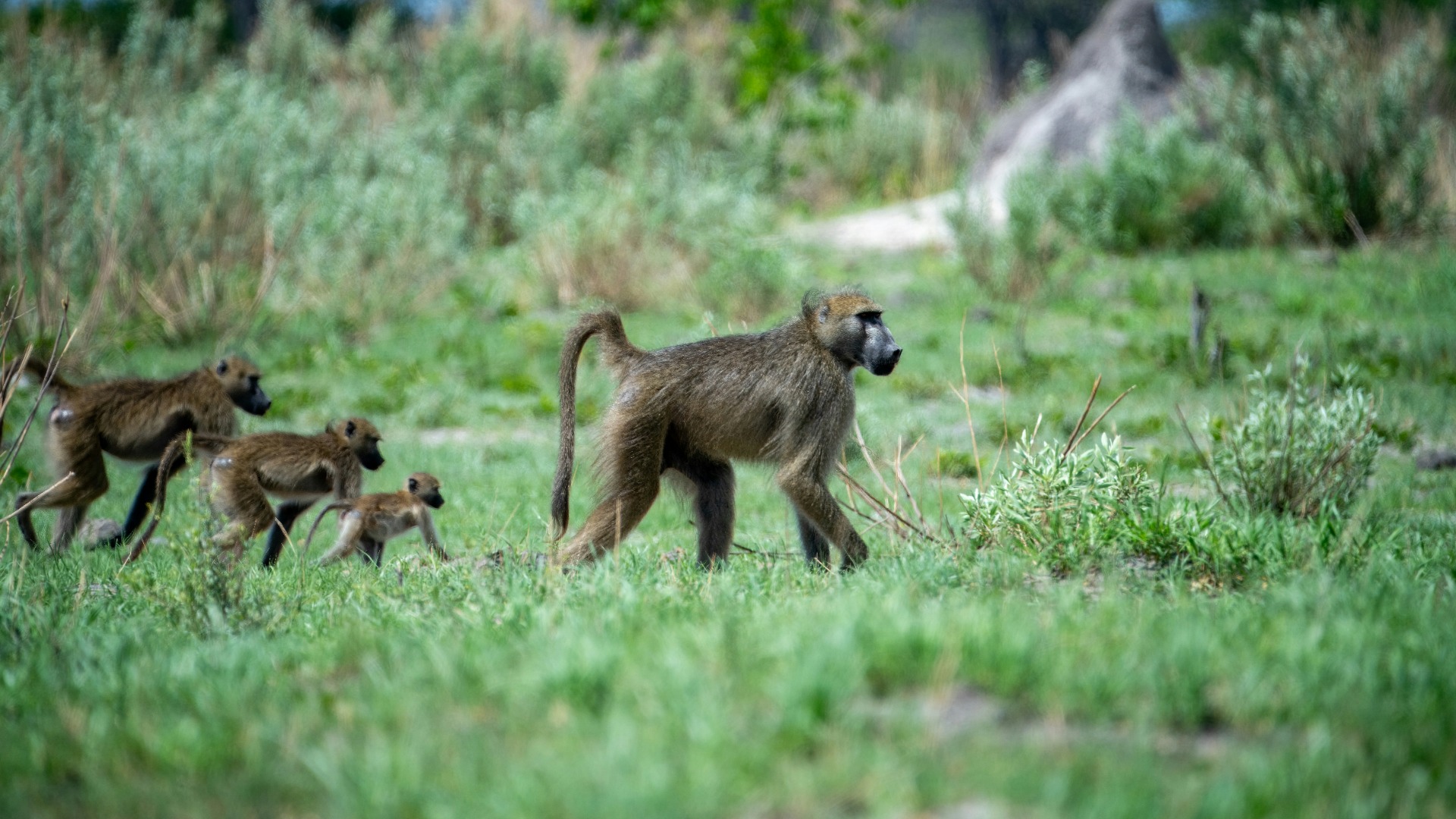
From their strict hierarchies to remarkable problem-solving abilities, these five facts reveal how chacma baboons have become one of the most successful primates in the fynbos biome around Cape Town and beyond. Visitors to South Africa's Western Cape often encounter these intelligent creatures along mountain trails and coastal paths, yet few appreciate the complex lives unfolding just beyond the roadside. Understanding chacma baboons in the Western Cape enriches every encounter and helps travellers approach them with the respect these adaptable primates deserve.
Chacma baboons, scientifically known as Papio ursinus, represent one of the largest monkey species in Africa. In the Western Cape, their troops navigate a unique mosaic of fynbos vegetation, rocky outcrops and urban edges with remarkable confidence. Encounters Africa regularly incorporates thoughtful observation of these primates into tailored journeys, ensuring guests witness their natural behaviours while maintaining safe distances that protect both parties.

The Complex Social Structure of Chacma Baboons
Chacma baboons live in multi-male, multi-female troops that can number between 20 and 150 individuals. Their societies operate under a strict linear dominance hierarchy where rank determines access to food, mates and prime resting spots. Females inherit their mother's rank, creating matrilineal lines that can persist for generations, while males must constantly negotiate their position through displays, alliances and occasional fights.
Within this structure, grooming serves as the social currency that maintains bonds and reduces tension. A dominant male might spend hours allowing lower-ranking females to groom him, reinforcing alliances that prove vital during times of conflict. These intricate relationships create a dynamic society where cooperation and competition exist in constant balance.
Observing a chacma baboon troop at rest reveals an entire world of politics, family ties and calculated risks playing out in the shade of a milkwood tree.
Recent studies from the Cape Peninsula have shown that higher-ranking females enjoy better nutrition and produce more surviving offspring. Their infants receive protection not only from their mothers but from a network of related females who will fiercely defend the young against threats. This female-centred stability forms the backbone of troop cohesion in the often challenging Western Cape environment.
Understanding Rank and Its Daily Impact
Rank influences everything from when an individual eats to how far they can wander from the group. Lower-ranking baboons often act as sentinels, scanning for predators while higher-ranking members feed in relative safety. This system, though seemingly unfair, ensures the group's survival by distributing risk and reward according to established rules.
During your time in the Western Cape, you may notice certain baboons carrying themselves with unmistakable confidence. These are typically alpha individuals whose posture and direct gaze command immediate respect from the rest of the troop. Their leadership, while sometimes aggressive, provides the structure necessary for coordinated movement across fragmented habitats.
Impressive Intelligence and Problem-Solving Abilities
Chacma baboons rank among the most cognitively advanced primates outside the great apes. Their brains, roughly the size of a small grapefruit, enable sophisticated social cognition, tool use and innovative problem-solving. In the Western Cape, researchers have documented baboons using rocks to crack open shellfish along the coastline and fashioning sticks to extract insects from bark.
These primates demonstrate remarkable memory, recognising over 100 individual faces and remembering complex relationships within and between troops. They can even track third-party relationships, understanding that if individual A dominates B, and B dominates C, then A likely dominates C without direct observation.
Their ability to anticipate others' actions and manipulate social situations reveals a level of tactical intelligence that continues to surprise behavioural scientists.
Problem-solving extends beyond food acquisition. Baboons in the Cape Peninsula have learnt to distinguish between different car models, knowing which ones belong to residents who might provide food scraps. This cognitive flexibility has allowed them to thrive alongside human development where other species have struggled.
Cultural Transmission of Knowledge
Young chacma baboons learn essential survival skills through observation and imitation rather than instinct alone. Mothers demonstrate safe foraging techniques, while older siblings show juveniles how to navigate the steep cliffs characteristic of the Western Cape's coastline. This cultural transmission creates distinct troop traditions that can persist for decades.
Some troops have developed unique techniques for raiding gardens or opening specific types of bins, knowledge passed from experienced foragers to the next generation. These learned behaviours highlight why simply moving problem individuals rarely solves human-wildlife conflict in the region.
Their Remarkable Adaptation to the Fynbos Biome
The Western Cape's fynbos represents one of the world's most diverse floral kingdoms, yet its nutrient-poor soils present significant challenges for primates. Chacma baboons have adapted by developing an incredibly varied diet that includes over 100 plant species, along with insects, small vertebrates and marine foods along the coast.
During the dry summer months, when fynbos plants conserve moisture by reducing leaf production, baboons switch to digging for geophytes and consuming protein-rich insects. Their powerful jaws and dexterous hands allow them to exploit food sources inaccessible to many other mammals in this Mediterranean-type climate.
Water scarcity during the dry season presents another challenge. Troops in the Cape mountains may travel several kilometres daily between reliable water sources, demonstrating impressive spatial memory and efficient route planning. Their ability to locate hidden seeps and natural rock pools speaks to generations of accumulated ecological knowledge.
Seasonal Movement Patterns
Understanding when and where to find chacma baboons in the Western Cape helps visitors plan respectful encounters. The best time to observe them is during the cooler months from May to September, when troops spend more time in open areas foraging for the season's new growth. Summer sightings often occur earlier in the morning or later in the afternoon when temperatures are more comfortable.
Coastal troops follow predictable patterns tied to tidal cycles, timing their visits to rocky shores with low tide to access mussels and limpets. Mountain troops, conversely, range more widely, following the seasonal availability of protea seeds and other fynbos resources.
Interactions Between Humans and Chacma Baboons
The Western Cape presents a unique case study in human-primate coexistence. As Cape Town has expanded into the surrounding natural areas, chacma baboons have increasingly incorporated human-modified landscapes into their territories. This overlap creates both conflict and opportunity for greater understanding between species.
Baboons quickly learn which properties offer easy access to fruit trees, compost heaps or unsecured bins. While these behaviours create frustration for residents, they demonstrate the species' remarkable behavioural plasticity. Conservation efforts now focus on education and practical prevention rather than punishment, recognising that baboons are simply responding to available opportunities.
Successful coexistence requires acknowledging that chacma baboons are neither pests nor pets, but wild animals whose intelligence demands equally intelligent management strategies.
Local authorities have implemented various measures including electric fencing, baboon monitors and community education programmes. These initiatives aim to reduce negative interactions while preserving the baboons' right to exist in their ancestral ranges. For visitors, understanding these dynamics adds depth to any wildlife encounter in the region.
Responsible Viewing Guidelines
When encountering chacma baboons in the Western Cape, maintaining distance remains paramount. Never feed them, as this creates dangerous dependencies and alters their natural foraging patterns. Keep food securely stored in vehicles or baboon-proof containers, and avoid direct eye contact which they may interpret as a challenge.
Move slowly and predictably, never attempting to touch or approach young baboons regardless of how endearing they appear. Remember that a mother baboon's protective instincts are fierce, and males will readily defend the troop if they perceive a threat. Following these simple guidelines ensures safe, ethical viewing that doesn't compromise the animals' welfare.
Conservation Status and Current Challenges
While chacma baboons as a species are classified as Least Concern by the IUCN, specific populations in the Western Cape face mounting pressures. Habitat fragmentation, vehicle collisions, and occasional targeted persecution create ongoing challenges for these primates. The Cape Peninsula troop, in particular, exists in a heavily constrained area surrounded by urban development and the Atlantic Ocean.
Current population estimates suggest approximately 400 chacma baboons remain on the Cape Peninsula, divided into several troops. Conservation organisations work closely with researchers to monitor their health, genetic diversity and ranging patterns. This data informs management decisions that balance baboon needs with those of the growing human population.
Climate change presents a new frontier of concern. As temperatures rise and rainfall patterns shift, the fynbos vegetation that sustains these primates may undergo significant changes. Baboons' adaptability offers some hope, yet their success will ultimately depend on maintaining sufficient natural habitat and continued human tolerance.
The Role of Research and Education
Long-term field studies have revolutionised our understanding of chacma baboon behaviour and ecology in the Western Cape. Projects tracking individual animals over many years reveal surprising longevity, with some females living into their mid-twenties and males reaching their early twenties. This data helps predict population trends and identify key resources requiring protection.
Public education programmes have proven equally important. By sharing knowledge about baboon behaviour and ecology, researchers hope to foster greater appreciation and reduce conflict. School visits, guided interpretive walks and community workshops all contribute to building a more informed public that values these remarkable primates as part of the region's natural heritage.

Planning Your Western Cape Wildlife Experience
Observing chacma baboons responsibly adds tremendous value to any journey through South Africa's Western Cape. Whether you encounter them while hiking Table Mountain, exploring the Cape of Good Hope, or visiting Cape Town's surrounding nature reserves, knowledge transforms these moments from simple sightings into meaningful connections with wild Africa.
For discerning travellers seeking a private safari beyond our set itineraries, we invite you to contact us directly. We specialise in designing exceptional, tailor-made journeys for individuals, couples, families, and private groups of up to eight guests. Drawing on our handpicked network of distinguished camps and lodges, we curate every detail with precision and care, creating a seamless, deeply personal safari experience shaped entirely around your preferences, pace, and budget.
Consider combining your Western Cape exploration with visits to other remarkable South African wildlife destinations. Our specialists can seamlessly integrate chacma baboon viewing with journeys to Addo Elephant National Park or Camp Figtree Addo, where different primate and mammal species offer fascinating behavioural contrasts. We also frequently design itineraries that connect the Western Cape with classic safari experiences in other regions through carefully planned South Africa safari packages.
At Encounters Africa, we believe that understanding transforms observation. By learning about chacma baboons before your visit, you become part of a growing community of informed travellers who appreciate these complex primates as essential components of the Western Cape's rich biodiversity. Their presence reminds us that wilderness exists not only in remote wilderness areas but often on the very edges of our cities, requiring our respect, protection and thoughtful coexistence.
More like this

Wildlife
What Happens When You Track Zambian Wildlife on Foot Through Luangwa Valley

Wildlife
What Lingers After a Leopard Crosses Your Path in Sabi Sand
Wildlife
What One Week Tracking Gorillas and Golden Monkeys Showed About Rwanda

Wildlife
What Rangers Reveal About Daily Life Among Lions and Elephants in the Bush
wildlife
What Really Drives the Masai Mara Great Migration and Why River Crossings Defy Fixed Dates

Wildlife