wildlife
What Really Drives the Masai Mara Great Migration and Why River Crossings Defy Fixed Dates
Encounters Africa - 8 min read
Updated on 31 August 2026
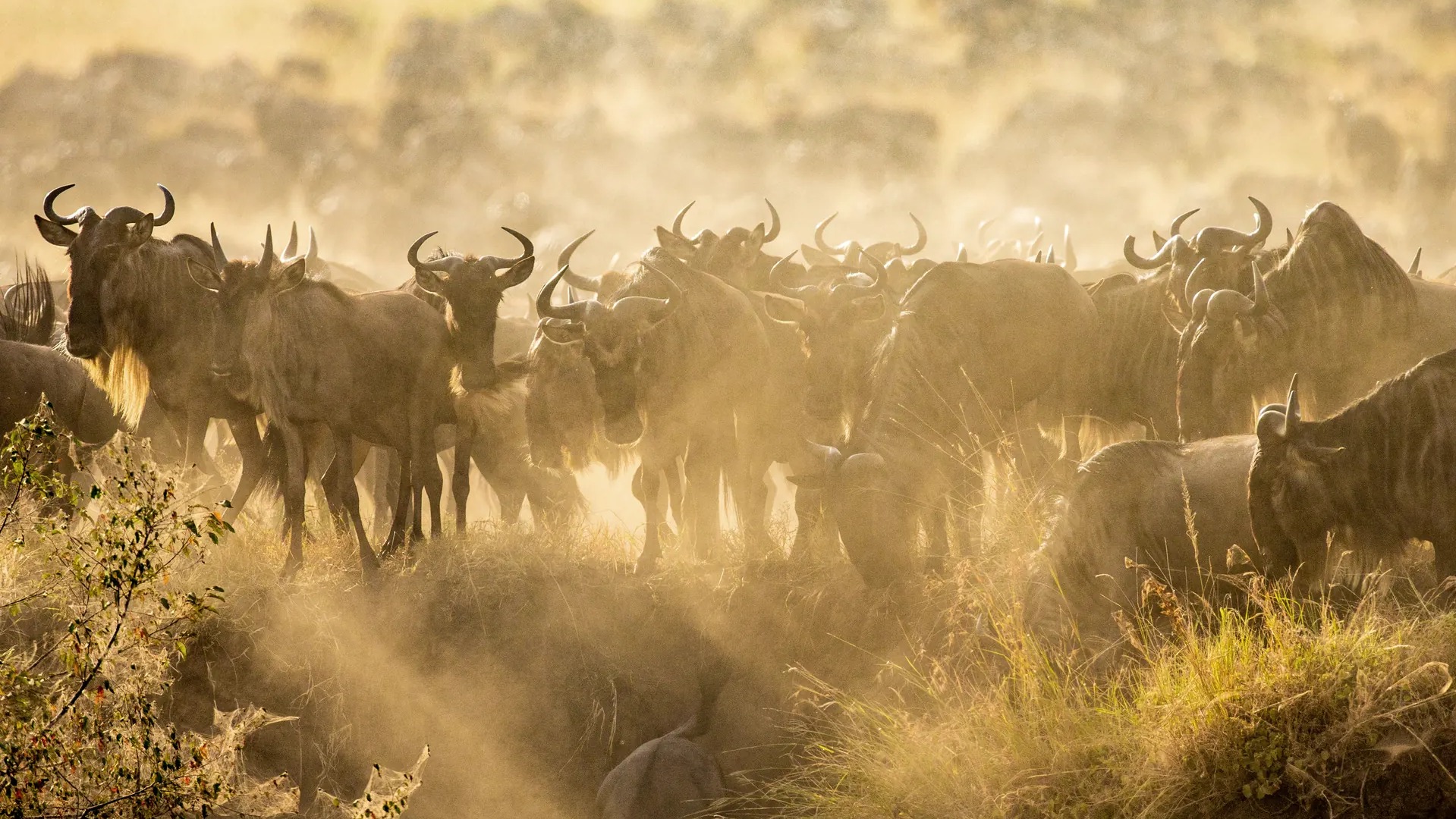
The Masai Mara Great Migration stands as one of Africa’s most compelling wildlife spectacles, where vast herds of wildebeest and zebra respond to ancient rhythms of rain and grass. Yet what actually unfolds each year is shaped by forces far more complex than a simple calendar. From the rains that green the plains to the herds that follow, this honest look at Kenya’s Great Migration explains the forces at play, the months when drama peaks at the Mara River, and why no safari can promise a crossing on any given day. Encounters Africa, the specialist arm for safaris beyond Namibia within the Secret Namibia group, draws on three decades of combined experience to shape these journeys by booking directly with camps and lodges for individuals, couples, families and private groups of up to eight.
Our Cape Town-based team curates tailor-made safaris across Kenya, South Africa, Botswana, Tanzania, Rwanda, Uganda, Zambia and Zimbabwe using 81 published itineraries that can all be reshaped. We work directly with distinguished camps rather than through multiple agents, ensuring every detail aligns with your interests and pace. This approach brings travellers closer to the raw unpredictability that makes the migration so memorable.
The migration does not run like clockwork; it dances to the weather, the grass, and the instincts of a million animals that have never read a calendar.
The Ecological Engine Behind the Movement
At its heart the Great Migration is a relentless search for fresh grazing and water. Each year roughly 1.5 million wildebeest, accompanied by 200,000 zebra and smaller numbers of Thomson’s gazelle, cover more than 1,800 kilometres in a roughly clockwise route between Tanzania’s Serengeti and Kenya’s Masai Mara. The cycle is driven by the seasonal rains that fall between November and May in the south and shift northward from June.
When the short rains arrive in the southern Serengeti around November, the plains explode with nutrient-rich new grass. Calving peaks in February, producing some 8,000 calves daily for a few weeks, an event that draws predators in concentrated numbers. By late April the grass begins to dry, pushing the herds northwest toward the central Serengeti and ultimately into the Masai Mara by July.
This movement is not a single-file parade but a sprawling, ever-shifting carpet of life that can stretch across kilometres. The precise timing varies by as much as three to four weeks year on year, depending on rainfall patterns that climate data shows are becoming less predictable. Travellers who understand this variability approach their safari with realistic expectations and heightened appreciation.
When Do the Mara River Crossings Usually Happen?
The Mara River crossings usually happen between late July and mid-September, with the highest concentration of attempts occurring in August. This window aligns with the herds’ arrival on the northern banks after moving from the central Serengeti. However, the exact dates when large numbers cross cannot be fixed in advance because they depend on local rainstorms that influence water levels and the availability of grass on the opposite bank.
In some years the first significant crossings are observed as early as the second week of July; in others the main activity builds only in early August. Crossings may continue into October if the herds linger, but by then many have already begun drifting south again. Because the animals move in response to immediate conditions rather than a timetable, no operator can guarantee a river crossing on any specific calendar date.
Patience and flexibility remain the two most valuable currencies on any migration-focused safari.
The Drama and Danger of River Crossings
Nowhere is the raw power of the migration more visible than at the Mara River itself. Here the herds gather in nervous thousands, milling along the banks before plunging into fast-flowing water that can reach depths of three metres. Crocodiles lie in wait, and the steep, muddy exits make every crossing a chaotic test of survival.
Observers frequently witness multiple crossing attempts in a single morning, yet success is never assured. A sudden downpour upstream can raise the river level overnight, turning a feasible ford into a dangerous torrent. Conversely, a dry spell may leave the water low enough for easier passage but concentrate predators on both banks.
The sound alone is unforgettable: a constant low grunting that swells into a thunderous roar when the front-runners finally commit. Dust rises in clouds, hooves churn the water white, and the air fills with the calls of anxious mothers separated from their calves. These moments distil weeks of patient game driving into pure, visceral theatre.
Why Fixed Dates for Crossings Cannot Be Promised
The honest truth is that river crossings defy fixed dates because the migration is an ecological event, not a theatrical performance. Rainfall in the Masai Mara can differ by hundreds of millimetres from one season to the next, altering grass growth by as much as a fortnight. A single thunderstorm 50 kilometres upstream can transform a gentle flow into a barrier the herds will not attempt for days.
Experienced guides track wind direction, water clarity, and the composition of herds on each bank, yet even they can only offer educated windows rather than certainties. This unpredictability is part of what keeps the experience authentic. Safari operators who promise specific crossing dates are selling hope rather than reality, something we at Encounters Africa refuse to do.
Instead we focus on placing travellers in the right locations during the most likely weeks, allowing time to explore the broader ecosystem. The days spent watching lion prides hunt on the open plains or cheetahs stalking gazelle often prove as memorable as any river drama.
Choosing the Right Season and Camp for Your Migration Safari
July to October remains the most popular period for witnessing the herds in the Masai Mara, yet each month offers distinct advantages. Early arrivals in July often find the plains still relatively uncrowded, while August and September deliver peak river activity alongside excellent predator viewing. By October the herds begin moving south again, and the landscape starts to dry.
Private conservancies bordering the Masai Mara National Reserve, such as Mara North Conservancy and Olare Motorogi Conservancy, typically experience fewer vehicles and more intimate encounters. Camps positioned close to known crossing points on the Mara and Talek rivers maximise opportunities without compromising comfort.
Our team selects properties that balance access to migration routes with outstanding guiding and conservation credentials. Whether you stay at a classic tented camp or a more luxurious lodge, the emphasis remains on quality guiding that helps you read the landscape and interpret subtle signs of movement.
Beyond the River: The Full Spectrum of Migration Experiences
While river crossings capture the headlines, the migration offers far richer stories across the entire year. In the southern Serengeti the February calving season creates a predator’s paradise where lions, cheetahs and hyenas hunt against a backdrop of endless plains. Later, as the herds stream north, travellers can follow their progress through changing landscapes that reveal different facets of East African wilderness.
Photographers particularly value the golden light of early morning and late afternoon when dust, animals and dramatic skies combine to produce images that transcend the ordinary. Birdlife also peaks during the wetter months, with more than 500 species recorded in the broader ecosystem.
By understanding the full cycle rather than fixating on a single spectacle, travellers gain deeper insight into the delicate balance that sustains this natural wonder. This knowledge transforms a safari from a checklist experience into a genuine connection with one of the planet’s last great migrations.
Planning Your Masai Mara Migration Safari with Confidence
Approaching the Great Migration with realistic expectations opens the door to a more rewarding journey. Rather than chasing guarantees, focus on seasons, strategic camp placement, and the quality of guiding that can turn uncertain days into unforgettable ones. The migration rewards those who embrace its wild unpredictability.
For discerning travellers seeking a private safari beyond our set itineraries, we invite you to contact us directly. We specialise in designing exceptional, tailor-made journeys for individuals, couples, families, and private groups of up to eight guests. Drawing on our handpicked network of distinguished camps and lodges, we curate every detail with precision and care, creating a seamless, deeply personal safari experience shaped entirely around your preferences, pace, and budget.
Compare the Masai Mara experience with other iconic African landscapes by reading our thoughtful comparison of Namibia safari versus Kenya safari. Discover further East African possibilities at our dedicated Beyond Namibia resource page. To begin shaping your own migration encounter, please visit our enquiry form and allow Encounters Africa to craft a journey that respects both the wildlife’s freedom and your desire for meaningful adventure.
In the end the greatest privilege is simply to stand witness to a force of nature that has shaped these plains for millennia, regardless of whether the river runs red with crossings on any particular day.
More like this
Wildlife
What Recent Data Shows About Wildlife Recovery Programs Across Rwanda
wildlife
What Recent Kenyan Wildlife News Reveals About Changing Habitats
Wildlife
What Sets Botswana's Big Five Apart from Their Cousins Elsewhere
wildlife
What the Daily Habits of Zambian Wildlife Reveal About Survival
@-cropped.jpg)
Wildlife
What the Return of Zambia's Painted Wolves Says About Recovery
wildlife