wildlife
Why Tanzania's Migratory Herds Signal Deeper Changes in African Habitats
Encounters Africa - 8 min read
Updated on 9 July 2026
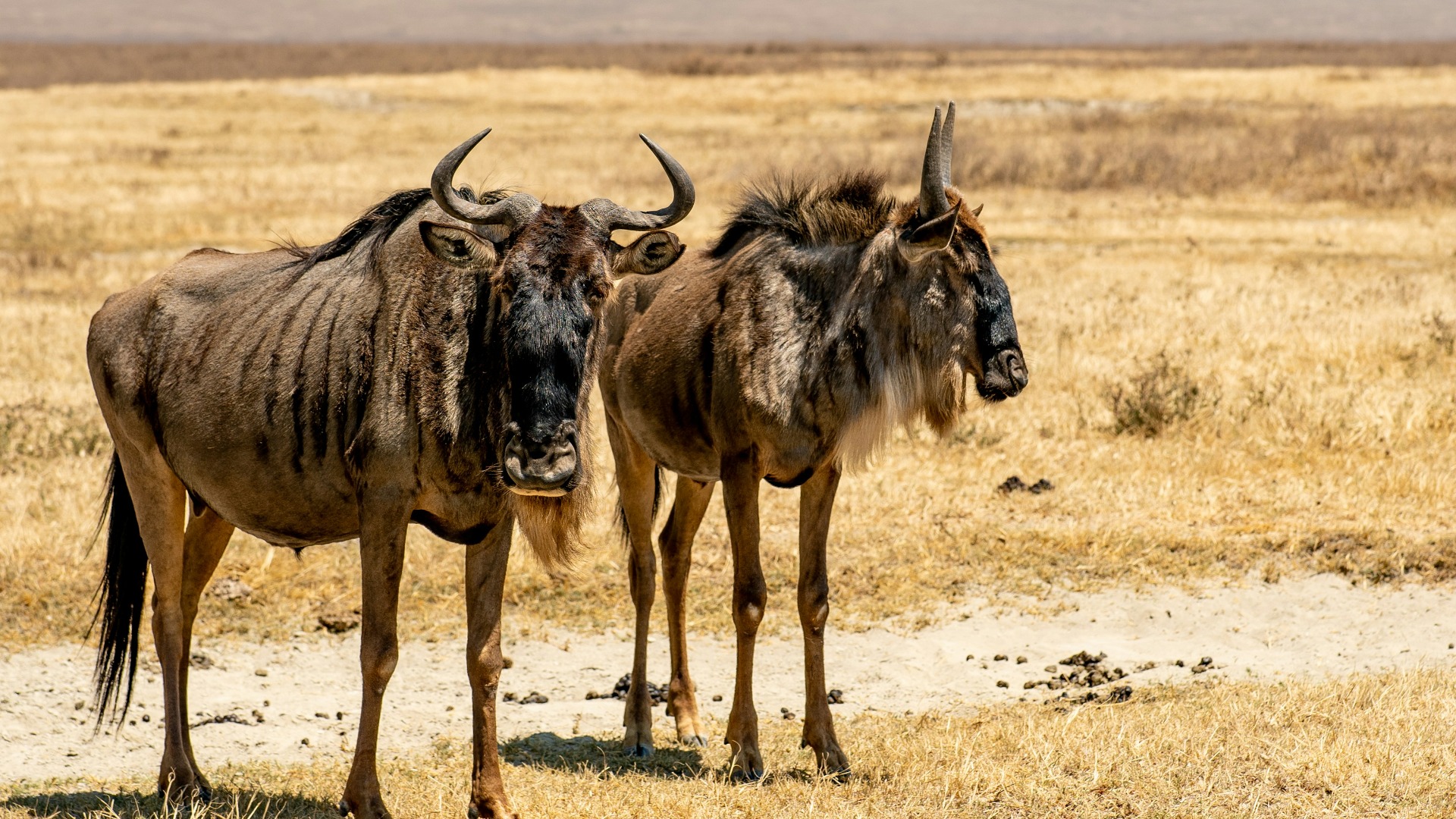
Tanzanian wildlife and habitats tell a story far richer than the thunder of hooves across the Serengeti plains. The great migration, with its two million wildebeest and zebra traversing the ecosystem each year, serves as a visible barometer of deeper ecological shifts. These patterns reveal how climate variability, habitat connectivity and human activity are reshaping ancient rhythms across one of Africa's most diverse landscapes.
Beyond the spectacle of the great migration lies a quieter story of resilience: how Tanzania's lesser-known species, from pangolins in the Eastern Arc to flamingos on soda lakes, maintain fragile links between landscape and survival amid climate variability.
The Great Migration as an Ecological Sentinel
Each year, approximately 1.5 million wildebeest, accompanied by 200,000 zebra and smaller numbers of gazelle, follow the seasonal rains in a 1,800-kilometre circuit that spans the Serengeti in Tanzania and Kenya's Masai Mara. This movement, one of the planet's last great terrestrial migrations, is not merely dramatic theatre but a complex response to nutrient-rich grasses that emerge after the rains.
Researchers have documented how these herds influence everything from soil composition to predator behaviour. When the wildebeest arrive in the short-grass plains between December and March, their grazing stimulates new growth while their dung fertilises the earth. The timing of this journey has shifted noticeably in recent decades, with studies from 2015 to 2023 showing an average delay of nine days in river crossings at the Mara River due to altered rainfall patterns.
The migratory herds do not simply move across the land; they are the land's memory, carrying forward connections between distant habitats that would otherwise fragment and fade.
These changes in tanzania animals behaviour offer early warnings about broader environmental pressures. When the herds arrive late to calving grounds, calf survival rates drop by as much as 20 percent in particularly dry years. Such statistics underscore why understanding these patterns matters for the entire ecosystem's health.
Diverse Tanzanian Wildlife and Habitats Beyond the Plains
While the migration captures global attention, Tanzania hosts an astonishing variety of ecosystems supporting over 430 mammal species and more than 1,100 bird varieties. From the montane forests of the Eastern Arc Mountains to the alkaline lakes of the Great Rift Valley, each habitat nurtures specialised wildlife with unique survival strategies.
In the Selous Game Reserve, now part of the vast Nyerere National Park covering 30,000 square kilometres, African wild dogs maintain one of their strongest populations on the continent. These highly social predators, with their distinctive mottled coats and tireless hunting style, require vast territories exceeding 500 square kilometres per pack. Their presence signals healthy prey bases and minimal human disturbance.
The Eastern Arc forests harbour the continent's highest concentration of endemic species. Here, the secretive giant pangolin navigates dense undergrowth using its powerful sense of smell rather than sight. These scaly mammals consume up to 200,000 ants and termites nightly, playing a crucial role in controlling insect populations that might otherwise damage forest health.

Each Tanzanian habitat tells its own story of adaptation, where seemingly insignificant creatures hold together the intricate web that supports more charismatic species.
Specialised Adaptations in Challenging Environments
On the soda lakes of Ngorongoro Crater and Lake Natron, lesser flamingos gather in their hundreds of thousands. These birds possess unique filtration systems in their beaks that allow them to feed on cyanobacteria thriving in waters with pH levels as high as 10.5. Their breeding success depends on specific water level conditions that have become increasingly unpredictable with changing rainfall patterns.
Further north in Tarangire National Park, elephants follow traditional pathways to ancient baobab trees and mineral-rich termite mounds. Family groups demonstrate remarkable spatial memory, with matriarchs leading their herds to water sources that may be 50 kilometres apart during the dry season between July and October.
How Climate Variability Reshapes Animal Behaviour
The question travellers most frequently ask is: "How is climate change affecting Tanzania animals and their habitats?" The answer lies in subtle but significant behavioural adjustments across species.
Long-term studies in the Serengeti have recorded that lions now hunt more frequently at dawn and dusk rather than during traditional nocturnal hours, likely responding to higher daytime temperatures that have risen by 1.2°C since the 1960s. Similarly, cheetahs, already operating at the edge of their thermal tolerance, have reduced their daytime hunting activity by nearly 25 percent in areas where temperatures regularly exceed 35°C.
These adaptations come with costs. When predators shift their activity patterns, prey species must adjust accordingly, creating ripple effects throughout the food web. Herbivores like impala and topi have altered their grazing times, which in turn affects vegetation recovery rates in key areas.
Montane species face perhaps the most immediate pressure. As temperatures rise, the cloud forests of the Eastern Arc are literally shrinking, with some plant species migrating upslope at rates of 2.5 metres per year. This compression of available habitat puts enormous pressure on endemic creatures like the kipunji monkey, whose entire world population numbers fewer than 1,100 individuals.
Conservation Efforts Supporting Tanzanian Wildlife and Habitats
Tanzania has committed more than 28 percent of its land to protected areas, a figure that includes 16 national parks and numerous game reserves. Yet the effectiveness of these protections depends on connectivity between habitats and community support beyond park boundaries.
Community-based conservation initiatives around the Ngorongoro Conservation Area demonstrate how local involvement can strengthen protection for both wildlife and cultural heritage. The Maasai communities here maintain traditional livestock practices while participating in tourism ventures that provide alternative income sources, reducing pressure on natural resources.
Organisations working with Elewana Serengeti Pioneer Camp and similar properties have pioneered conservation tourism models where visitor fees directly support anti-poaching units and habitat restoration projects. These partnerships have contributed to a 40 percent reduction in elephant poaching incidents in certain concessions between 2015 and 2022.
Research programmes tracking collared animals provide crucial data for adaptive management. GPS collars on 45 wildebeest have revealed new movement corridors that were previously unknown, leading to the creation of additional wildlife corridors linking the Serengeti to adjacent conservation areas.
Conservation in Tanzania succeeds when it recognises that protecting habitats means protecting the complex relationships between all species, from the tiniest insect to the largest mammal.
Responsible Safari Practices for Observing Tanzania Animals
Understanding the delicate balance of these ecosystems allows travellers to engage more meaningfully with the landscape. Responsible observation begins with choosing operators committed to low-impact practices and supporting community conservation.
During game drives, maintaining respectful distances from animals prevents unnecessary stress, particularly during critical periods such as calving season or when predators are hunting. Limiting time spent with any single animal group to no more than 30 minutes helps preserve natural behaviours.
Photography enthusiasts should remember that using artificial light or leaving vehicles to approach subjects closely can disrupt the very interactions they wish to capture. The most rewarding images often come from patience rather than proximity.
Consider visiting during shoulder seasons when visitor numbers are lower. The period from March to May, despite occasional rains, offers exceptional game viewing in the southern Serengeti with far fewer vehicles. November brings the migration to the northern plains, providing intimate encounters before the December high season begins.

The Interconnected Future of Tanzanian Ecosystems
The future of Tanzanian wildlife and habitats depends on addressing challenges at landscape scale rather than in isolated pockets. Climate models predict that by 2050, average temperatures across the Serengeti could rise by another 2.5°C, potentially reducing suitable habitat for certain species by up to 40 percent.
Yet there are reasons for measured optimism. The establishment of the 8,500 square kilometre Kigosi-Moyowosi ecosystem in western Tanzania has created additional protected space for species displaced from more pressured areas. Cross-border initiatives between Tanzania and Kenya aim to secure the full migratory route, recognising that animals cannot respect political boundaries.
Smaller reserves and private conservancies play an increasingly important role. Properties like those in the Grumeti Reserves have demonstrated how well-managed tourism can generate substantial funding for conservation while providing economic benefits to neighbouring communities.
Planning Your Tanzanian Wildlife Experience
For those drawn to witness these remarkable natural processes, a thoughtfully designed safari offers far more than a checklist of sightings. It provides context for understanding the complex relationships shaping these ancient landscapes and the challenges they face.
Whether observing the dramatic river crossings of the migration or quietly watching a pangolin emerge at dusk in the Eastern Arc forests, each encounter carries deeper significance when viewed through an informed lens. The habits of Tanzania animals reflect millions of years of evolution while simultaneously adapting to pressures that have emerged in mere decades.
Encounters Africa specialises in creating personalised journeys that balance exceptional wildlife viewing with meaningful engagement in conservation efforts. Our expert guides not only help you interpret animal behaviour but connect you with the communities working to protect these habitats for future generations.
For discerning travellers seeking a private safari beyond our set itineraries, we invite you to contact us directly. We specialise in designing exceptional, tailor-made journeys for individuals, couples, families, and private groups of up to eight guests. Drawing on our handpicked network of distinguished camps and lodges, we curate every detail with precision and care, creating a seamless, deeply personal safari experience shaped entirely around your preferences, pace, and budget.
Begin your journey by exploring our Tanzania safari collection or visit our enquiry form to start a conversation about your perfect Tanzanian experience. The herds continue their ancient journey; the question is whether we will ensure they have landscapes through which to continue moving for generations to come.
More like this
Wildlife
Why Tanzania's Savannahs Still Shape Africa's Most Dramatic Animal Encounters
wildlife
Why the Big Five Still Shapes Safari Marketing Long After Its Hunting Roots
Wildlife
Why Thoughtful Game Lodge Selection Directly Improves Your Wildlife Sightings
Wildlife
Why Tree Climbing Lions Thrive in Uganda's Ishasha Sector
Wildlife
Why Zimbabwe Delivers Some of Africa's Most Photogenic Wildlife Encounters
wildlife