wildlife
Tracking the Black-Footed Cat After Dark in South Africa's Karoo
Encounters Africa - 8 min read
Updated on 20 August 2026
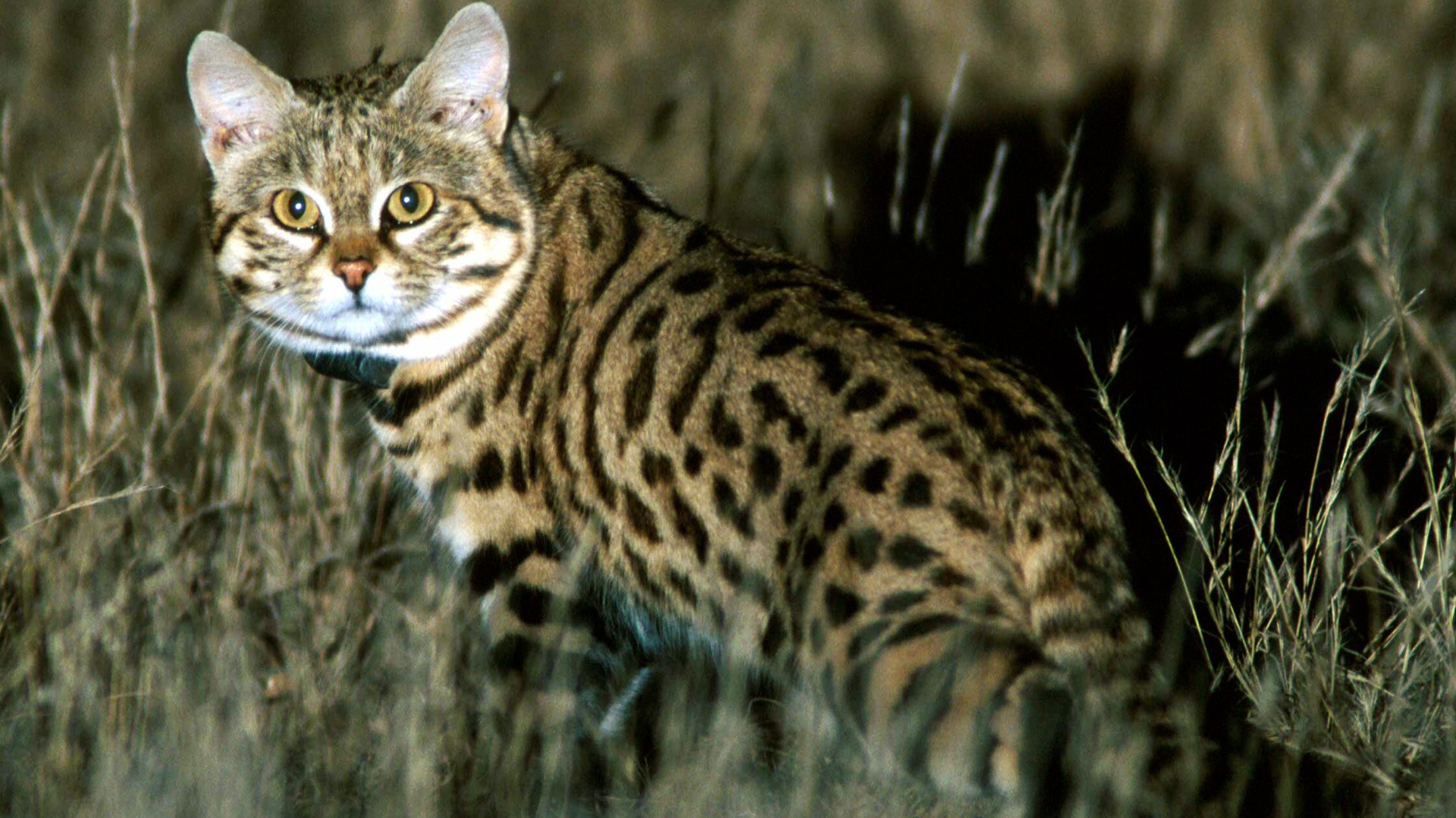
As the last light drains from the Karoo sky, a different world stirs beneath the acacia thorns and low scrub. Tracking the black-footed cat after dark in South Africa's Karoo reveals one of the continent's most efficient nocturnal predators, a diminutive hunter whose success rate far exceeds that of larger felines. Weighing little more than a domestic cat yet boasting a documented kill rate of up to 60 percent, this elusive species offers a compelling window into the delicate balance of arid ecosystems after sunset.
Encounters Africa travellers who join these specialist night drives witness behaviour rarely seen by daylight visitors. The black-footed cat, known scientifically as Felis nigripes, emerges as shadows lengthen, transforming from near-invisible resident to lightning-fast hunter in the beam of a spotlight. Its story, woven through years of patient research, highlights both the fragility and resilience found in this vast semi-desert landscape.
The Karoo After Dark: A Stage for the Smallest Wild Cat
The Karoo stretches across nearly 400,000 square kilometres of South Africa's interior, its seemingly barren plains concealing surprising biodiversity. By day the heat shimmers off red earth and sparse vegetation, but when temperatures drop after sunset the landscape comes alive with movement. This is when the black-footed cat begins its solitary patrol, covering distances of up to 30 kilometres in a single night in search of prey.
Our guides at selected lodges near the Eastern Cape and Northern Cape borders prepare vehicles with specialised red-filtered spotlights that minimise disturbance to nocturnal animals. The experience feels intimate, almost cinematic, as the beam sweeps across saltbush and through dry riverbeds. What appears at first as empty terrain gradually reveals a complex web of life visible only to those willing to venture out after dark.
The black-footed cat demonstrates that size bears little relation to hunting prowess; in the Karoo's challenging environment, precision and persistence matter far more than power.
Physical Adaptations for Nocturnal Survival
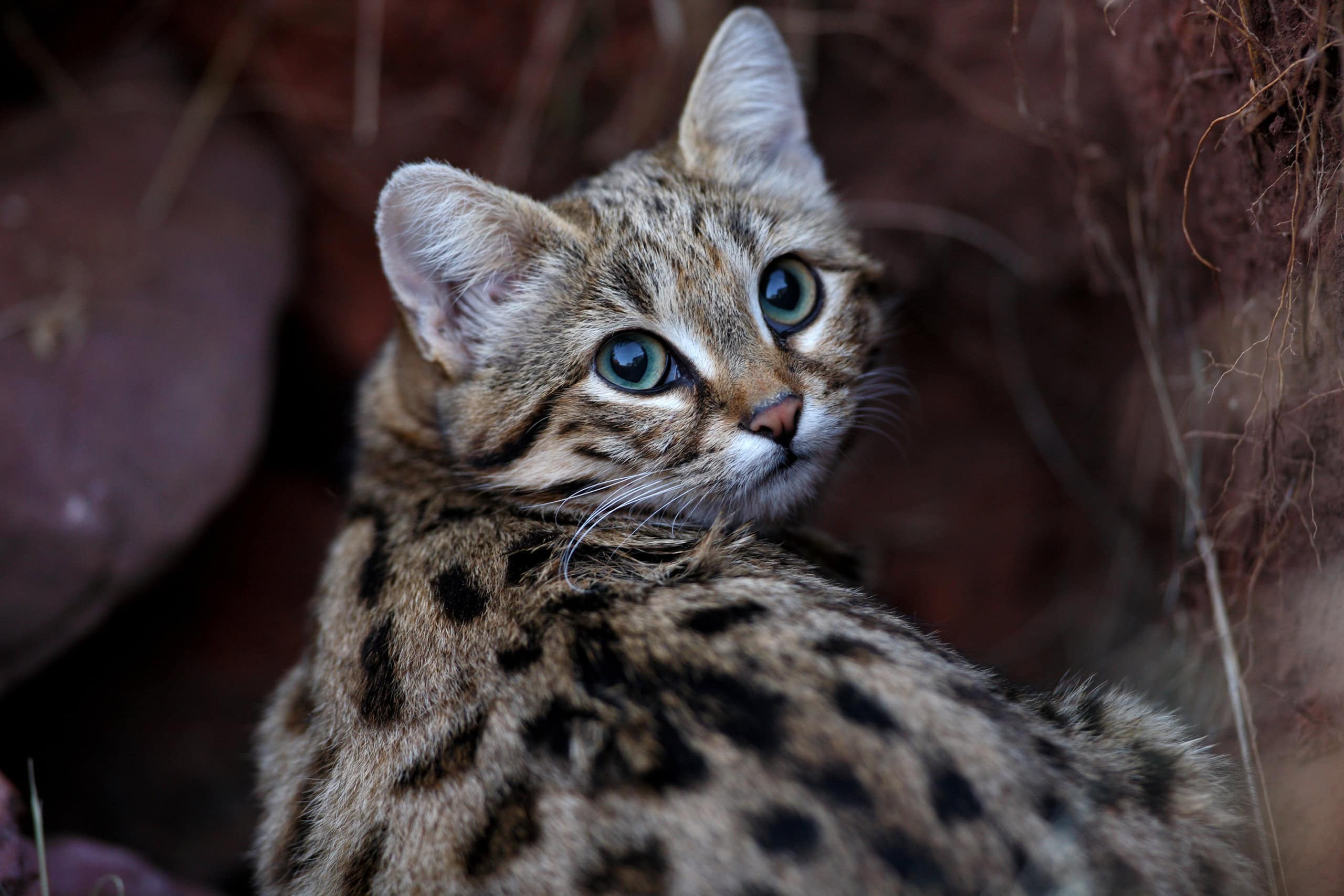
Standing just 25 centimetres at the shoulder, the black-footed cat possesses several remarkable adaptations. Its namesake black feet and legs are stockier than those of similar small cats, providing stability on uneven ground while its large, rounded ears capture the faintest rustle of prey. The coat varies from pale tawny to rich cinnamon, perfectly matching the Karoo's earthy palette.
Unlike many felines that rely on bursts of speed, this species excels at both stalking and pouncing with extraordinary accuracy. Its eyes, adapted for low light, allow detection of movement that would escape human notice. These traits combine to create an extraordinarily effective hunter whose nocturnal pursuits have fascinated researchers for decades.
Understanding the Black-Footed Cat's Hunting Techniques
Research conducted in the Karoo over more than 15 years has documented the astonishing efficiency of these small predators. Scientists following radio-collared individuals have recorded an average of 12 to 18 prey items captured per night during peak activity periods between April and October. This translates to a success rate that researchers estimate at approximately one kill every 50 minutes of active hunting.
The black-footed cat employs multiple strategies depending on prey type and conditions. For rodents and small birds, it uses a low, patient stalk followed by a sudden pounce reaching up to three metres. When targeting larger prey such as hares or young springbok lambs, the cat may employ a persistent chase lasting several minutes, demonstrating remarkable stamina for its size. These observations come from long-term studies that have revolutionised our understanding of small carnivore ecology.
In the quiet hours after midnight, when larger predators have retreated, the black-footed cat claims its territory as the Karoo's most successful hunter by weight.
Prey Selection and Dietary Preferences
Small mammals form the bulk of the black-footed cat's diet, with gerbils, mice and shrews making up roughly 70 percent of recorded kills according to camera-trap data collected since 2008. Birds, reptiles and insects provide important seasonal supplements, particularly during summer months when insect populations surge after rains.
This varied diet allows the species to thrive in an environment where resources fluctuate dramatically between seasons. During winter, when temperatures can drop below freezing at night, the cats conserve energy by focusing on high-calorie prey such as rodents that remain active throughout the cold months. Their ability to extract maximum nutrition from each kill supports their high metabolic demands despite their small body size.
Conservation Challenges Facing This Rare Species
The black-footed cat currently holds Vulnerable status on the IUCN Red List, with an estimated wild population of fewer than 10,000 mature individuals. Habitat loss through overgrazing and agricultural expansion poses the greatest threat, particularly in the central Karoo where traditional farming practices have intensified in recent decades. Climate change further complicates their future, with shifting rainfall patterns potentially disrupting prey availability.
Despite their small size, these cats face competition and occasional predation from larger carnivores including jackals, caracals and even domestic dogs on farmland boundaries. Road mortality represents another significant danger, especially during the breeding season when males expand their territories and cross more frequently between fragmented habitats.
Research Initiatives and Community Involvement
Since the early 2000s, dedicated research teams have maintained study sites across the Karoo, using a combination of radio-tracking, camera traps and direct observation to build comprehensive data sets. One long-running project has followed more than 30 individual cats, documenting everything from maternal behaviour to territory sizes that can reach 20 square kilometres for males.
Local farming communities play an increasingly important role in conservation efforts. Several initiatives now work with landowners to implement cat-friendly farming practices, including reduced use of rodenticides and creation of wildlife corridors. These partnerships have proven essential for maintaining genetic connectivity between isolated populations across the vast landscape.
Every black-footed cat observed under the Karoo stars represents a small victory for conservation in an increasingly pressured landscape.
What to Expect on a Night Drive in the Karoo
Visitors joining night drives focused on black-footed cats should prepare for an experience quite different from traditional game viewing. Vehicles move slowly along farm tracks and across open plains, with guides using both spotlights and their extensive knowledge of individual cat territories. Success rates vary with seasons and weather, but dedicated expeditions typically achieve sightings on roughly 60 to 70 percent of outings during optimal months.
The best time to visit for black-footed cat viewing runs from May to September, when cooler temperatures bring increased activity and clearer night skies. Summer months offer their own rewards with abundant insect life and breeding birds, though higher temperatures may reduce the cats' hunting periods to the cooler hours before dawn. Layered clothing is essential as temperatures can drop dramatically after sunset, sometimes by as much as 20 degrees Celsius.
Combining Night Tracking with Daytime Exploration
While the black-footed cat remains strictly nocturnal, daytime activities in the Karoo complement the night experience beautifully. Morning walks reveal the tracks and signs left by these secretive hunters, while visits to research stations provide deeper insight into ongoing studies. Several properties now offer combined packages that include both nocturnal expeditions and daytime interpretation of the wider ecosystem.
Photography during night drives requires specific techniques. Guides typically limit spotlight use to brief periods and encourage the use of higher ISO settings rather than prolonged illumination. The resulting images often capture the cat's intense focus and fluid movement in ways that daylight photography cannot match.
Related Experiences Across Southern Africa
The skills developed tracking small carnivores in the Karoo translate well to other specialist wildlife experiences. Travellers interested in nocturnal observation might consider Kalahari expeditions where similar techniques reveal bat-eared foxes and aardwolves. For those seeking contrast, Malewane Lodge in the Greater Kruger offers exceptional big cat viewing that highlights the diversity of African felines.
Our article on practical night photography techniques provides additional guidance for capturing these elusive moments responsibly. Similarly, the piece exploring meerkat burrows and ecosystem engineering offers fascinating parallels to the black-footed cat's role in the Karoo food web.
.jpg?width=1280&height=960&name=WhatsApp%20Image%202021-10-22%20at%2018.21.13%20(1).jpg)
Planning Your Karoo Night Safari Experience
For discerning travellers seeking a private safari beyond our set itineraries, we invite you to contact us directly. We specialise in designing exceptional, tailor-made journeys for individuals, couples, families, and private groups of up to eight guests. Drawing on our handpicked network of distinguished camps and lodges, we curate every detail with precision and care, creating a seamless, deeply personal safari experience shaped entirely around your preferences, pace, and budget.
Whether you wish to focus intensively on the black-footed cat or combine nocturnal Karoo adventures with visits to other remarkable destinations across South Africa, our team will craft an itinerary that exceeds expectations. The opportunity to witness this remarkable small predator in its natural element creates memories that resonate long after returning home.
Begin your journey by reaching out through our enquiry form. Let Encounters Africa guide you towards an authentic connection with one of Africa's most accomplished yet least-known hunters under the vast Karoo night sky.
More like this
Wildlife
What a Lone Elephant Taught Me About Survival in Hwange National Park
Wildlife
What a Sudden Leopard Encounter Taught Me About Botswana's Delta
Wildlife
What a Year Observing Predators Taught Us About Kenya's Savannah Balance
Wildlife
What Botswana's Anti-Poaching Units Reveal About Protecting Wildlife in Botswana
Wildlife
What Elephant Matriarchs Teach Us About Memory and Leadership Across African Savannas
wildlife